Eagle Scout Disc Golf Project Signs That Work
A strong Eagle Scout project usually leaves behind something visible, useful, and built to last. That is exactly why eagle scout disc golf project signs are such a smart fit for public courses, church camps, schools, and community parks. When the signs are planned well, they do more than mark tee pads – they improve navigation, reduce confusion, support course safety, and give the entire property a more finished, professional look.
For project leaders, the challenge is rarely whether signage is needed. It is usually how to make the project organized enough for approval, affordable enough to fund, and durable enough to feel worthy of the effort. That is where a clear plan matters.
Why eagle scout disc golf project signs make sense
Disc golf courses often grow in stages. A park may install baskets first, then tee pads later, and signage becomes the missing piece that never quite gets finished. Volunteers may add temporary markers, laminated printouts, or hand-painted boards, but those rarely hold up for long. Sun fades them. Weather warps them. Layout changes turn them into outdated clutter.
An Eagle Scout signage project solves a real operational problem. Players need to know where to start, where to throw, how far the basket is, and where to walk next. Park staff and club leaders need signs that look intentional and are easy to maintain. A well-run project meets both needs at once.
It also fits what many review boards and community partners want to see. The project has visible public benefit, requires planning and coordination, and can include fundraising, volunteer management, approvals, and long-term value. That combination makes signage a practical project with real leadership components, not just a simple installation day.
What a good signage project should include
The best projects start by defining scope before anyone starts raising money or ordering materials. In some cases, the right project is a full tee sign package for every hole. In others, it may be a smaller but still meaningful system, such as a course kiosk, directional signs between holes, and a few high-priority tee signs on confusing holes.
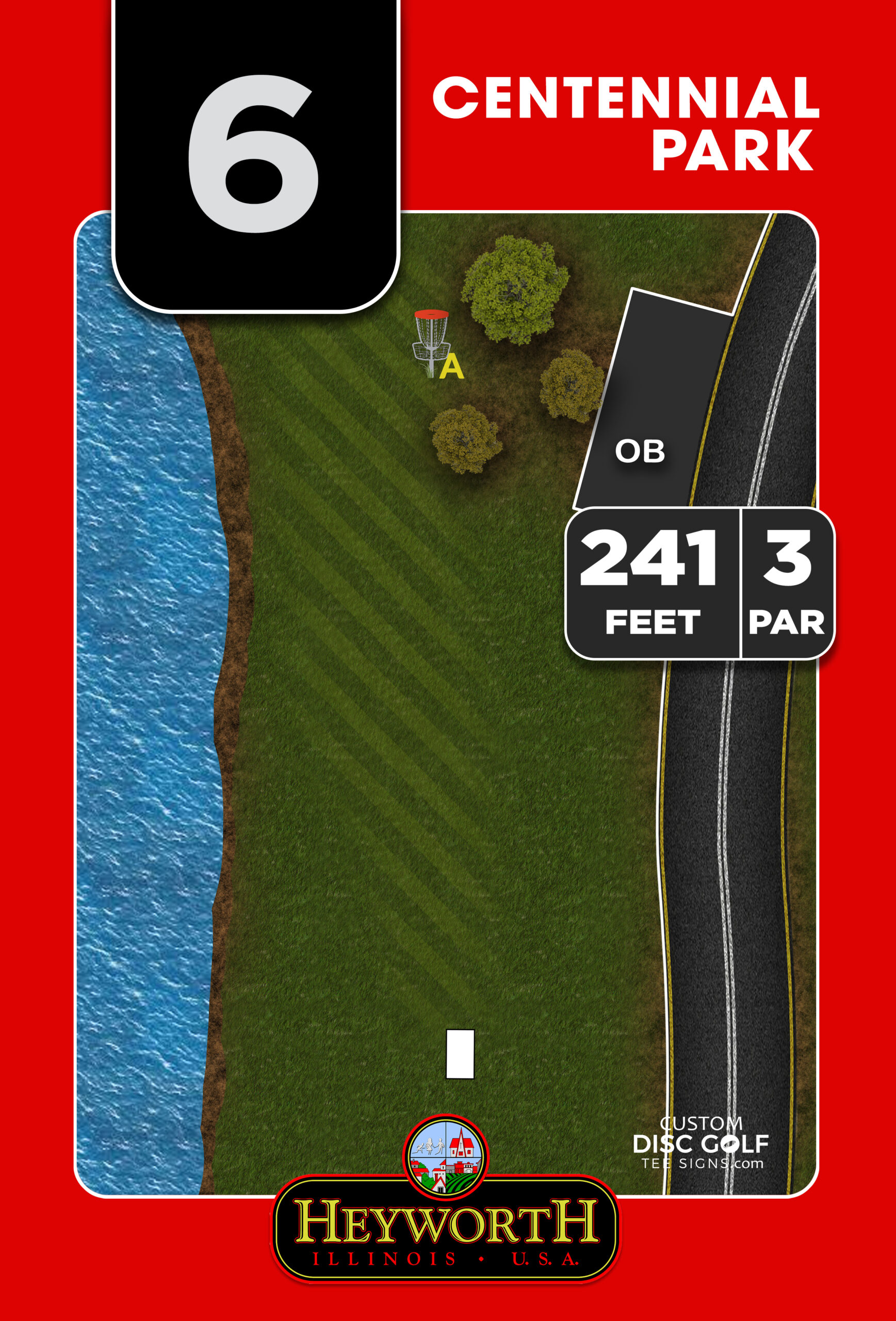
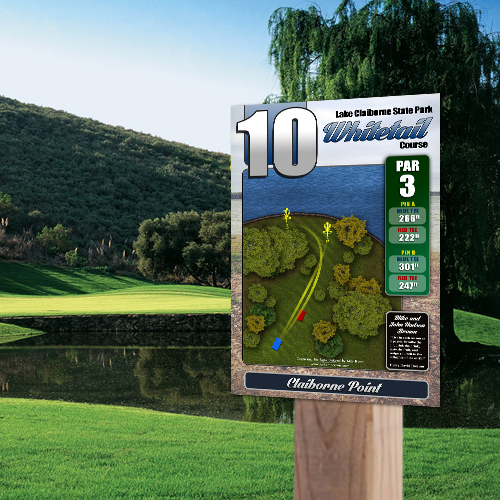
A complete disc golf signage system usually includes three layers. First, there are tee signs with hole number, par, distance, and a clear layout. Second, there are navigation signs that point players to the next tee. Third, there is a course map or kiosk sign near the entrance to help first-time visitors understand the layout before they begin.
That full-system approach often creates the strongest result because it fixes the player experience from start to finish. Still, scope should match budget, timeline, and approval realities. A smaller, well-executed project is better than an oversized plan that stalls.
Tee signs do the heavy lifting
If the course has no permanent signage, tee signs are usually the priority. They deliver the most immediate value because they help at the exact moment players need information. Strong tee signs should be easy to read from a standing position on the pad, visually clean, and accurate to the course layout.
This is where many volunteer-run projects run into trouble. The idea is simple, but the design work is not. A sign needs the right balance of map clarity, branding, hole data, sponsor space, and readability. If too much is added, the sign becomes hard to use. If too little is included, it fails to solve the problem.
Navigation signs matter more than people expect
Many courses focus on tee signs and forget the walk to the next hole. That creates a course that looks improved but still frustrates new players. If holes are spread out, cross walking paths, or loop back near one another, navigation signs can have just as much impact as tee signs.
For Eagle Scout projects, these are often a strong budget-friendly addition because they extend the benefit of the project without requiring a full map on every sign.
Planning for approvals, stakeholders, and budget
Most successful signage projects involve more than one decision-maker. A Scout may be leading the effort, but the park department, property owner, course club, and project coach all need to stay aligned. That is why early planning should focus on approvals before design details.
Start by confirming who owns the course and who has final authority on permanent installations. Then verify whether there are rules around materials, colors, post types, digging, or sponsor recognition. Some municipalities welcome sponsor logos. Others restrict them. Some parks prefer a certain mounting height or substrate. It depends on the property.
Budget should be discussed just as early. Custom signs are not a place where the cheapest option usually wins. Temporary materials may lower the upfront number, but replacement costs and poor presentation catch up quickly. For most public-facing courses, the better value is durable, full-color signage built for UV exposure and weather over time.
That does not mean every project needs premium shaped signs or a championship-level package. It means the materials and graphics should match the long-term use of the course. If the signs are meant to serve the community for years, the project should be built that way from the start.
Sponsorship can make the project easier to fund
One of the smartest ways to fund eagle scout disc golf project signs is to build sponsor placement into the sign system. Local businesses are often willing to support a visible park improvement, especially when the recognition is professional and consistent across the course.
This works best when sponsor space is planned into the design from the beginning rather than added as an afterthought. A clean sponsor area keeps the sign readable while still giving donors real value. It also helps the Scout present a more structured fundraising plan to clubs, businesses, and community partners.
There is a trade-off here. If sponsor logos dominate the layout, the sign can start to feel cluttered or commercial. The best approach is balanced – enough space to support fundraising, but not so much that the sign stops functioning as wayfinding and course information.
Why professional design changes the outcome
A disc golf sign is not just a printed panel. It is part map, part navigation tool, part course branding, and part public-facing infrastructure. That is why professional design support can save a project from common mistakes.
The biggest issues usually show up in the proofing stage. Distances may be outdated. Basket positions may be mislabeled. Trees and fairways may be drawn in ways that look attractive but confuse the player. Fonts may be too small. Colors may not hold enough contrast outdoors.
An experienced signage partner can guide those choices, produce accurate proofs, and keep the project moving without placing all the design burden on a volunteer team. For Eagle Scout coordinators, that support is valuable because it reduces rework and helps the final installation look worthy of the effort that went into approval and fundraising.
Custom Disc Golf Tee Signs works in that exact lane – helping courses, clubs, and community-led projects move from concept to proof to finished signs with a process built specifically for disc golf infrastructure.
Material choices and installation details
Not every course needs the same sign construction. A heavily used municipal course may need a tougher setup than a small private camp course. Exposure matters too. Full sun, irrigation, mowing patterns, vandalism risk, and winter conditions all affect what should be installed.
Aluminum and aluminum composite are common choices because they offer a clean appearance, strong print quality, and good outdoor durability. UV protection matters as much as the panel itself. A sign can look great on day one and still fail the project if it fades too quickly.
Installation planning should be treated as part of the project, not an afterthought. Post type, hardware, hole depth, local utility checks, and spacing all need to be coordinated. A polished sign mounted poorly still looks unfinished. Good installation is part of the public impression.
What makes the project feel complete
The strongest Eagle Scout signage projects feel cohesive. The tee signs match each other. The numbering is consistent. The course map uses the same visual language. Sponsor placement is organized. The result looks like a system, not a collection of unrelated signs.
That consistency has real value for the course. It helps first-time visitors trust what they are seeing. It makes the property look maintained. It gives clubs and park departments an asset they can be proud to show. And for the Scout, it creates a project that clearly demonstrates planning, leadership, and a lasting community benefit.
If you are helping lead one of these projects, think beyond just getting signs installed. Aim for a signage system that improves how the course works every day. That is the kind of project people notice right away and appreciate long after the workday is over.