Disc Golf Project Approval Guide for Tee Signs

A course can have excellent baskets, thoughtful fairways, and a loyal local player base, yet still feel unfinished when tee signs are inconsistent, faded, or missing. This disc golf project approval guide is built for the people who need to turn a good idea into an approved, funded, and install-ready signage project. Whether you represent a parks department, club, state park, school, or community group, the strongest proposals make the practical case before they ask for a budget.
Start With the Problem the Project Solves
Approval conversations move faster when the request is tied to visible course needs rather than a general desire to improve appearances. Walk the course with fresh eyes. Note where players hesitate, walk toward the wrong basket, miss safety information, or have no reliable way to understand distance, par, or out-of-bounds rules.
For many public courses, navigation is the most persuasive starting point. New players need to find the first tee, understand each hole, and move confidently to the next one. Tournament visitors need dependable layouts and clear rules. Park staff need an organized facility that looks maintained and reflects well on the property.
Frame the project around outcomes decision-makers can recognize: fewer navigation questions for staff, a better first impression for visitors, clearer hole information, improved tournament readiness, and signage that can withstand outdoor use. Professional tee signs are not decoration. They are course infrastructure.
Before presenting the project, document the current condition with photos and a short list of issues. A faded hand-made sign, a missing next-tee marker, or an outdated course map makes the need easy to understand without overexplaining it.
Build an Approval Packet That Answers Questions Early
A vague request creates extra meetings. A clear approval packet gives a course manager, recreation director, board, or land manager the information needed to make a decision with confidence.
Your packet should explain the project scope, show the proposed visual direction, identify the installation plan, and state how the work will be paid for. It does not need to be complicated, but it should be complete enough to prevent predictable questions from slowing the process.
Include these four elements:
- A course inventory showing how many tee signs, next-tee signs, overview signs, maps, and rule signs are needed.
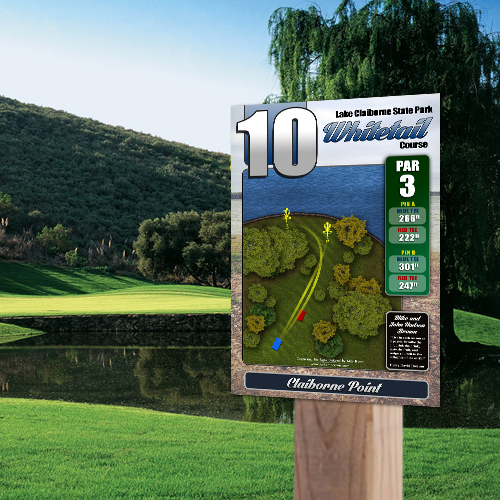
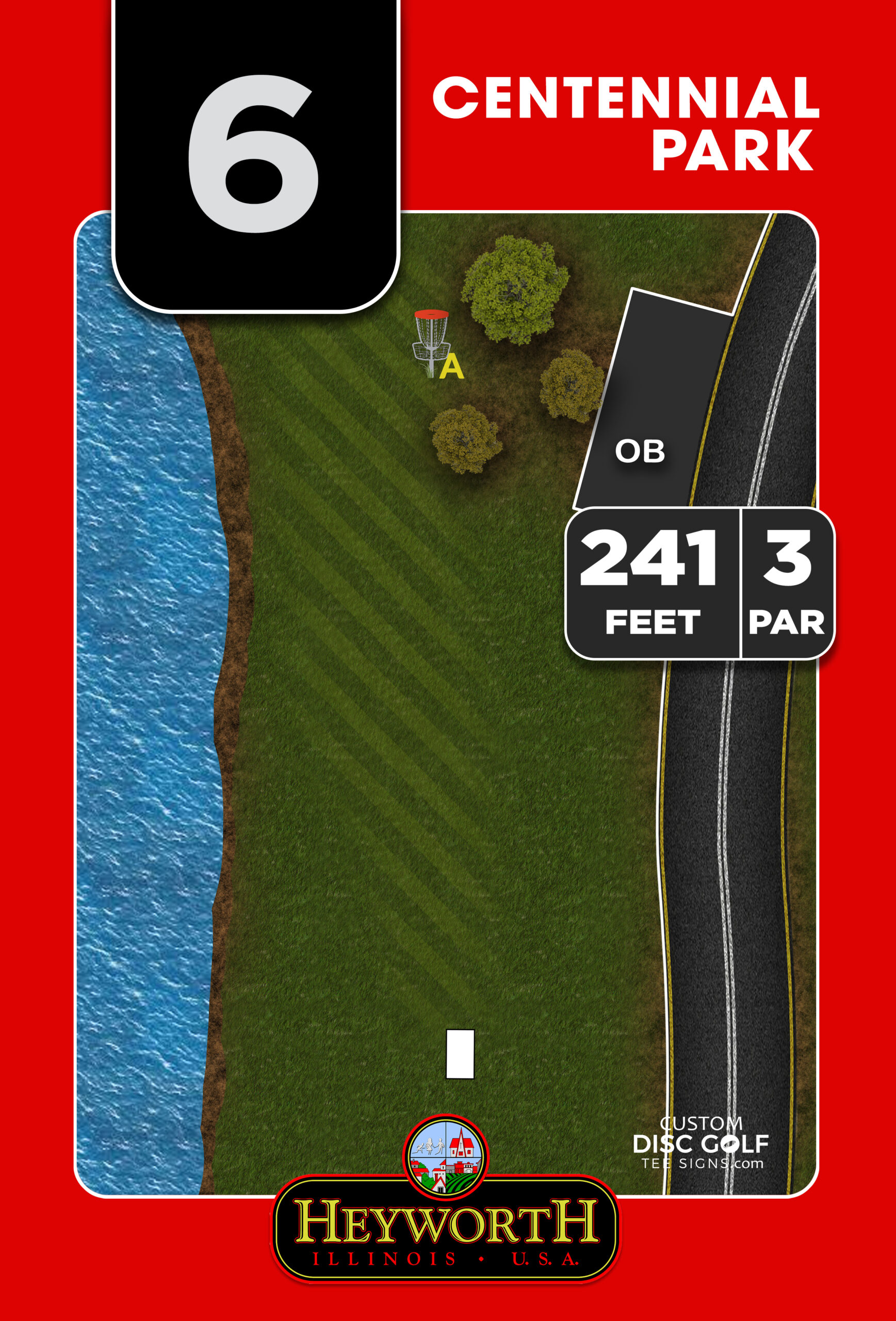
- A simple concept showing the information each tee sign will carry, such as hole number, distance, par, layout, sponsor space, and course branding.
- A material and mounting recommendation suited to the location, weather exposure, and expected level of use.
- A budget that separates design, production, hardware, installation, and any contingency funds.
A visual proof is especially valuable. Stakeholders may understand that the course needs signs, but they are more likely to approve the project when they can picture a coordinated system at the first tee and throughout the property.
Define What Is Included and What Is Not
Signage projects often grow after approval because the original scope was too broad. Decide early whether the project covers every hole, only priority holes, a kiosk map, directional markers, practice-area signs, or sponsor panels. If the course has multiple layouts, clarify whether one sign will show all layouts or whether the design will focus on the primary configuration.
There is no single right answer. A small neighborhood course may benefit most from clear basic tee signs and a map at the entrance. A busy destination course may justify detailed full-color hole maps, championship-level information, and coordinated next-tee navigation. Match the scope to the course’s use, budget, and maintenance capacity.
Get the Right People Involved Before Final Approval
The person who supports a project is not always the person authorized to approve it. Identify the decision path early. A municipal course may require support from parks staff, a recreation director, procurement personnel, and a city council or advisory board. A club-led project may need the landowner’s permission, club officer approval, and agreement on installation responsibilities.
Ask direct questions at the beginning: Who owns the land? Who approves signage design? Are there park branding standards? Is there a purchasing threshold? Does the property require utility checks, post-depth requirements, or specific installation locations?
This step prevents a common problem: ordering signs before a land manager has approved their size, placement, or mounting method. Sign faces, posts, and hardware should be selected with the site rules in mind.
Bring maintenance into the discussion, too. Aluminum composite and aluminum signs offer strong outdoor performance and UV-protected full-color printing, but no material can solve poor placement. Signs installed too close to mower paths, flood-prone areas, or high-impact locations may need additional protection. A practical plan accounts for both durability and access for future replacement.
Make the Budget Easier to Approve
A total price without context can make even a worthwhile project look difficult. Present the budget as an investment in a system that improves the course for years, not as a collection of individual signs.
Start with the essential package: tee signs for each hole and any critical course overview or directional signs. Then identify optional upgrades separately. That might include larger maps, custom-shaped signs, added sponsor panels, secondary layouts, or premium materials. Separating essentials from upgrades lets the approving body protect the core project if funding is limited.
Sponsorship can make a meaningful difference, especially for clubs and volunteer-led improvements. A well-designed sponsor area gives local businesses a visible presence while helping offset production costs. The key is restraint. Sponsor recognition should be consistent, readable, and integrated into the sign design without competing with hole information.
When pursuing sponsors, give businesses a concrete offer. Explain where signs will be located, how long recognition will remain in place, what the sponsor panel will look like, and whether they will be included on an entrance map or event materials. Local restaurants, sporting goods businesses, real estate teams, health providers, and community-minded companies may all be potential partners depending on the course audience.
Do not promise permanent placement if the landowner has not approved the sponsor model. Public agencies may have policies governing advertising, logo size, renewal terms, or categories of businesses they will accept. Obtain those answers before selling sponsorships.
Use Design to Build Trust in the Project
Design quality is often treated as a finishing detail. It is not. Clear, course-specific design is what makes a sign system useful at the moment a player needs it.
Each tee sign should prioritize the information a player reads first: hole number, layout, distance, par, and a legible fairway map. From there, use visual hierarchy to include relevant hazards, mandatory routes, alternate pins, out-of-bounds boundaries, and next-tee direction. Too much information can be as frustrating as too little, particularly on a small sign face.
Use actual course details rather than generic hole diagrams. A custom layout built from accurate measurements, site references, and course knowledge creates confidence for players and reduces avoidable confusion. It also gives staff and sponsors a more polished representation of the facility.
Request a proofing process before production. Review every hole for distances, pin positions, spelling, local rules, logos, and sponsor names. Have at least one person familiar with daily course play review the layouts, and have the approving agency review branding and policy-sensitive content. A careful proof stage is far less expensive than correcting a printed sign after installation.
Plan Installation and Long-Term Ownership
Approval should cover what happens after the signs arrive. Confirm who will receive the shipment, where signs will be stored, who will install posts and faces, and what equipment is required. If volunteers will handle installation, create a simple hole-by-hole placement plan so signs remain consistent in height, orientation, and distance from each tee area.
Consider sunlight, sightlines, mowing routes, and accessibility. A sign should be easy to read without blocking play or creating a tripping hazard. Entrance maps should be placed where arriving players naturally stop, not where they have already passed the decision point.
Assign long-term ownership as well. Someone should keep the original artwork, final proof files, sponsor renewal information, and a record of materials used. Courses evolve. Pin positions change, trees fall, rules are updated, and sponsors rotate. A well-managed system makes future revisions straightforward instead of forcing the course to start over.
Present the Request With Confidence
When it is time to seek approval, lead with the course experience and operational benefit. Show the current condition, explain the proposed system, state the budget and funding plan, and make the decision easy: approve the full project, approve the essential phase, or authorize a final design and quote process.
Custom Disc Golf Tee Signs helps organizations move from course information to professional, proof-ready signage built for the way disc golf facilities operate. The goal is not simply to put a sign at every tee. It is to create a system players trust, staff can maintain, and the community is proud to support.
A well-prepared project gives stakeholders a clear reason to say yes. Start with the problems players experience, show exactly how the signs will solve them, and build a plan that respects both the property and the people responsible for it.