How to Fund Disc Golf Sign Projects With Sponsors

A player reaches a new course, finds the first tee, and immediately has to guess where the basket sits. The hole has no distance, no map, no next-tee direction, and no clear indication of the intended route. That is the everyday problem that fund disc golf sign projects are designed to solve. Better signage improves the player experience, but it also gives a course a more professional appearance that parks departments, local businesses, and community supporters can see value in.
For many clubs, municipalities, and volunteer-led course groups, the obstacle is not deciding whether signs are needed. It is paying for them without draining a limited maintenance budget. The strongest funding plans treat a sign project as an organized course improvement initiative, not a last-minute printing expense. With the right scope, sponsor structure, and communication plan, new tee signs can become an attainable investment.
Start With a Sign Plan Before Asking for Money
Sponsors and public agencies respond better to a defined project than a general request for help. Before setting a fundraising goal, document what the course needs and what the finished system should accomplish.
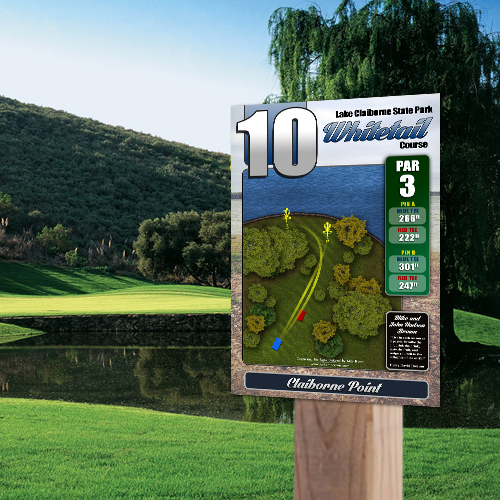
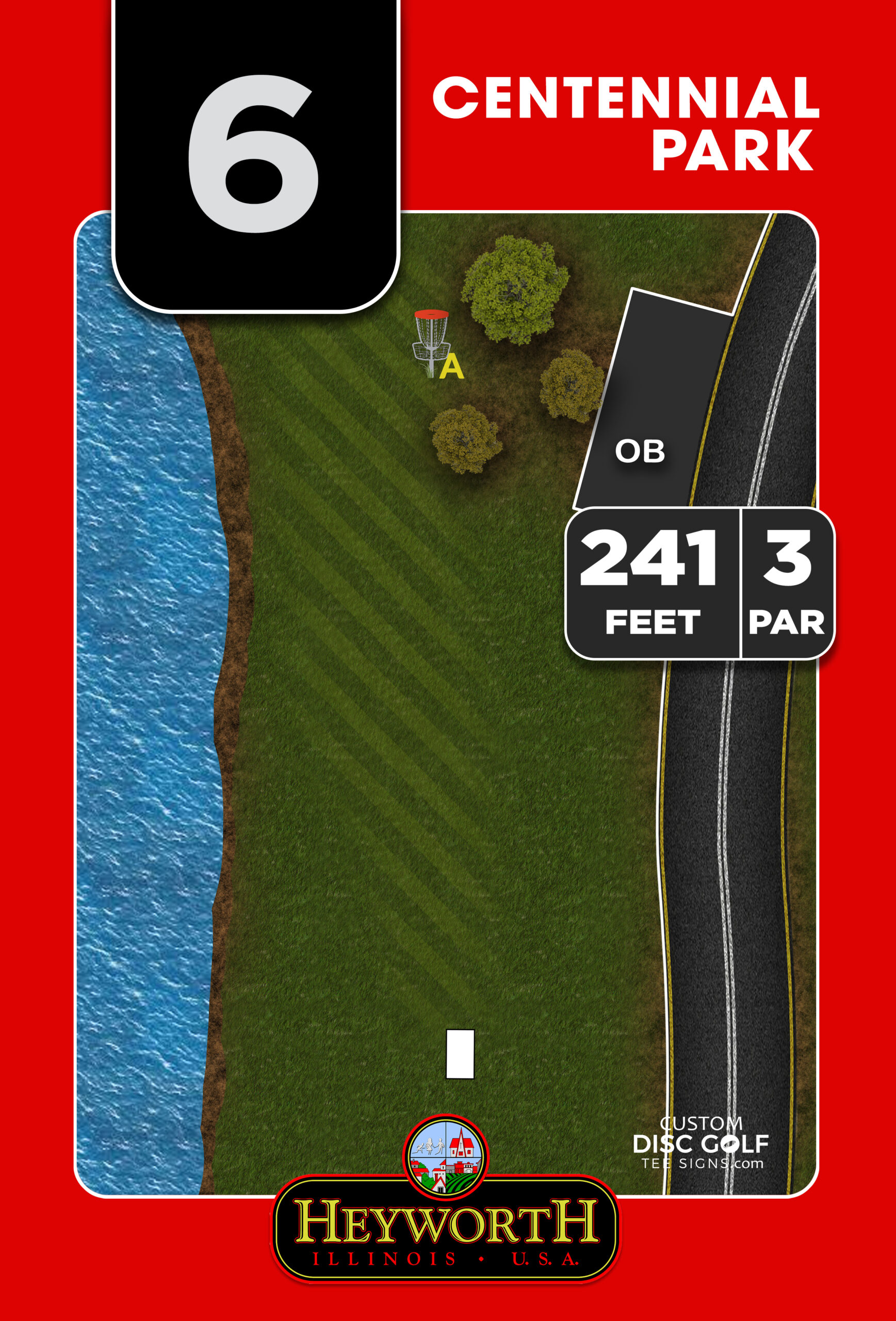
Walk the course and identify the gaps. Some facilities need a complete tee-sign package with hole maps, distances, par information, and next-tee navigation. Others may need a course overview sign at the parking area, directional signs at confusing intersections, or replacement signs for damaged and outdated holes. A championship-caliber course may also need multiple tee positions, professional branding, and full-color graphics that make complex hole layouts easy to understand.
A clear scope lets you build an accurate budget and avoid asking supporters to fund a vague idea. It also helps determine whether the project should be completed all at once or in phases. A 27-hole course may be best handled in two or three stages, while a heavily used 18-hole public course may benefit from completing its core tee signs in a single installation.
When planning, account for more than the printed sign faces. Consider posts, mounting hardware, installation labor, site preparation, map development, approvals, and a modest contingency for changes. Durable UV-protected aluminum composite or aluminum signs cost more than temporary materials, but they are built for outdoor exposure and can reduce replacement costs over time. The best choice depends on the course environment, expected traffic, and long-term maintenance plan.
Build Sponsor Packages That Offer Real Value
Local sponsorship is often the most practical way to offset a disc golf sign project. Businesses want visibility, but they also want to know where their dollars are going. A well-designed sponsor package shows them both.
The most effective packages keep recognition visible without overwhelming essential course information. The player should still be able to find the basket location, distance, par, and next tee at a glance. Sponsor placement works best when it is intentionally incorporated into the sign design rather than added as an afterthought.
A simple sponsorship structure can include several levels, such as:
- Hole sponsor recognition on one dedicated tee sign
- Premium placement on a course map or kiosk sign near the parking area
- Event-level support connected to a grand opening, league, or fundraising tournament
- Project partner recognition for a business funding several signs or an entire course section
Set the price of each level according to the actual value provided. A hole sponsor may cover the cost of one sign face and its share of design and installation, while a lead sponsor might support the course overview, navigation system, or a complete set of signs. Avoid pricing so low that the club is left subsidizing most of the project after sponsorships are sold.
It is also smart to establish the sponsorship term up front. Some projects offer recognition for a fixed number of years, then invite renewal when signs are refreshed. Others choose permanent acknowledgment. Fixed terms can create a future funding path, but they require a process for tracking sponsors and managing renewals.
Make the Ask Easy for Local Businesses
A business owner should not have to decode the project from a long email or a stack of unrelated documents. Give prospective sponsors a concise proposal that explains the course, the need, the audience, the sign location, the sponsorship cost, and the recognition they will receive.
Lead with the practical benefits. Disc golf courses draw local residents, traveling players, league participants, tournament competitors, and families using the park. Signs place a sponsor’s name in front of an active outdoor audience while supporting a visible community asset. For businesses that serve recreation-minded customers, such as restaurants, sporting goods stores, breweries, real estate offices, banks, and service contractors, that connection can be especially natural.
Photos help. Show the current sign condition, confusing intersections, worn handwritten layouts, or missing navigation. Then include a visual concept of the improved sign system. Supporters are more likely to contribute when they can picture the final result.
Personal outreach usually outperforms a generic social media post. Divide a prospect list among club members, board members, or project volunteers so each business receives a direct conversation. Start with people who already play, support local parks, sponsor youth sports, or have ties to the community. A warm introduction can be more valuable than a large but impersonal list.
Use Public Funding and Partnerships Strategically
Sponsorships do not have to carry the entire project. Municipal recreation budgets, park improvement funds, tourism groups, friends-of-the-park organizations, and civic grants may all be part of the solution. The approach depends on who owns the land and who is responsible for ongoing maintenance.
For a city or county course, present signs as infrastructure that improves safety, navigation, accessibility, and visitor satisfaction. Clear tee information helps first-time players move through the course with less confusion. Directional signs can reduce off-trail wandering and keep players from crossing into picnic areas, roads, or restricted spaces. A professionally branded course can also strengthen the park’s appeal for leagues and sanctioned events.
If the project is led by a club on public property, coordinate with the land manager early. Confirm sign size requirements, approved materials, post locations, sponsor policies, and installation procedures before selling sponsor placements. A project can lose momentum quickly if supporters are promised recognition that the managing agency later cannot approve.
Community improvement projects, including Eagle Scout service projects, can be a strong fit for signage when the work has a clear benefit and a defined scope. In those cases, the project leader should still separate material costs from donated labor and obtain written approvals for the final design and installation plan.
Phase the Project Without Sacrificing Consistency
A phased project is not a lesser project if it is planned correctly. It can be the right answer when funds are limited, course mapping still needs to be completed, or a park department needs to approve expenditures over multiple budget cycles.
The key is to establish one visual system from the beginning. Choose the sign size, material, color palette, logo treatment, information hierarchy, and sponsor placement standards before the first batch is produced. That way, signs added next season will match the signs installed this season.
A practical first phase often focuses on the areas that create the most confusion: the entrance, the first tee, holes with blind baskets, major pathway intersections, and the transition from the last hole back to parking. The next phase can add the remaining tee signs, advanced layouts, or feature signs for practice areas and tournament information.
Do not let temporary signs become permanent by accident. Paper inserts, handwritten arrows, and mismatched replacement boards may solve a short-term problem, but they can make a course feel neglected. If temporary navigation is necessary, use it as a bridge toward the approved permanent system and keep the timeline visible to stakeholders.
Choose a Sign Partner That Supports the Whole Project
A sign project has several moving parts: course data, hole maps, branding, sponsor artwork, proofs, material selection, production, shipping, and installation. Working with a disc-golf-specific signage provider reduces the burden on volunteers and staff who may not have design or print-production experience.
Custom Disc Golf Tee Signs helps organizations turn course details into full-color, course-specific sign systems rather than forcing them into generic templates. The proofing process matters because it gives course decision-makers time to confirm basket positions, tee distances, route lines, sponsor placement, and visual accuracy before production begins.
Ask any provider how they handle artwork, revisions, material options, turnaround, and shipping. A lower initial quote is not always the best value if the project requires extensive outside design work, ships in pieces, or uses materials that will fade and fail early. Durable signs with professional hole layouts can support the course for years, which makes the funding effort easier to justify.
Keep Sponsors Connected After Installation
Once the signs are installed, thank every sponsor publicly through the channels your organization already uses. Share installation photos, recognize project volunteers, and invite sponsors to visit the course. If a grand opening round, league night, or small dedication event fits the community, it can give the finished project added visibility.
Keep a simple record of each sponsor, their recognition location, the agreement term, contact information, and renewal date. This protects the course from confusion later and creates a foundation for future upgrades. When a map is revised, a hole changes, or signage is refreshed, you will know exactly who needs to be contacted.
A well-funded sign project does more than replace old tee markers. It gives players confidence at every hole, gives sponsors a meaningful place in the course story, and gives the people responsible for the facility a visible improvement they can be proud to maintain.