Disc Golf Course Maps That Players Use
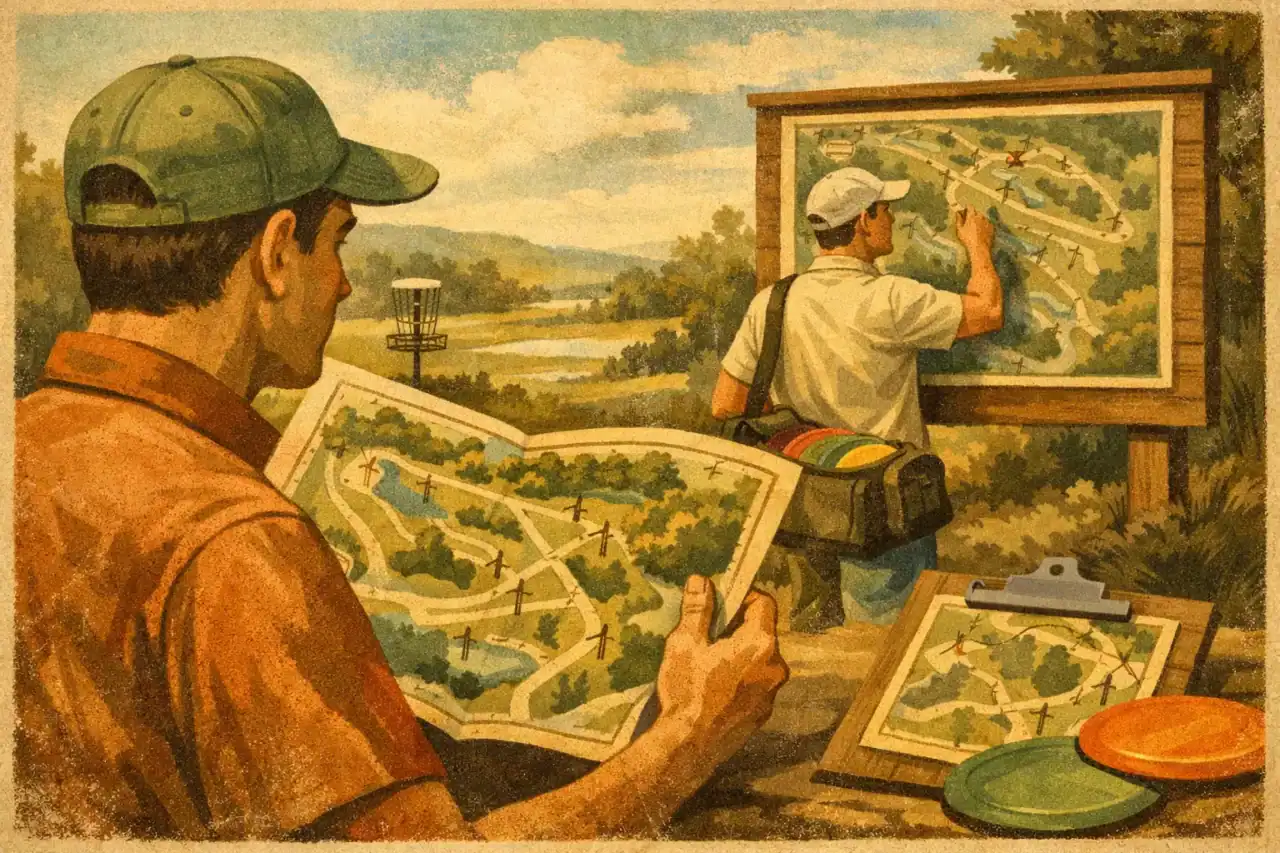
A player standing at hole 1 should not have to guess where hole 2 starts, whether a mando is in play, or which path leads back to parking. That is exactly where disc golf course maps prove their value. They reduce confusion immediately, set the tone for the entire round, and help your course feel organized, intentional, and ready for repeat play.
For course managers, clubs, parks departments, and volunteer-led projects, a map is not just a nice extra. It is a working part of the course infrastructure. When it is done well, it improves flow, supports safety, reinforces branding, and gives new players the confidence to keep moving without stopping to ask for directions at every turn.
Why disc golf course maps matter more than most courses realize
A well-designed map does two jobs at once. First, it helps people navigate the property. Second, it communicates that the course is being maintained to a higher standard. Players notice that difference right away.
The navigation side is obvious. People need to know where they are, where they are going, and what to expect on the next hole. But the operational value is just as important. Clear maps reduce wandering across fairways, limit backups caused by uncertainty, and cut down on first-time player frustration. On larger properties, wooded layouts, or multi-use parks, that clarity becomes even more important.
There is also a reputational benefit. Courses with polished signage and readable mapping feel established. That matters to municipalities evaluating park improvements, clubs recruiting support, and organizers trying to build community buy-in. If your course looks thoughtfully planned on the tee and at the kiosk, players assume the rest of the experience will be more professional too.
What good disc golf course maps actually include
The best maps are simple to read but detailed enough to answer real questions. That balance is where many projects succeed or fail.
A useful course overview map should show the full layout, hole sequence, tee and basket locations, walking paths where needed, parking, practice areas, kiosks, restrooms, and any key park features that affect movement through the property. If the course shares space with trails, playgrounds, roads, or athletic fields, those should be clearly shown as well. This is not just for convenience. It helps players understand where caution is needed.
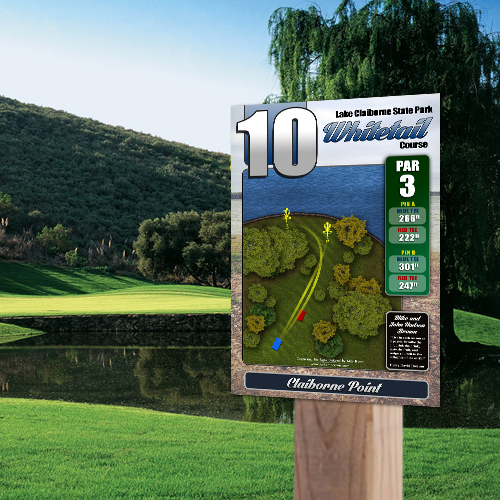
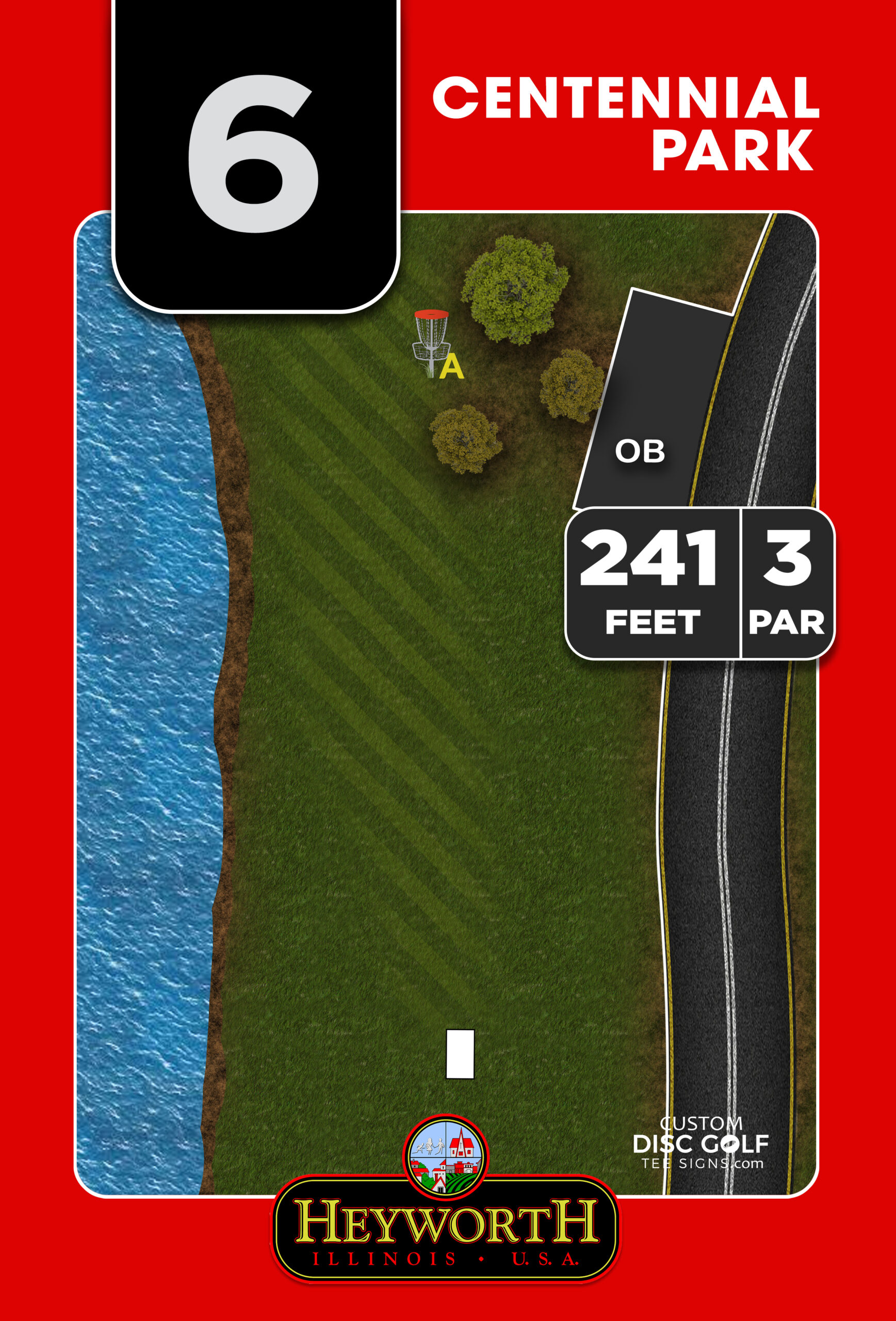
At the tee sign level, hole maps need to show the fairway shape, distance, basket placement, major obstacles, out-of-bounds areas, mandatories, elevation cues when relevant, and the next tee direction. That last part gets overlooked more often than it should. A beautiful hole graphic loses value fast if players still walk in circles after they finish the putt.
The strongest map designs do not try to show everything at once. They prioritize readability. Clean linework, consistent icon use, strong contrast, and disciplined label placement matter more than decorative extras. In practice, that means a map should be understandable in a few seconds from a standing position outdoors, not only when someone leans in and studies it.
Course overview maps vs. tee sign maps
It helps to think of mapping as a system rather than a single sign. One overview map at the entrance cannot carry the full navigation load for 18 holes, and tee signs alone cannot orient a first-time visitor to the entire property.
A course overview map works best at the main kiosk, parking area, or gathering point. It gives players the big picture before they start. This is where you show how the course loops, where hole 1 begins, and how players return to central amenities or the lot.
Tee sign maps handle the in-round decisions. They show how to play the hole and where to go next. If your course has alternate pin positions, multiple tees, split fairways, or championship layouts, tee-level mapping becomes even more critical.
Some courses also benefit from transition signs between long walks or confusing crossings. Not every project needs them, but some absolutely do. A wooded course with several hidden tee pads has different navigation demands than an open park layout with strong sightlines.
The biggest mistakes in course map design
Most map problems come from one issue: trying to solve every problem with artwork alone. Good design helps, but it cannot fix missing information or poor planning.
One common mistake is inaccurate scaling or unclear orientation. If players cannot tell where they are relative to the fairway or path system, the map creates hesitation instead of confidence. Another is clutter. Too many labels, textures, colors, or sponsor elements can overwhelm the actual play information.
Durability mistakes are just as costly. A sharp-looking map printed on the wrong material can fade, peel, or lose legibility faster than expected. Outdoor signage has to handle sun, moisture, handling, and routine wear. If the course plans to keep signs installed for years, substrate choice and UV protection are not minor details.
There is also a workflow issue many organizations run into. They gather rough sketches, old measurements, and differing opinions from multiple stakeholders, then send everything out without a clear review process. That leads to delays, inconsistent signs, and avoidable revisions. A structured proofing process matters because map projects involve real coordination.
How to plan disc golf course maps for a real project
The most efficient course map projects start with accurate field information. Before any design work begins, gather current hole distances, tee and basket locations, alternate layouts, OB rules, mandatory routes, and any navigation trouble spots that players already mention. If there are known problem areas between holes, document them early.
Next, decide what the signage system needs to do. Some courses need a straightforward refresh with clean tee signs and one overview map. Others need a more complete standardization project with sponsorship areas, premium materials, and elevated branding across the whole property. The right scope depends on your goals, budget, and how long you want the system to serve the course before future updates.
Then think about who needs to approve the design. Clubs, parks departments, municipal boards, donors, and volunteer leaders often all have input. It helps to establish one point of contact who can consolidate feedback. That keeps revisions manageable and helps the project move on schedule.
Sponsorship and fundraising value
For many public and community-supported courses, map signage is easier to fund when sponsorship is built into the design from the beginning. That is especially true for tee signs, but overview displays can support sponsor recognition as well if the layout is handled carefully.
The key is balance. Sponsorship space should feel integrated, not like it was added as an afterthought or allowed to overpower the map itself. A course sign still has to perform its primary job first. When sponsor placement is planned professionally, it helps offset project costs without sacrificing readability.
This matters for Eagle Scout projects, club-led upgrades, and municipal improvements where budgets are tight and accountability matters. A sponsor-friendly signage package gives organizers a clearer path to funding while also delivering a more polished final result.
Why material and production choices matter
A map is only as useful as its condition after a season or two outdoors. That is why production quality should be part of the planning conversation early, not at the end.
Aluminum composite and aluminum are popular for a reason. They hold up well, support full-color graphics, and present a professional finish suitable for public spaces. Pair that with UV-protected printing, and the map remains readable and presentable much longer than lower-grade alternatives.
Fast turnaround also matters more than people expect. Signage projects often align with course openings, upgrades, events, or funding deadlines. A delayed map package can hold up the whole improvement timeline. Working with a provider that understands disc golf-specific layouts, proofing, and production reduces friction across the project.
At Custom Disc Golf Tee Signs, that niche focus is part of the value. Disc golf mapping is different from general outdoor signage because it has to communicate play, movement, and safety clearly in a sport-specific format.
A better map creates a better round
When players know where to go, what they are looking at, and how the course is meant to flow, the round feels smoother from the first tee onward. That experience matters whether your audience is first-time park visitors, league regulars, tournament players, or a city official evaluating the property.
Disc golf course maps are not just informational panels. They are part of how your course presents itself, how efficiently it functions, and how confidently people use it. If your current signage leaves players guessing, the right map system does more than clean up the look of the course. It makes the entire facility easier to trust, easier to enjoy, and easier to support.