Custom Artwork vs Sign Templates for Courses

A tee sign project usually looks simple until the first proof goes around. Someone wants cleaner branding. Someone else needs better hole maps. A sponsor asks for logo placement. Then the big question shows up: custom artwork vs sign templates.
For disc golf courses, that choice affects more than appearance. It changes how clearly players navigate, how professionally the course is perceived, how easily sponsors buy in, and how well the final sign package holds up as a long-term improvement instead of a temporary fix. If you are planning signage for a city park, club-led course upgrade, private facility, or community project, the right answer depends on what your course actually needs to communicate.
What custom artwork vs sign templates really means
A sign template is a prebuilt layout. It gives you a standard arrangement for elements like hole number, par, distance, map, rules, and logos. Templates are useful because they create consistency quickly and reduce design time. For straightforward projects, that can be enough.
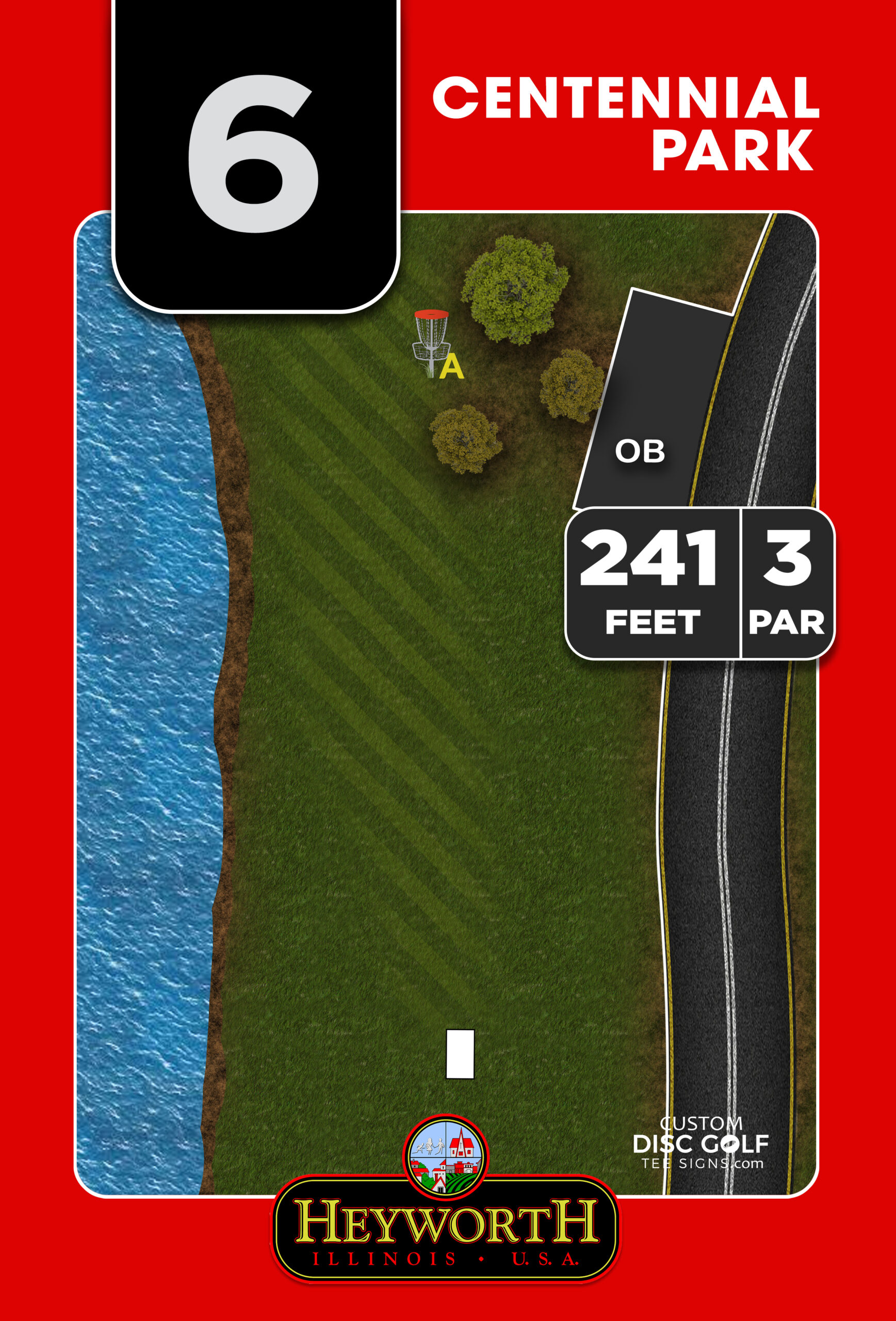
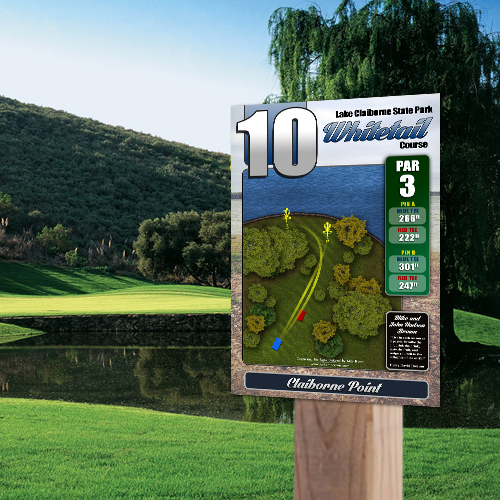
Custom artwork starts from the course itself. The layout, map styling, branding, sponsor areas, icons, color use, and visual hierarchy are all built around your specific holes and your goals for the player experience. Instead of forcing your information into a fixed format, the design is shaped to fit the information.
That distinction matters in disc golf because tee signs are not generic directional signs. They need to communicate the hole clearly, fit the terrain, support the course identity, and often make room for sponsors without cluttering the sign face.
When sign templates make sense
Templates have a legitimate place, especially when speed and budget are the top priorities. If a course needs basic navigation signs, consistent numbering, and simple hole details, a template can move a project forward without overcomplicating it.
For smaller installations, temporary upgrades, or very limited funding, templates can be a practical starting point. They are also easier for groups that need to standardize signs across many holes with minimal back-and-forth. If the hole maps are simple and the branding requirements are light, a clean template may cover the essentials.
The benefit is predictability. Decision-makers know roughly what they are getting, approvals tend to move faster, and production is often more straightforward.
But the trade-off is just as important. Templates are efficient because they are standardized. That same standardization can become a limitation when your course has unusual fairway shapes, multi-pin placements, heavy elevation changes, multiple tee pads, or sponsors that need dedicated placement.
Where templates start to fall short on disc golf courses
Disc golf signage has to do more than fill space with data. It has to guide a player standing on a tee pad, often making a quick decision while looking down a fairway with trees, bends, blind landings, or safety concerns. A generic layout does not always handle that well.
The most common issue is map clarity. A template may technically include a map area, but if the map box is too small or the layout does not support the shape of the hole, the player gets less usable information. On a simple open hole, that might be fine. On a wooded par 4 with a dogleg and an out-of-bounds line, it is not.
Branding is another limitation. Municipalities, clubs, and private courses often want signs that look like part of a complete facility upgrade, not a collection of stock layouts. If every course in the region could use the same template, the signage will not do much to set your course apart.
Sponsor placement is also a real concern. Many courses rely on local business sponsorships to help fund improvements. Template-based signs often treat sponsor logos like an afterthought, squeezed into whatever space is left. That can make the sign look crowded and reduce sponsor value at the same time.
Why custom artwork often delivers better long-term value
Custom artwork costs more effort on the front end because it is built around your course, but that is exactly why it performs better over time.
A well-designed custom tee sign improves readability first. The hole information is arranged in a way that matches how players actually scan a sign. The important elements stand out. Distances and pars are easy to find. The map is sized and drawn for that hole, not forced into a generic frame. If there are alternate positions, hazards, mando routes, or next tee guidance, those details can be prioritized correctly.
Custom artwork also helps establish a higher standard for the entire property. When signs are designed as part of a complete course identity, the course feels more organized, more permanent, and more professionally managed. That matters for public perception, tournament presentation, parks department approval, and sponsor confidence.
There is also a practical maintenance advantage. With a custom design system, future updates are easier to manage because the course has a defined visual standard. If a basket location changes or a hole gets redesigned, the update does not need to look patched together.
Custom artwork vs sign templates for sponsorships
If sponsorships are part of your funding plan, custom artwork usually gives you a stronger return.
Sponsors want visibility, but they also want to be associated with something polished. A sign that looks professionally designed gives their logo a better setting. It signals that the project is organized and worth supporting. That can help clubs and municipalities secure more local buy-in.
More importantly, custom artwork lets sponsor space be built into the design from the beginning. That means logos can be placed cleanly, consistently, and at an appropriate size without competing with hole information. The result is a sign that works for players and still delivers real sponsor recognition.
This is one area where a one-size-fits-all template often creates friction. If sponsorship space is added late, the sign can feel crowded. If the sponsor area is too small, local businesses may not see enough value. Good custom design avoids both problems.
The approval process matters too
For many courses, the challenge is not just design. It is coordination. Clubs, parks staff, board members, volunteers, and donors may all have input. That is why workflow matters almost as much as artwork.
Templates can reduce the number of design decisions, which is helpful when a group wants the fastest path to production. But they can also create frustration if stakeholders feel boxed in by a layout that does not reflect the course well.
Custom artwork works best when there is a clear proofing process. Decision-makers can review layouts, confirm branding, check maps, and refine sponsor placement before anything goes to print. That extra structure helps avoid the more expensive problem of installing signs that look generic, confusing, or outdated the moment they arrive.
For disc golf facilities investing in durable materials and full-course signage, taking the time to get the design right is usually the smarter move.
How to decide between custom artwork and sign templates
The best choice depends on the role signage needs to play on your course.
If your goal is basic identification and simple navigation, and the course layout is straightforward, templates can be a reasonable solution. They are especially useful when budget is tight and customization is not a high priority.
If your goal is to elevate the course image, improve player understanding of each hole, create sponsor-friendly signage, and build a cohesive system that reflects the quality of the facility, custom artwork is usually the better investment.
That is especially true for championship-level courses, municipal upgrades, destination courses, and projects where signage is part of a broader improvement effort. In those cases, signs are not just markers. They are part of how the course presents itself every day.
A smarter standard for disc golf signage
Disc golf courses are judged by details. Players notice whether signage is clear, whether maps make sense, whether branding feels intentional, and whether the course looks cared for. Those details influence first impressions and repeat play more than many course operators realize.
That is why the debate around custom artwork vs sign templates is really a question about priorities. Are you trying to check a box, or are you building signage that improves the course experience and supports the long-term image of the facility?
For many organizers, the best answer is not the cheapest starting point. It is the option that gives the course a cleaner presentation, better communication, and more value from every installed sign. Custom Disc Golf Tee Signs focuses on that standard because disc golf signage works best when it is built for the course, not borrowed from a generic layout.
If your course deserves signage that looks intentional, reads clearly, and gives sponsors a professional place on the property, it is worth choosing the design approach that still feels right years after installation.