Can Course Maps Reduce Player Confusion?

A player finishes Hole 7, looks down the fairway, and sees three worn paths leading into the woods. One route reaches Hole 8. Another leads back toward the parking lot. The third cuts through an active fairway. That small moment of uncertainty can slow a round, frustrate first-time visitors, and make an otherwise well-designed disc golf course feel unfinished. Can course maps reduce player confusion? In most cases, yes – provided they are designed around the actual decisions players need to make on site.
For course managers, park departments, clubs, and volunteer organizers, navigation is not a cosmetic upgrade. It affects pace of play, safety, accessibility, maintenance, and the overall impression a facility leaves with players. A clear course map gives visitors confidence from the moment they arrive and helps them keep moving when the course becomes unfamiliar.
Why Player Confusion Happens on Disc Golf Courses
Most player confusion is not caused by a single bad sign. It comes from a series of small information gaps. A player may not know where the first tee is located, whether a course has multiple layouts, where the next tee begins, or how to return to the parking area after the final basket. On wooded properties, multi-use parks, and courses with long transitions between holes, those gaps become more noticeable.
Local players can often navigate by memory. New players, tournament visitors, families, and travelers cannot. They are reading the course in real time, often while carrying bags, watching for other groups, and trying to understand unfamiliar terrain. If the navigation system relies on word of mouth, faded arrows, or a phone signal that may not be reliable, the course puts the burden back on the player.
Confusion also increases when a course has evolved over time. A new basket location, added alternate tee, rerouted path, or revised layout can leave older signs inaccurate. Even a high-quality tee sign cannot solve the full navigation problem if the player never finds the correct tee in the first place.
Can Course Maps Reduce Player Confusion at the Right Moments?
A course map works best when it answers questions before they become problems. It should give players a clear starting point, establish the course flow, and show the landmarks that make the property easier to understand. That may include parking, restrooms, practice baskets, pavilions, roads, water crossings, trail junctions, and the location of each tee and basket.
An overview map at the entrance or parking area is especially valuable because it gives players the big picture. Before throwing a disc, they can see whether the course loops back to the start, where the longer walks occur, and which areas require extra attention. This is useful for casual players deciding whether they have time for 18 holes, as well as tournament directors planning staging, spectator movement, and event traffic.
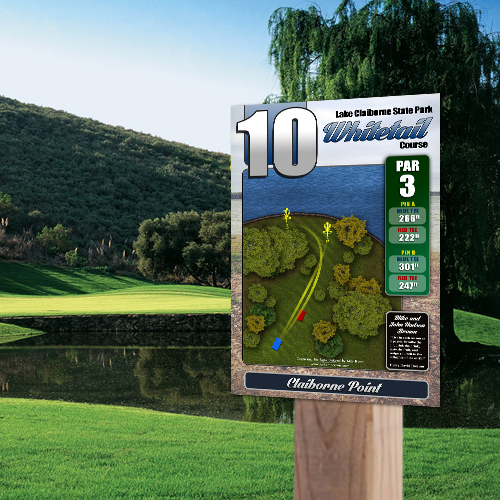
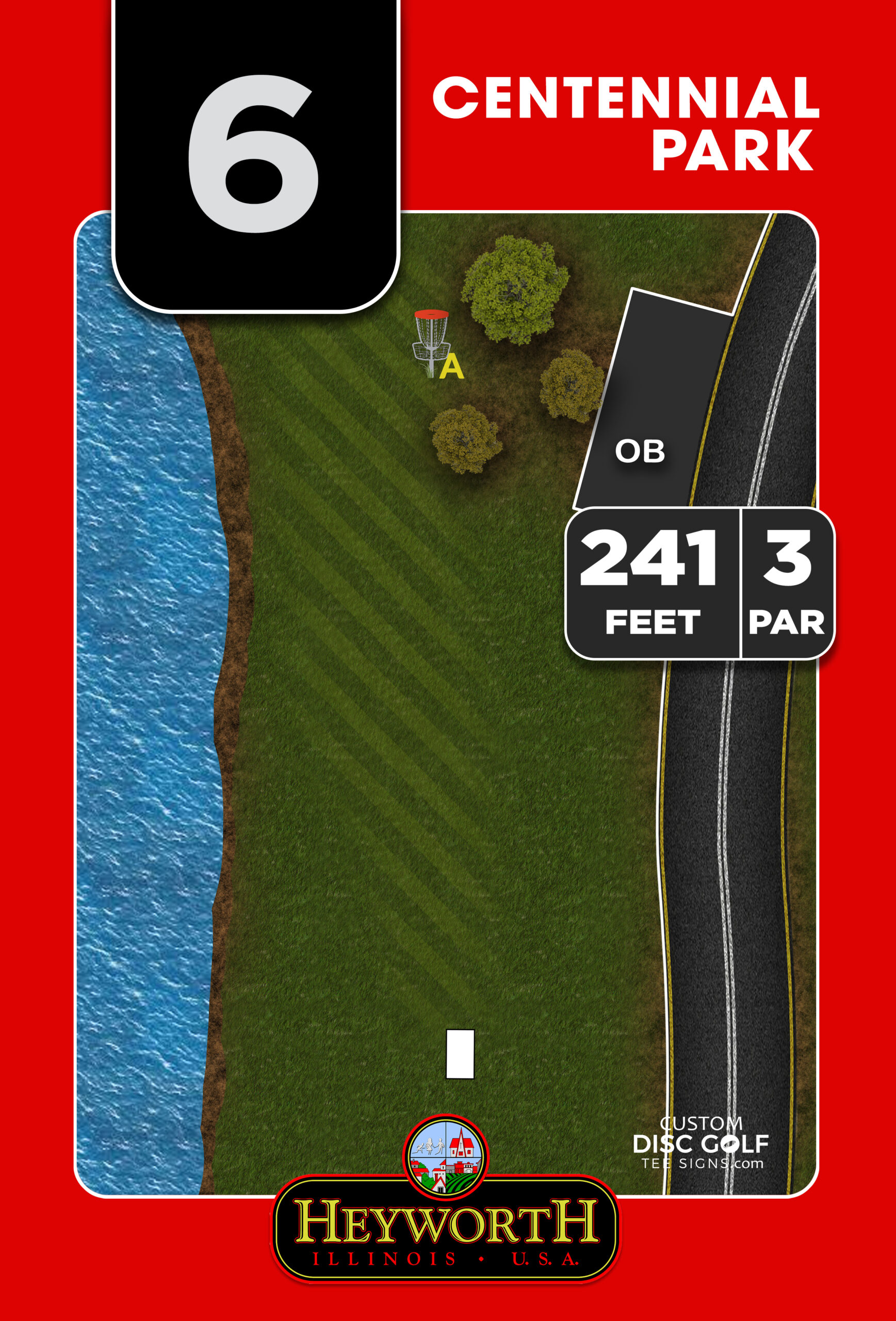
The map cannot carry every detail by itself. Players still need clear tee signs and directional next-tee signage at critical transitions. Think of the system as layers of information. The overview map explains the whole property. The tee sign explains the hole in front of the player. Directional signs confirm where to go next.
When these pieces use matching colors, numbering, typography, and layout names, players do not have to reinterpret the course at every stop. They simply follow a consistent visual system.
What a Useful Disc Golf Course Map Should Show
The most effective maps are not necessarily the most crowded. Their job is to make decisions easy at a glance. A clean map should prioritize course flow over decorative detail, while still reflecting the identity of the facility.
At minimum, a public-facing course map should clearly identify the starting location, hole sequence, basket positions, tee locations, major paths, and the route from Hole 18 back to parking or other amenities. If the course offers short and long tees, multiple basket positions, or separate beginner and championship layouts, those options need unmistakable labels and color separation.
Course-specific features deserve attention as well. A creek that creates an out-of-bounds risk, a bridge that connects two course sections, or a road that divides the property can orient players far better than a generic green-and-gray diagram. Maps should also show facilities that matter during a round, such as restrooms, drinking water, shelters, and emergency access points when appropriate.
Design for a Player Standing Outside
A map viewed on a computer screen may look excellent and still fail at the course entrance. Outdoor viewing conditions are different. Players may be reading from several feet away, in bright sunlight, while rain spots cover the surface, or while a group waits behind them.
That is why strong map design uses large labels, high-contrast colors, simple icons, and a clear visual hierarchy. Hole numbers must remain readable without forcing players to step close to the sign. Dense aerial imagery can be helpful, but only if it does not hide the route players need to follow.
Orientation matters too. Whenever practical, the map should relate to the direction a player is facing. A north arrow helps, but a layout that feels intuitive from the sign location reduces the mental work required to get started.
Separate Course Information From Park Clutter
Municipal parks often contain playgrounds, ball fields, walking trails, picnic areas, and other amenities. Some belong on the map, especially when they help with orientation or create a safety consideration. Others can make the map harder to use.
The right balance depends on the property. A compact dedicated disc golf course may need little beyond holes and key amenities. A large multi-use park may need more context to help players avoid restricted areas and understand crossings. The goal is not to document every feature. It is to show the information that supports safe, confident movement through the course.
Maps Improve More Than Navigation
Clear course maps can improve pace of play because groups spend less time searching, backtracking, or debating where the next hole begins. This matters on busy weekends and during leagues, when one lost group can create a bottleneck behind it.
They also support safety. Players who know the intended route are less likely to walk into an adjacent fairway, cross an unsafe area, or take informal shortcuts through sensitive landscaping. On larger public properties, maps can help park staff direct visitors and reduce the number of basic wayfinding questions they need to answer.
There is a reputation benefit as well. Players notice when a course feels cared for. A professionally designed map, coordinated tee signs, and durable directional signs tell visitors that the facility values their experience. For municipalities and park departments, that presentation reflects well on the entire recreation system. For clubs, it can make a strong first impression on prospective members, sponsors, and tournament guests.
The Trade-Off: Maps Must Be Accurate and Maintainable
A course map is only helpful if it reflects the course players encounter. An outdated map can create more confusion than no map at all, particularly after a major redesign. Before production, course leadership should confirm hole numbers, current tee and basket positions, layout names, paths, property boundaries, and any areas that should not be shown publicly.
It also helps to decide how future changes will be handled. If basket positions rotate frequently, a fixed map may need a simpler approach that identifies permanent targets and directs players to current layout information at the kiosk or tee. If the course has stable layouts, detailed full-color mapping can be a long-term asset.
Material selection is part of the maintenance plan. Outdoor signs need UV-protected printing and durable substrates that hold up against sun, rain, temperature swings, and routine park use. Fading colors and peeling graphics quickly reduce readability, even when the original design was strong. A durable aluminum or aluminum composite sign can protect the investment and keep the information clear through years of play.
Build the Map Into a Complete Signage Plan
The strongest projects begin with a walk-through of the player journey. Start at the parking lot and ask what a first-time visitor needs to know at each point: where to park, where to find Hole 1, which layout to play, how to reach the next tee, and where the round ends. This process reveals where an overview map is needed and where a smaller directional sign will do more good.
It is also the right time to plan sponsorship space. A well-organized sponsor area can help offset project costs without interfering with course information. Sponsors should support the map, not compete with it. Keeping logos contained in a consistent area preserves clarity while giving local businesses visible participation in a course improvement effort.
Custom Disc Golf Tee Signs helps organizations turn verified course information into coordinated, full-color signage systems, with proofing before production so stakeholders can review the details. That process is particularly useful when a project involves a club, city staff, donors, or an Eagle Scout coordinator who needs everyone aligned before signs are installed.
A course map will not replace thoughtful course design or every directional marker. It can, however, remove the avoidable uncertainty that interrupts a round. Give players a clear view of where they are, where they are going, and how the course fits together, and your facility immediately feels easier to play and easier to recommend.