Disc Golf Fundraiser Signage Example That Works
A new tee sign can do more than identify Hole 7. When it gives a local business a visible, professional place on the course, it can help pay for the sign itself. That is the value behind a strong disc golf fundraiser signage example: it shows sponsors exactly what they receive, gives organizers a clear package to sell, and creates an on-course system players can actually use.
For clubs, park departments, and volunteer-led course projects, fundraising signage works best when it is planned as part of the course improvement project, not added as a last-minute logo box. Sponsors are supporting a public recreation asset. The signage should make that investment look worthwhile while keeping navigation, hole information, and course branding easy to read.
What a Disc Golf Fundraiser Signage Example Should Show
A sponsor pitch is easier to approve when a prospective partner can see the finished product. Instead of saying, “Your logo will be on a sign,” show a proof-style example with the essential information already organized.
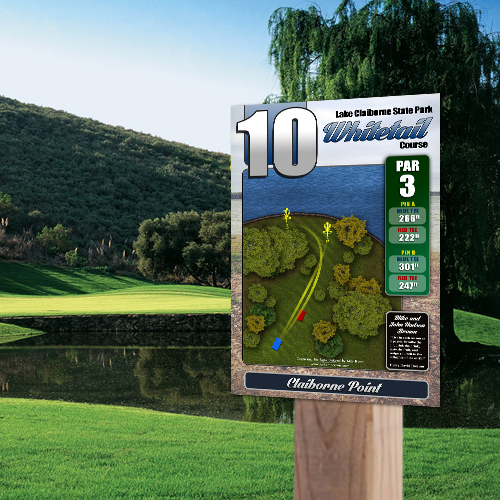
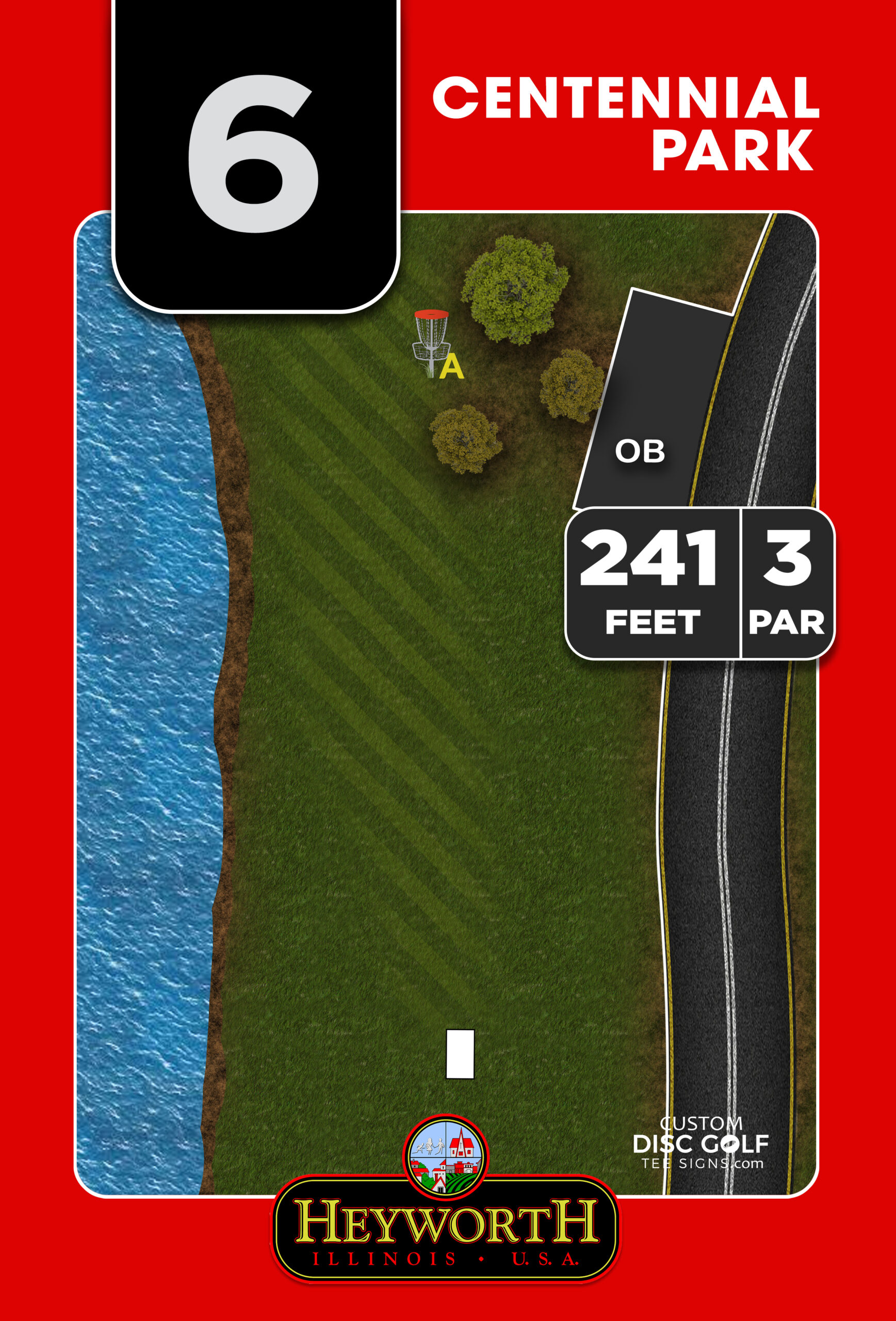
Picture an 18-hole public course preparing to replace faded, mismatched tee markers. Its fundraiser sign for Hole 4 includes a full-color hole map, the hole number, par, distance from each tee pad, a directional arrow, and simple course branding across the header. Along the bottom is a dedicated sponsor panel: “Hole 4 Sponsored by Pine Ridge Physical Therapy,” followed by the sponsor logo, phone number, and a short line such as “Keeping our community moving.”
The sponsor panel is visually distinct without overpowering the hole map. A player standing at the tee can find the basket, understand the intended route, and recognize the sponsor in a matter of seconds. That balance is the point. The business gains repeated, relevant exposure, while the course receives durable infrastructure rather than a temporary banner or a crowded bulletin board.
A clear example also answers practical questions before they slow down the sale. It shows the sponsor’s logo size, where contact information appears, whether every hole has an individual sponsor, and how course-wide supporters will be recognized.
Start With the Funding Goal, Not the Sign Layout
Before building a sponsor packet, calculate the project total. Include tee signs, course map or kiosk signage, design work, posts or mounting hardware if needed, installation, and a modest contingency for site conditions. The goal is not simply to sell every available logo placement. It is to raise enough money to deliver a cohesive system that brings the course to a higher standard.
For example, an 18-hole course may decide that hole sponsors will contribute $350 each. If all 18 placements are sold, the project raises $6,300. That may cover a basic navigation package, while a course that wants detailed maps, multiple tee distances, premium materials, or custom-shaped signs may need a higher sponsorship level or additional course-wide partners.
There is no universal price that fits every community. A busy municipal course with league play, tournaments, and steady daily traffic can often justify a higher annual rate than a lightly used course with limited visibility. Local business budgets matter too. The right price is one that feels credible to sponsors and supports the quality level the course needs.
Avoid setting a low sponsor price simply because it feels easier to sell. Cheap placements can create a large coordination burden while leaving the project underfunded. Conversely, a premium package needs a clear reason behind it: longer sponsorship terms, stronger logo visibility, high-quality full-color artwork, durable materials, or inclusion on a course map sign.
Build Sponsor Packages That Are Easy to Explain
The most effective fundraiser programs limit choices. A small business owner should be able to understand the offer in one conversation and approve it without sorting through a complicated menu of add-ons.
A practical structure might include hole sponsorships as the primary package, plus one or two higher-visibility options. Hole sponsors receive a logo placement on their assigned tee sign for an agreed term, commonly one to three years. A presenting sponsor may receive larger recognition on the course overview sign, first placement in printed or digital event materials when applicable, and recognition across multiple signs. Community supporters who contribute at a lower level can be listed together on a donor panel near the first tee or course kiosk.
Be precise about what is included. State the logo location, approximate panel size, term length, replacement policy, and whether artwork setup is included. If a sponsor wants a larger message, a QR code, or a custom ad treatment, decide in advance whether it fits the design system. Too many exceptions can make the course look inconsistent and complicate production.
Sponsor recognition also needs boundaries. Public courses serve players of all ages, and municipal partners may have content standards. Keep messages appropriate, concise, and compatible with the course identity. The signage should feel like a well-managed community asset, not an assortment of unrelated advertisements.
Make the Sign Work for Players First
Fundraising succeeds over time when players see that sponsor dollars produced a real improvement. A tee sign that looks attractive but omits useful navigation will frustrate players. One that contains too much sponsor copy will be ignored.
Give the hole information the largest visual priority. The hole number, map, par, distance, and next-tee guidance should be legible from a normal standing distance. Use strong contrast and avoid tiny text. If the hole has a blind basket, OB, a mando, or a safety concern, the map should communicate it clearly. For multi-tee courses, distance information must be organized so players do not have to hunt for the correct number.
The sponsor area should be consistent from sign to sign. A standard lower panel or side panel makes the sponsorship program feel intentional and gives businesses equal treatment. It also protects the course map from being redesigned every time a new sponsor comes aboard.
Material selection matters here. Paper inserts, vinyl decals, and unprotected prints may cost less at the start, but frequent sun exposure, moisture, and impacts can quickly undermine the project. Durable UV-protected aluminum composite or aluminum signage supports a better long-term presentation, especially on public courses where signs receive daily use. A fundraiser should fund an improvement that lasts.
Use the Example During Sponsor Conversations
When approaching businesses, lead with the local outcome. Explain what the project fixes: outdated tee information, confusing navigation, limited course branding, or an incomplete map system. Then show the signage example and point out where their business would appear.
A straightforward message works well: “We are upgrading the course with full-color, durable tee signs that include accurate hole maps and local sponsor recognition. Your sponsorship helps fund a permanent improvement used by players, families, leagues, and tournament visitors throughout the year.”
Bring a one-page proposal that includes the sign rendering, sponsorship cost, term, audience description, and payment deadline. If the course has usage figures, league attendance, tournament participation, or park visitation data, use it carefully and honestly. Sponsors do not need inflated claims. They need confidence that the placement is visible, local, and connected to a positive community experience.
It also helps to set a firm artwork deadline. Sponsors often delay sending logos, which can hold up the entire project. Request vector artwork when possible, but accept that many small businesses will only have a PNG or JPG. A disc-golf-focused design partner can evaluate available files, create a proof, and keep sponsor branding consistent with the overall sign system.
Plan for Approval, Proofing, and Future Changes
For municipal and public-course projects, get approvals early. Park staff, city communications teams, land managers, or board members may need to review sponsor categories, logo placement, sign dimensions, colors, and installation plans. A sample sign gives these stakeholders something concrete to approve before sponsors are sold.
Create a simple workflow: confirm the sign count and package, secure stakeholder approval, sell sponsorships, collect payment and artwork, review design proofs, then send final files to production. This prevents a common mistake: promising a sponsor a placement that the course manager later rejects.
Decide how renewals will work before the first signs go in. Sponsors may renew annually, retain the placement for a multi-year term, or be replaced at the end of the agreement. If individual sponsor panels need updating later, a modular layout can reduce replacement costs. But if the whole sign is due for an update, replacing it as a complete, color-matched unit may provide a cleaner result. The right approach depends on the expected sponsor turnover and the condition of the course data.
Custom Disc Golf Tee Signs helps organizers turn this type of concept into a coordinated proofing and production process, from course-specific artwork through durable full-color signs and sponsor placement planning.
The best fundraiser signage does not ask businesses to rescue a project with a donation. It invites them to visibly support a course improvement that players will notice every round. Show the finished standard, protect the player experience, and give every sponsor a professional place in the result.