If you’ve ever replaced tee signs sooner than expected, you already know this is not just a design decision. Choosing the best material for disc golf tee signs affects how your course looks, how long your investment lasts, and how much maintenance your team takes on over the next several seasons.
For course managers, park departments, clubs, and volunteer-led projects, the right answer is usually not the cheapest panel on day one. It is the material that holds color, handles weather, resists abuse, and still looks professional after years of sun, rain, mowers, weed trimmers, and heavy play. That is where material choice starts to matter.
What is the best material for disc golf tee signs?
For most public and private courses, aluminum composite material, often called ACM, is the best material for disc golf tee signs. It offers an excellent balance of durability, print quality, weather resistance, cost control, and clean professional appearance. It is especially well suited for full-color hole maps, sponsor panels, QR codes, branding, and course information that needs to stay readable outdoors.
Solid aluminum is also a strong choice, especially for high-impact environments or courses that want a more premium metal substrate. It tends to cost more, but it performs extremely well in outdoor conditions and supports long-term signage programs where durability is the top priority.
That said, the best fit depends on the course. A city park with tight budget oversight may need a different solution than a championship-level installation, a state park, or an Eagle Scout project trying to maximize sponsor visibility.
Why material choice matters more than most courses expect
A tee sign does several jobs at once. It helps players navigate, shows distance and layout, reinforces branding, creates room for sponsorships, and sets the visual standard for the entire property. If the material fails, all of those benefits fade at the same time.
Faded graphics make hole maps harder to read. Warped or damaged panels make the course look neglected even if the fairways are in great shape. Low-grade materials can also create hidden costs because staff or volunteers end up replacing signs one section at a time instead of finishing the project once and moving on.
For decision-makers, this is why material should be evaluated as part of the full system, not as a standalone line item. The sign face, the printed graphics, the UV protection, the mounting method, and the exposure level of the course all work together.
Comparing the most common tee sign materials
Aluminum composite material
ACM is one of the most practical choices in disc golf signage today. It consists of a composite core sandwiched between thin aluminum faces, which gives it rigidity without excessive weight. That matters on larger tee signs where you want a clean, flat panel that is easier to ship, install, and mount securely.
For most courses, ACM hits the sweet spot. It handles outdoor exposure well, supports high-resolution full-color graphics, and gives clubs and municipalities a polished look without pushing the project into premium-metal pricing. It is particularly effective when your sign design includes hole maps, par, distance, directional cues, logos, and sponsor placements that need strong visual clarity.
The trade-off is simple. While ACM is highly durable, it is still not the same as a thicker solid metal panel in extreme abuse conditions. If your course sees frequent vandalism, repeated direct impact, or very rough treatment, you may want to consider stepping up to solid aluminum.
Solid aluminum
Solid aluminum is a premium option for courses that want maximum material confidence. It is highly weather resistant, does not rust, and performs extremely well over time when paired with quality printing and UV protection. If your goal is long-term infrastructure with fewer compromises, aluminum deserves serious consideration.
This material is often a smart fit for municipalities, destination courses, state parks, and organizations investing in a full course upgrade. It looks substantial, performs well in harsh outdoor settings, and supports a professional presentation that matches the quality of the course itself.
The main trade-off is cost. Aluminum typically comes in at a higher price point than ACM, so the question becomes whether the extra durability aligns with the course environment and budget. For some projects, it absolutely does. For others, ACM delivers more than enough performance while preserving funds for kiosks, course maps, or additional signs.
Wood
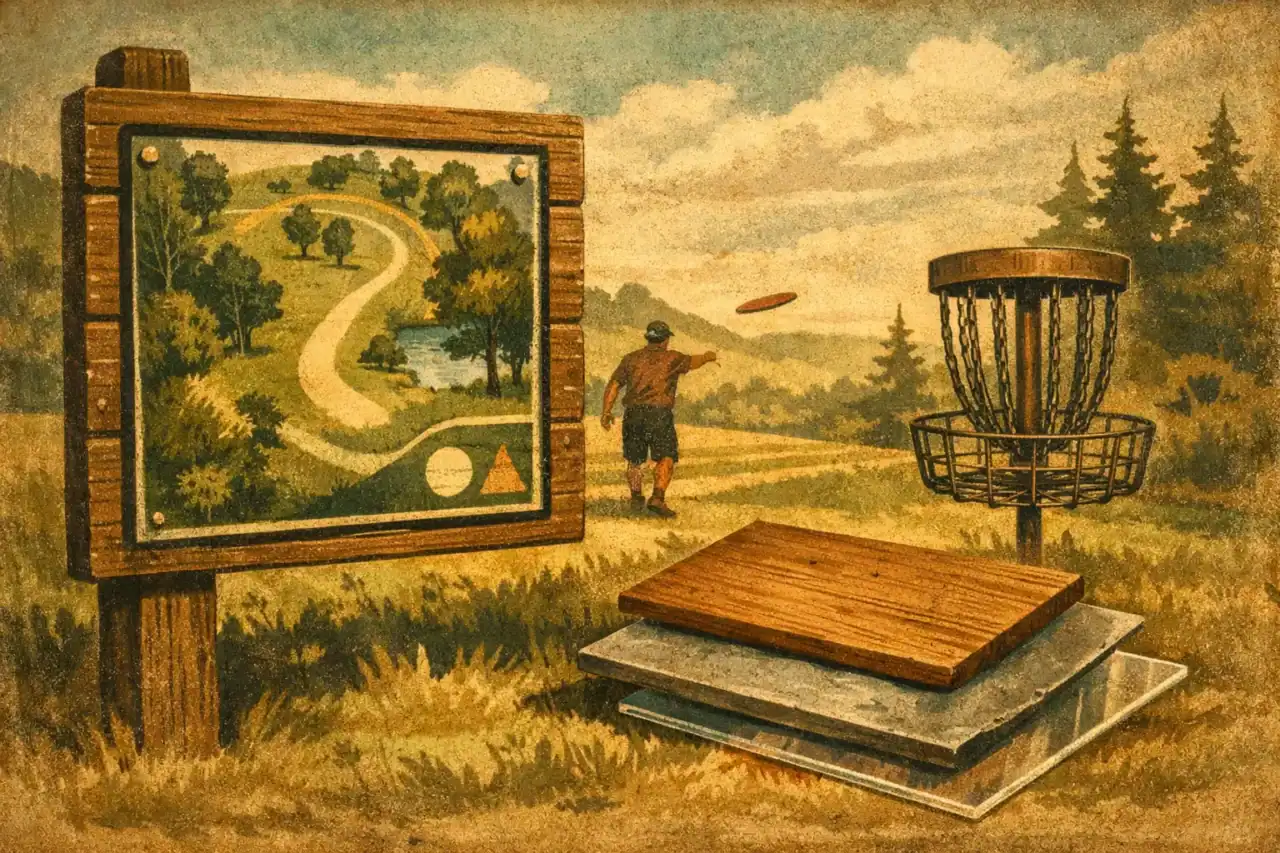
Wood has a rustic appeal that some courses like, especially in heavily wooded settings or parks that want a natural look. But as a tee sign substrate, wood creates limitations quickly. It can absorb moisture, crack, split, fade, and age unevenly. It also tends to offer less consistency for detailed, full-color graphics.
Wood can work for carved or simple directional signage, but it is rarely the best material for modern tee signs that need accurate layouts, sponsor placement, and long-term readability. If your course is trying to raise its visual standard, improve navigation, and maintain a consistent branded appearance, wood usually introduces more maintenance than value.
Plastic and laminated panels
Lower-cost plastic panels or basic laminated sign systems may look appealing during budget planning, but they often struggle over time. Sun exposure can lead to fading, brittleness, or curling. Surface wear becomes visible faster, especially on heavily used public courses.
These materials can make sense for temporary installations, pilot layouts, or very short-term use. They are much less ideal for a permanent course improvement project where durability and presentation matter. When a course wants signs that look official and hold up, plastic usually feels like a compromise.
The best material for disc golf tee signs depends on your course type
A neighborhood park course with limited funding may prioritize cost efficiency and sponsor integration. In that case, ACM is often the strongest value because it keeps the project professional without overspending. A private club or tournament destination may lean toward aluminum because the course is part of a broader premium experience.
Exposure also matters. Open courses with long hours of direct sun need strong UV-resistant printing and a substrate that will not break down under heat. Courses in humid or wet climates need materials that resist moisture-related deterioration. High-traffic public parks may need a sign face that can stand up to repeated contact, rough handling, and occasional abuse.
This is why blanket recommendations only go so far. The best answer comes from matching the material to the actual conditions of the property and the expectations of the people managing it.
Don’t separate material from print quality and protection
A good substrate can still underperform if the graphics are poorly produced. Tee signs are only as good as the full production method behind them. High-resolution layouts, proper color printing, and UV protection all play a major role in how the finished sign performs outdoors.
This matters even more for disc golf because tee signs carry a lot of visual information. Distances, fairway shapes, out-of-bounds notes, next-tee arrows, sponsor logos, and branding all need to stay legible. If a sign fades too quickly or loses surface quality, the material itself may get blamed when the real issue is incomplete production planning.
That is why a specialized signage partner matters. Disc golf courses need more than a flat panel with ink on it. They need a sign system designed around actual outdoor use, course-specific layouts, and long-term readability.
Budget, lifespan, and replacement planning
The right material decision should reduce replacement frequency, not just reduce the initial invoice. Many courses end up spending more over time because they install a lower-tier sign face, then replace damaged or faded signs individually over the next few years. That piecemeal approach is harder to manage and usually produces a less consistent look.
If your project includes fundraising or sponsorship support, this is the time to think bigger. A better substrate can extend the useful life of the signs and improve the return on the effort it took to organize approvals, gather artwork, and coordinate stakeholders. For volunteer-led projects, that matters a lot. Nobody wants to revisit the same sign project two years later because the materials were underspecified.
The best choice for most courses
If you need one practical recommendation, start with ACM for most standard tee sign projects and consider solid aluminum for higher-end or higher-impact environments. Both materials support the kind of full-color, course-specific signage that helps players navigate confidently and makes the property feel complete.
What matters most is choosing a material that fits your real conditions, not just your ideal budget. A well-made sign should do more than survive outdoors. It should represent the course well every day it is in the ground.
If your course is ready to improve navigation, presentation, and sponsor visibility, the best material for disc golf tee signs is the one that helps you build a system you will still be proud of seasons from now.