A course upgrade meeting usually starts with a simple goal – better tee signs, cleaner navigation, and a more professional look. Then the real question shows up fast: who is paying for it? Sponsor signs for disc golf course projects solve that problem in a practical way by turning on-course signage into a funding tool, not just a design expense.
For clubs, parks departments, municipalities, and volunteer-led course projects, sponsorship is often the difference between replacing one or two worn signs and building a complete, polished signage system. When handled correctly, sponsor placement helps offset project costs, gives local businesses a visible community presence, and raises the overall standard of the course. The key is making sponsorship feel integrated and professional, not crowded or improvised.
Why sponsor signs for disc golf course projects work
Disc golf is unusually well suited for sponsor-backed signage because players engage with the course at a walking pace. They stop at each tee, study the map, talk through the shot, and wait for the fairway to clear. That creates real viewing time. A sponsor logo on a tee sign is not fighting for a split second of attention like a roadside ad. It sits next to useful information that players actively read.
That matters to local businesses. A restaurant, real estate office, contractor, brewery, insurance agent, or physical therapy clinic is more likely to support a course when the sponsorship is visible, organized, and tied to a respected public asset. A well-designed sign gives them a placement that looks intentional. A poorly arranged sign with tiny maps, uneven branding, and mismatched layouts does the opposite.
This is where many courses get stuck. They understand the fundraising value, but they underestimate the design standard required to make sponsorship sell. Businesses do not want to attach their name to signage that looks temporary. They want to appear on something durable, clear, and worth showing off.
What sponsors expect from tee sign placement
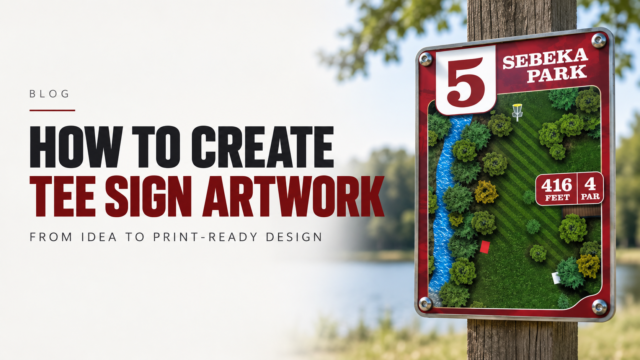
Most sponsors are not looking for a giant ad on the course. They want association, visibility, and professionalism. That means the sign has to do its main job first. It needs to clearly show hole number, distance, par, layout, next tee direction when needed, and any major course features. Sponsor space should support that layout, not compete with it.
The best sponsor areas are reserved and consistent across the full course. If one hole gives a sponsor a clean logo panel and the next gives another sponsor a squeezed corner placement, the package starts to feel uneven. Consistency helps with fundraising because it gives every business a clear expectation of what they are buying.
There is also a practical balance to strike. A sponsor wants recognition, but players do not want course information buried under promotional graphics. If the hole map becomes too small or the typography gets cramped, the sign stops serving the player. That weakens the course experience, and over time it can weaken the sponsor value too.
Designing sponsor signage without clutter
The strongest sponsor signs start with the hole information, not the ad space. That may sound obvious, but it changes the result. When the core layout is built around legibility first, sponsor placement can be added in a way that feels natural.
A typical approach is to reserve a dedicated sponsor panel in the lower section or side section of each sign. That creates a predictable visual zone for logos, contact details, or a short brand line. It also protects the map and scoring details from being compressed. On championship-style signs or larger formats, there is more flexibility to include larger branding areas while still keeping the course information prominent.
Material choice matters here too. Full-color sponsor artwork needs a substrate that reproduces color cleanly and holds up outdoors. If the print fades quickly or the panel warps, the sponsor message starts to look neglected. That is one reason many courses move toward UV-protected, durable sign materials rather than trying to piece together a lower-cost solution that will need replacement too soon.
It also helps to think beyond individual logos. Sponsors are more likely to commit when the overall sign system feels branded at the course level. Matching colors, consistent sign shapes, accurate maps, and polished layouts make every sponsor look better because they are participating in a higher-quality presentation.
Setting up sponsor tiers that make sense
Not every course needs a complicated fundraising structure. In many cases, the easiest model is one sponsor per hole with the same placement and the same contribution level. It is simple to explain, simple to sell, and easy to manage.
For larger projects, tiered sponsorships can work well. A title sponsor might appear on the course kiosk or overview sign, while hole sponsors receive placement on individual tee signs. Some courses also include support sponsors on maps, practice area signage, or directional signs. The right setup depends on how much funding is needed and how many local businesses are likely to participate.
The trade-off is administrative. More tiers can generate more revenue, but they also create more design variables, more approvals, and more room for inconsistency. If a volunteer-led club is managing the project, a simpler structure often leads to a smoother result. If a municipality or established organization has more internal support, a broader sponsorship program may be worth the added coordination.
Common mistakes that make sponsorship harder to sell
The first mistake is treating sponsor logos as an afterthought. If businesses are being asked to fund part of the project, their placement should be planned from the start. Retroactively squeezing logos into a completed sign design usually creates visual problems.
The second is using outdated maps or weak artwork. Sponsors notice presentation quality. So do parks boards and city staff. A clean, course-specific layout with accurate fairway graphics makes the entire project easier to approve and easier to promote.
The third is ignoring durability. Temporary-looking signs can undermine sponsorship conversations before they begin. A sponsor may support a course once out of goodwill, but long-term support usually depends on whether the finished product looks like a real infrastructure improvement.
Another common issue is offering too much ad copy. A logo, business name, and maybe one short contact line are often enough. Once a tee sign starts reading like a flyer, it loses its visual hierarchy.
How to present sponsor signs for disc golf course fundraising
When you pitch sponsorship, lead with the course improvement, not the logo placement. Businesses respond better when they understand they are helping fund a visible public amenity – better navigation, a more welcoming player experience, and a course that represents the community well.
Show them what they are getting. A sample layout is far more effective than a verbal description. When sponsors can see a polished sign concept with a clear logo panel and professional map design, the value becomes concrete. It feels less like a donation request and more like a defined sponsorship package.
It also helps to set expectations early. Tell sponsors what file types you need, what the sign size will be, how long the signs are expected to remain in place, and whether placements will be renewed annually or tied to a longer upgrade cycle. Clear process builds confidence.
For public courses, this structure also helps with internal approvals. Parks departments and municipal teams need to know that sponsor recognition will be tasteful, consistent, and appropriate for a public recreation setting. Professional sign design answers those concerns before they become objections.
Why the right signage partner matters
A sponsor-supported sign project is not just a printing order. It is a coordination project involving branding, layout, fundraising, approvals, and outdoor performance. Courses often run into trouble when they work with a general sign provider that does not understand disc golf hole maps, player information needs, or how sponsor placement affects the usability of the sign.
A disc-golf-specific design process makes a difference because the workflow is built around the course itself. Accurate hole layouts, clear proofing, sponsor integration, and durable production all need to come together at once. That is where a specialized provider like Custom Disc Golf Tee Signs can remove a lot of friction from the project.
Good sponsor signage should help you raise money, but it should also leave the course looking better than it ever has. That is the real goal. If the signs look organized, durable, and built for the course, sponsors feel good about supporting them, players trust the information, and the whole property moves up a level. When that happens, sponsorship stops feeling like a workaround and starts functioning like smart course development.