Direct Print Versus Vinyl Graphics for Tee Signs
A tee sign may look like a simple piece of course infrastructure, but it takes constant exposure to sun, rain, thrown discs, mower debris, and player traffic. When you are investing in a full signage system, the decision between direct print versus vinyl graphics affects far more than appearance on installation day. It shapes how clearly players can read the hole, how well sponsor panels hold up, and how much maintenance the course may face over time.
For course managers, clubs, park departments, and volunteer organizers, the right answer depends on the sign material, expected conditions, artwork requirements, and project budget. Both methods can produce professional results. The key is understanding where each one performs best before approving a proof.
What Direct Print Means for Disc Golf Tee Signs
Direct print is exactly what it sounds like: the artwork is printed directly onto the surface of the sign material. For disc golf tee signs, this is commonly done with UV-cured inks on substrates such as aluminum composite or aluminum. The ink cures during production, creating a full-color graphic that becomes part of the finished sign face rather than a separate applied layer.
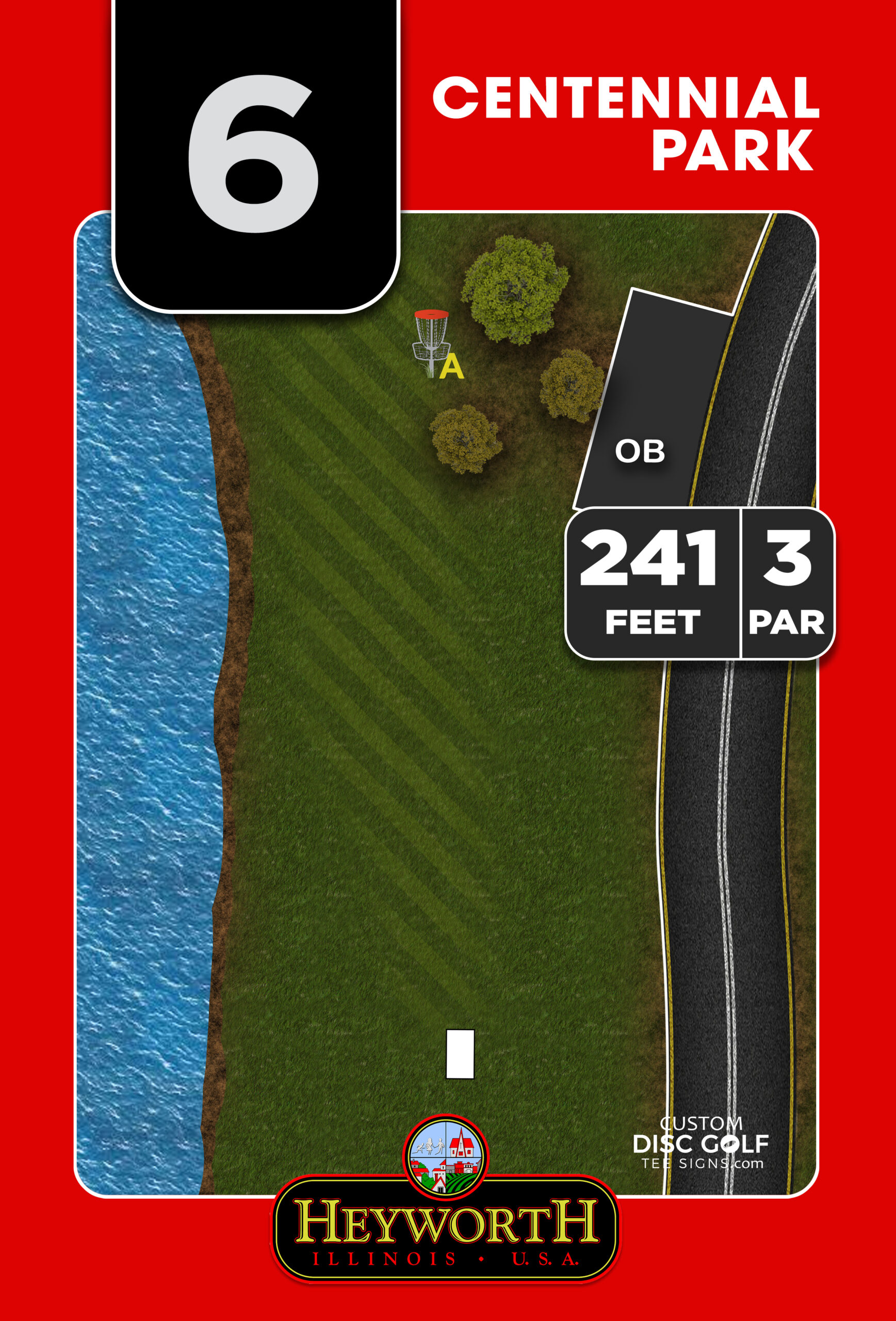
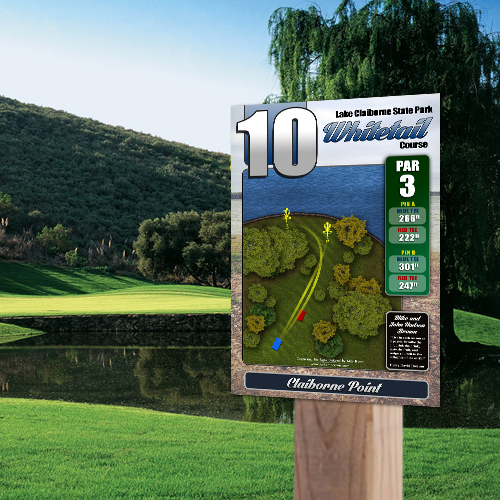
This method is well suited to detailed hole maps, color-coded fairway routes, distance information, course branding, rules, and sponsor recognition. A professionally prepared file can reproduce fine lines, readable typography, directional arrows, terrain details, and vibrant full-color logos in one finished panel.
The major benefit is simplicity. There is no separate film layer that needs to be aligned, wrapped around edges, or manually adhered to the panel. That can reduce variables during production and create a clean, consistent finish across an entire 9-hole or 18-hole system.
Why UV Protection Matters
Not every direct-print process is the same. Outdoor tee signage needs inks and finishing methods built for long-term UV exposure. Without sufficient UV resistance, colors can fade, especially on signs placed in open fields, sunny parkland, or high-elevation courses with intense sunlight.
A quality direct-printed sign should be paired with a durable outdoor-rated substrate and a design that accounts for real viewing conditions. Small text, low-contrast colors, and overly detailed map elements may look fine on a computer screen but become difficult to read from the tee pad. The printing method supports the artwork, but it cannot correct a layout that was not designed for on-course use.
How Vinyl Graphics Work
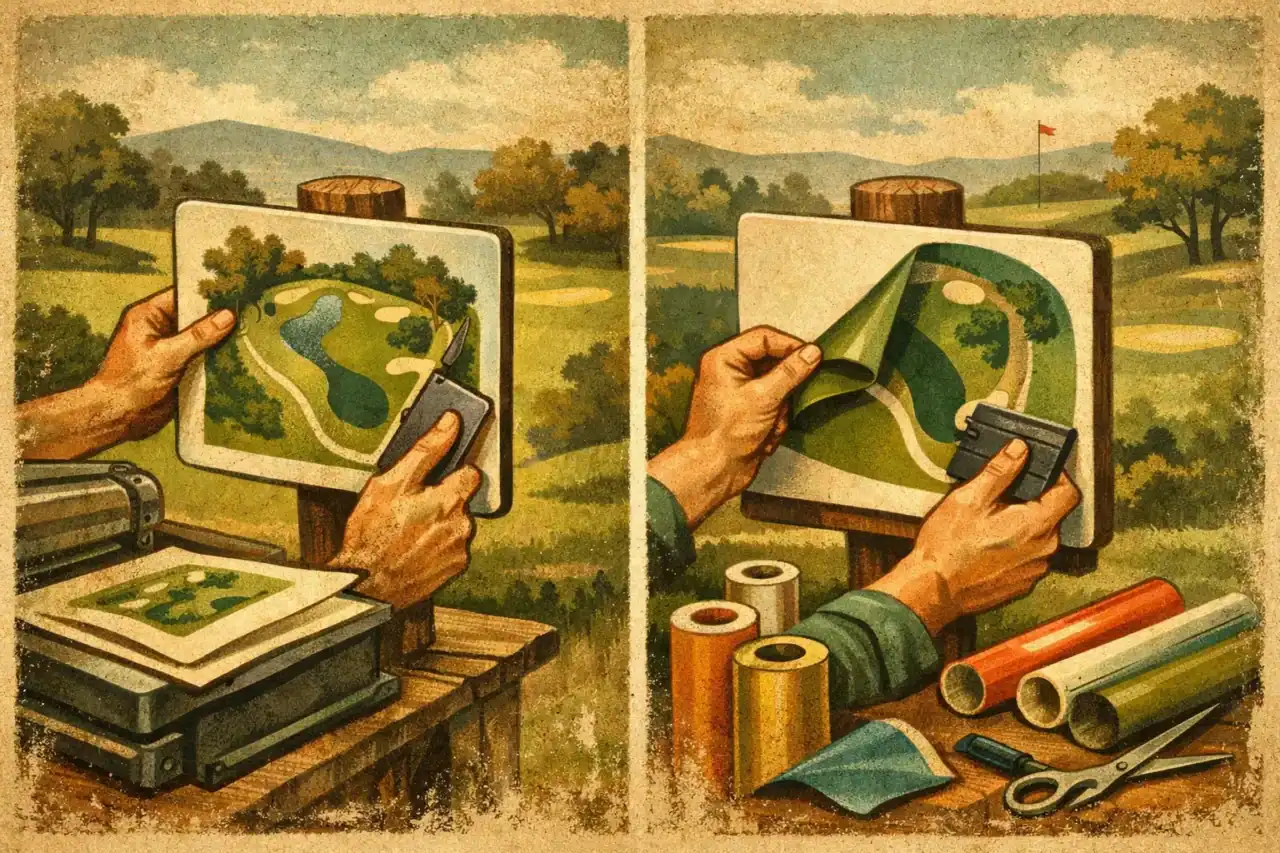
Vinyl graphics begin with printed or cut vinyl film that is applied to the sign panel. Depending on the project, the vinyl may be printed in full color, protected with a laminate, and then mounted to a substrate. Vinyl is also frequently used for individual lettering, logos, decals, and replacement graphics.
For certain applications, vinyl is a practical choice. It can work well for short-term signage, limited updates, simple sponsor decals, or projects where the graphic needs to be applied after the sign panel is fabricated. It is also useful when an existing panel needs a targeted refresh rather than a complete replacement.
However, vinyl introduces an additional layer to the finished sign. Its performance depends on the quality of the film, adhesive, laminate, installation conditions, panel preparation, and edge treatment. A premium outdoor vinyl installation can look excellent. Lower-grade material or rushed application can lead to lifting edges, shrinking, bubbling, scratching, or moisture intrusion as the sign ages.
Direct Print Versus Vinyl Graphics: The Key Differences
The most meaningful comparison is not whether one method is universally better. It is which one matches the role of the sign on your course.
For permanent, full-color disc golf tee signs, direct printing is often the more efficient option. It creates a finished panel with fewer applied components, supports detailed course-specific artwork, and is well suited to producing a coordinated sign package at scale. If your project includes hole-by-hole maps, consistent branding, tournament-ready presentation, and sponsor areas integrated into every layout, direct print provides a clean production path.
Vinyl can be the better fit when flexibility is the priority. If a sponsor changes frequently, a temporary event requires branded overlays, or a small set of existing signs needs updated information, vinyl may make more sense than replacing entire panels. The trade-off is that vinyl usually requires more attention to material grade and installation quality, particularly at the edges and corners.
Durability in Real Course Conditions
Disc golf courses are demanding environments. Signs may be exposed to wet weather, direct sun, freeze-thaw cycles, wind-driven dirt, trimming equipment, and the occasional direct hit from a disc. The substrate matters as much as the graphic method.
Direct print on aluminum composite or aluminum can be a strong choice for permanent installations because the graphic is printed directly onto a rigid, weather-ready panel. The panel should still be mounted correctly, with appropriate hardware and support, so it does not flex excessively or develop damage around mounting holes.
Vinyl graphics can also hold up well when made with premium outdoor-rated materials and a protective laminate. Yet vinyl is more vulnerable at exposed edges. Once an edge begins to lift, water and debris can work underneath the film. On a busy public course, that can turn a small issue into a visible maintenance problem.
Color, Detail, and Readability
Both direct printing and printed vinyl can produce full-color graphics. The difference is less about whether color is possible and more about how the complete sign is engineered.
Tee signs need a disciplined visual hierarchy. Players should be able to identify the hole number, par, distance, primary route, mandatory markings, out-of-bounds areas, and next-tee direction quickly. Sponsor recognition should have a defined place in the layout without competing with essential playing information.
Direct printing is especially effective for these complete, information-rich layouts because the artwork is created as one integrated composition. There is no need to break the design into separate applied elements. That consistency becomes valuable when every hole needs a polished, recognizable format while still reflecting its own map and shot shape.
Cost Should Be Measured Beyond the Initial Quote
Vinyl may appear less expensive in some situations, particularly for small updates or simple decals. Direct print can be a better long-term value for a complete signage project because it streamlines production and avoids some of the labor associated with applying and laminating separate graphics.
The real cost question is what the sign must do over its service life. A low initial price is less meaningful if panels require frequent repairs, graphics peel early, or the artwork does not provide the level of course information players need. For public parks and volunteer-led projects, replacing a poorly planned sign system can be much harder than building a durable one from the beginning.
Sponsorship can also change the financial picture. A permanent sponsor area built into each tee sign gives local businesses reliable visibility and gives organizers a clear funding tool. When sponsor panels are intentionally designed into the sign package, the system can help offset project costs without making the course feel cluttered or overly commercial.
Choose the Method Based on the Project
Direct print is generally the stronger choice when you are building a permanent, full-color tee sign system with detailed maps, course branding, and sponsor integration. It is also a practical solution when consistency across every hole is essential.
Vinyl is worth considering for temporary graphics, sponsor changes, targeted updates, or simple decals applied to an existing structure. It can be effective, but it should not be treated as interchangeable with a purpose-built printed tee sign.
Before production begins, review the expected lifespan of the signs, the substrate, mounting method, level of artwork detail, sun exposure, and how often sponsor or course information may change. At Custom Disc Golf Tee Signs, that planning happens during the design and proofing process, so course stakeholders can evaluate the complete system before it goes to print.
A well-designed tee sign should make the next shot easier, reinforce pride in the course, and continue doing its job long after opening day. Choose the graphic method that supports that standard, not just the one that solves the shortest-term need.