Disc Golf Signs vs Generic Park Signs
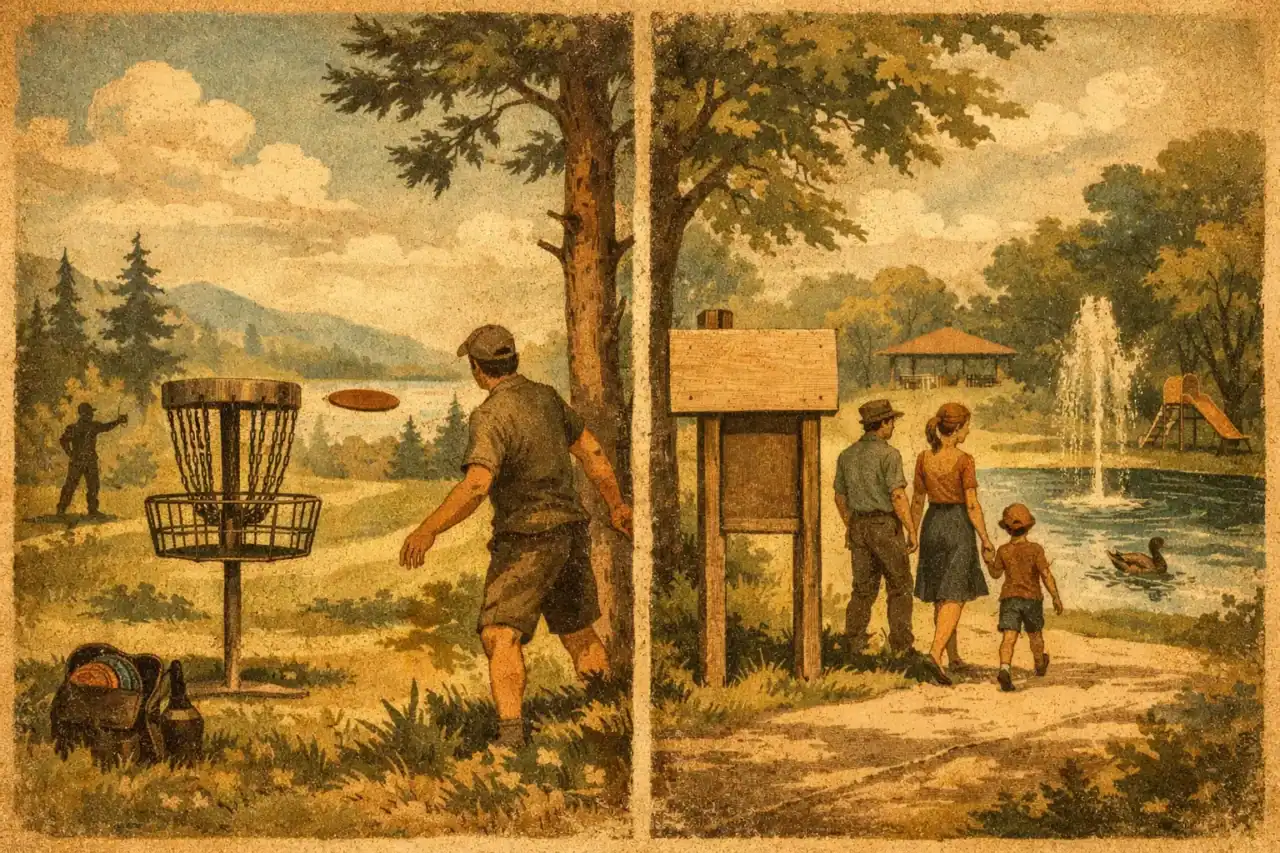
A player steps onto hole 1, looks at the sign, and still has to guess where the basket sits, whether the mando is in play, or which path leads to the next tee. That is usually the moment when the difference between disc golf signs vs generic park signs becomes obvious. Both can mark a space, but only one is built to guide a player through a disc golf round with confidence.
For course owners, clubs, parks departments, and municipalities, that distinction matters more than it may seem at first. Signage affects pace of play, first impressions, course safety, sponsor visibility, and the overall professionalism of the facility. A generic park sign may check a basic box, but a disc-golf-specific sign system does a different job entirely.
What generic park signs do well – and where they stop
Generic park signs have a place. They are often useful for simple identification, rules, directional markers, or facility notices. If a park needs to mark a pavilion, restroom, trail entrance, or general code of conduct, a standard sign package can do that efficiently.
The problem starts when those same signs are asked to perform as tee signs. Disc golf is not a general-use environment. Players need more than a label and an arrow. They need hole length, basket position, fairway shape, out-of-bounds information, hazards, next-tee direction, and often a quick visual understanding of elevation or landing zones.
A generic sign provider may offer a clean-looking panel, but if the layout is not built around the way players read a hole, the sign becomes decorative more than functional. It tells people where they are, but not what they need to know.
Disc golf signs vs generic park signs for actual play
Disc golf tee signs are course tools. They are not just markers.
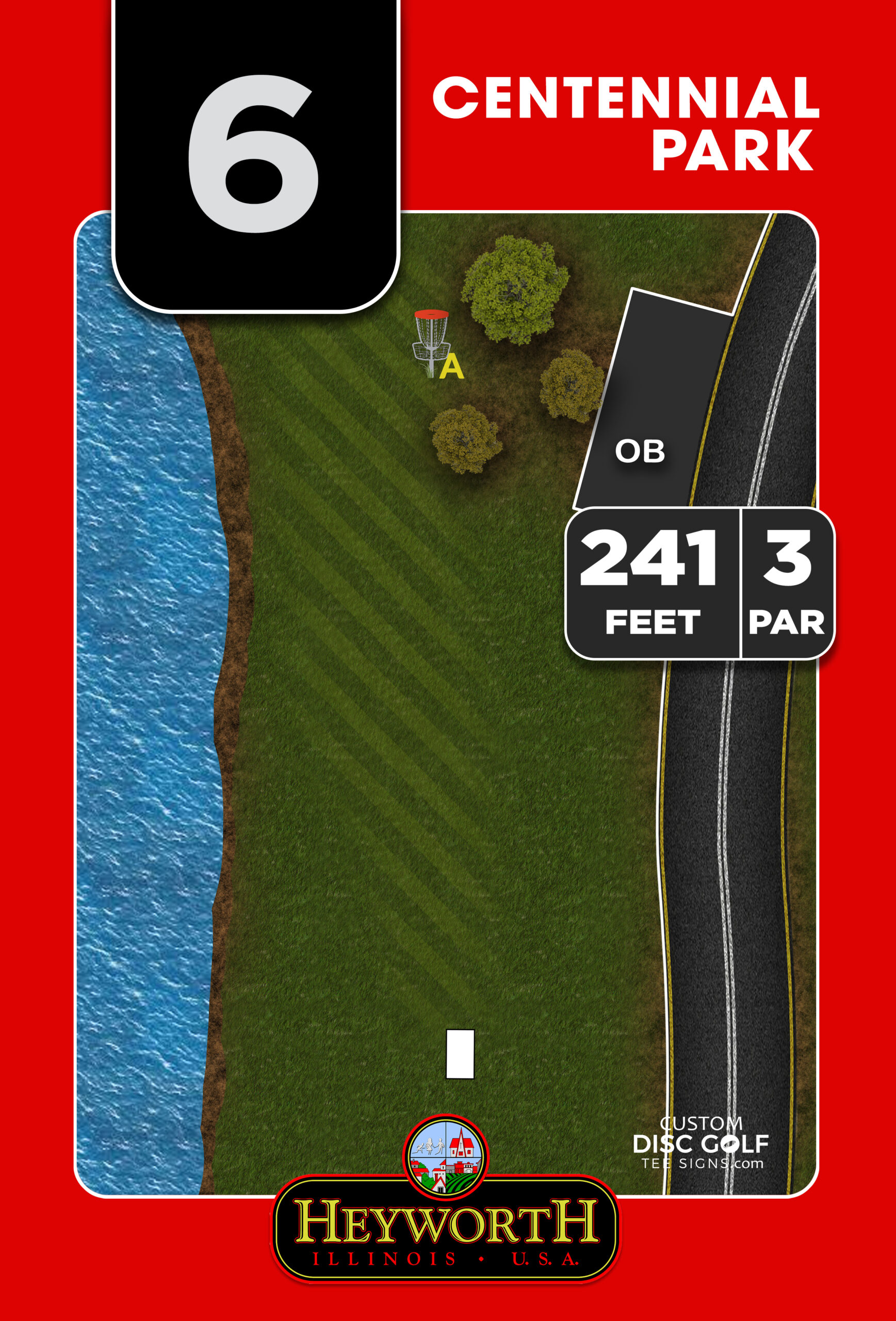
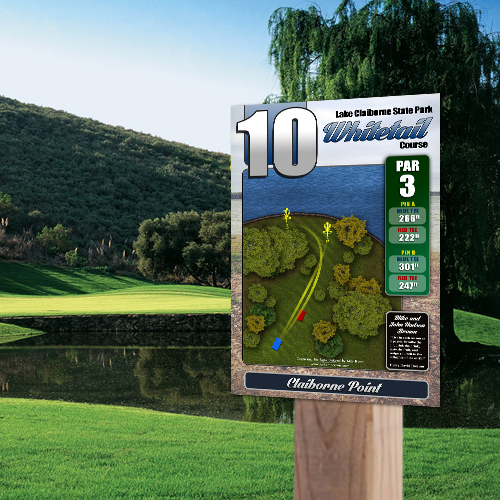
A well-designed disc golf sign gives players a fast read before they throw. It shows the tee location, the intended line, basket placement, distance, par, and any course-specific notes that affect strategy. When this information is presented clearly, players spend less time wandering, second-guessing, and asking others for help.
That improvement is especially noticeable on courses with multiple pin positions, alternate tees, wooded fairways, shared-use paths, water carries, or safety-sensitive crossings. Generic park signs usually are not structured to communicate that level of detail in a useful way. They can be adapted, but adaptation is not the same as purpose-built design.
This is where specialized signage earns its value. It is designed around the round itself.
Better navigation creates a better course experience
Most course complaints are not really about the grass, trees, or baskets. They are about confusion. Players remember when they threw to the wrong pin, missed the next tee, or walked back because the signage did not explain the hole.
That is why navigation is one of the strongest arguments in the disc golf signs vs generic park signs discussion. Dedicated tee signs and course maps reduce friction. They help first-time visitors move through the course without relying on a local guide or phone app. They also make league nights, tournaments, and public play run more smoothly.
For municipalities and parks departments, this matters beyond player satisfaction. Clear navigation cuts down on off-trail traffic, reduces unnecessary wear in surrounding areas, and helps separate disc golf movement from other park activities. In a shared public space, that kind of clarity supports both user experience and risk management.
Design is not decoration
A common mistake is treating custom design as an optional upgrade rather than part of the sign’s function. In disc golf, design directly affects usability.
A generic park sign template may allow text, a symbol, and maybe a basic map. That can work for broad public information. It is usually not enough for a hole layout that needs to communicate shape, distance, obstacles, and orientation at a glance.
Disc golf signage benefits from disciplined graphic hierarchy. The hole number should stand out immediately. Distance and par should be easy to find. The fairway map should be readable from a normal standing position. Color choices should help players distinguish playable lines, hazards, and background features instead of blending together. These are design decisions, not cosmetic extras.
Courses that invest in disc-golf-specific design tend to look more organized because they are more organized. The sign tells a cleaner story, and players notice.
Durability depends on the environment, not just the material
Material choice is part of the comparison, but it is not the whole story. A generic sign can be printed on a durable substrate, and a disc golf sign can be made from the same family of materials. The real question is whether the final product is built for outdoor use, long-term readability, and repeated player interaction.
Disc golf signs live in direct sun, rain, changing temperatures, mowers, foot traffic, and occasional abuse. UV protection matters. Print quality matters. Mounting style matters. Panel thickness and substrate choice matter. So does the ability to keep hole maps crisp and readable over time.
This is another area where specialized providers tend to outperform general sign vendors. They know the sign is not sitting in a lobby or mounted under a covered entry. It is out on the course doing work every day. That knowledge affects recommendations, proofing, and production choices from the beginning.
Branding and course image are part of the value
A course with consistent tee signs, overview signs, and maps looks established. That perception matters whether you are a city parks department improving a public amenity, a club trying to raise tournament standards, or a private facility building reputation.
Generic park signs can identify a location, but they rarely build a distinct course identity. Disc golf signs can incorporate a course name, colors, logo treatment, local character, and a consistent visual system across all holes. That creates a more professional presentation and makes the course feel intentional rather than improvised.
For decision-makers, that visual upgrade is not only about appearance. It supports community pride, helps justify capital improvements, and makes the course easier to present to boards, sponsors, and stakeholders.
Sponsorship support changes the budget conversation
One of the biggest practical differences in disc golf signs vs generic park signs is that disc golf signage can help pay for itself.
Sponsor placement is a natural fit on tee signs because players stop and engage with them on every hole. A well-designed sign can include sponsor recognition without cluttering the hole information. That makes sponsorship more valuable and easier to sell.
Generic park signs are not usually structured with this in mind. If a sponsor logo is added, it often feels secondary or awkwardly placed. Disc-golf-specific signage can be designed from the start with sponsor zones that support fundraising while keeping the player information clear.
For clubs, Eagle Scout projects, and community-led upgrades, this matters a great deal. A sign system that includes sponsorship planning is often much easier to fund than one that depends entirely on donations or departmental budget approval.
When generic park signs may still make sense
There are cases where a generic approach is enough. A temporary beginner course, a very small layout with simple open holes, or a park that only needs a basic rules sign and a directional marker may not require a full custom tee sign package right away.
Budget also matters. If the immediate goal is simply to mark holes in a low-cost way while a larger course improvement plan develops, a generic sign may serve as a short-term solution.
But short-term solutions often stay in place for years. That is where many courses get stuck with signage that never fully supports the way the course is actually used. If a facility expects regular play, wants to host events, or hopes to improve its image, purpose-built signage usually becomes the better investment.
Choosing the right signage partner
The real decision is not only about sign type. It is about whether your provider understands disc golf well enough to design for it.
A general sign shop may print what you send. A specialist can help shape the whole system – tee signs, course overview boards, maps, sponsor placement, material selection, and proofing. That guidance saves time and reduces costly revisions, especially when multiple stakeholders are involved.
For parks teams and volunteer-led projects, a structured workflow matters almost as much as the final signs. Clear proofs, consistent layouts, fast turnaround, and durable production make the project easier to manage from approval to installation. That is one reason organizations choose niche providers like Custom Disc Golf Tee Signs rather than trying to retrofit a generic sign process to a disc golf course.
If your goal is simply to post a name and an arrow, generic park signs can get you there. If your goal is to bring your course to a higher standard, improve navigation, support sponsors, and present a polished facility from hole 1 forward, disc golf signage is the stronger choice. The best sign system should do more than fill a post – it should make the course easier to play, easier to manage, and easier to be proud of.