Disc Golf Sign Package Pricing Explained

If you are planning a course upgrade, disc golf sign package pricing usually becomes the sticking point fast. Everyone wants durable, professional signs that improve navigation and presentation, but the budget has to work for clubs, parks, sponsors, and public approval processes. The good news is that pricing is more predictable than many buyers expect once you understand what actually drives the cost.
For most courses, the real question is not just, “How much do tee signs cost?” It is, “What level of signage makes sense for our course, our players, and our funding?” A basic package can solve navigation problems. A more advanced package can elevate the course image, support tournament play, and create sponsor value at the same time.
What affects disc golf sign package pricing?
The biggest factor is scope. A nine-hole park with simple layouts and straightforward branding will price very differently than an 18-hole championship course with multiple tee pads, alternate pin placements, branded course maps, and sponsor placements built into every sign.
Material choice matters immediately. Aluminum composite is a popular option because it offers a strong balance of durability, print quality, and cost control. Solid aluminum can be the right fit when buyers want a more premium or heavy-duty substrate, but that can increase the project total. For public parks and high-traffic courses, the right material is not just about appearance. It affects long-term replacement costs, weather resistance, and how well the signs hold up under UV exposure.
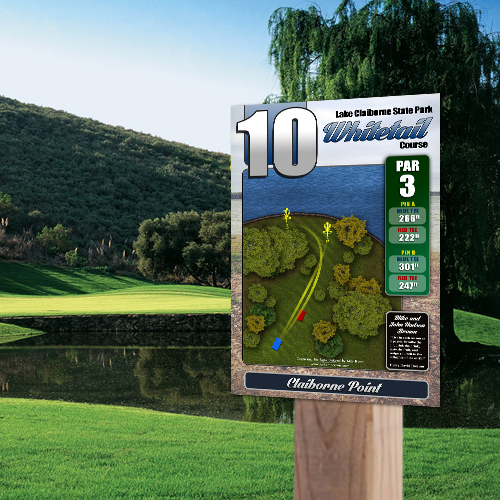
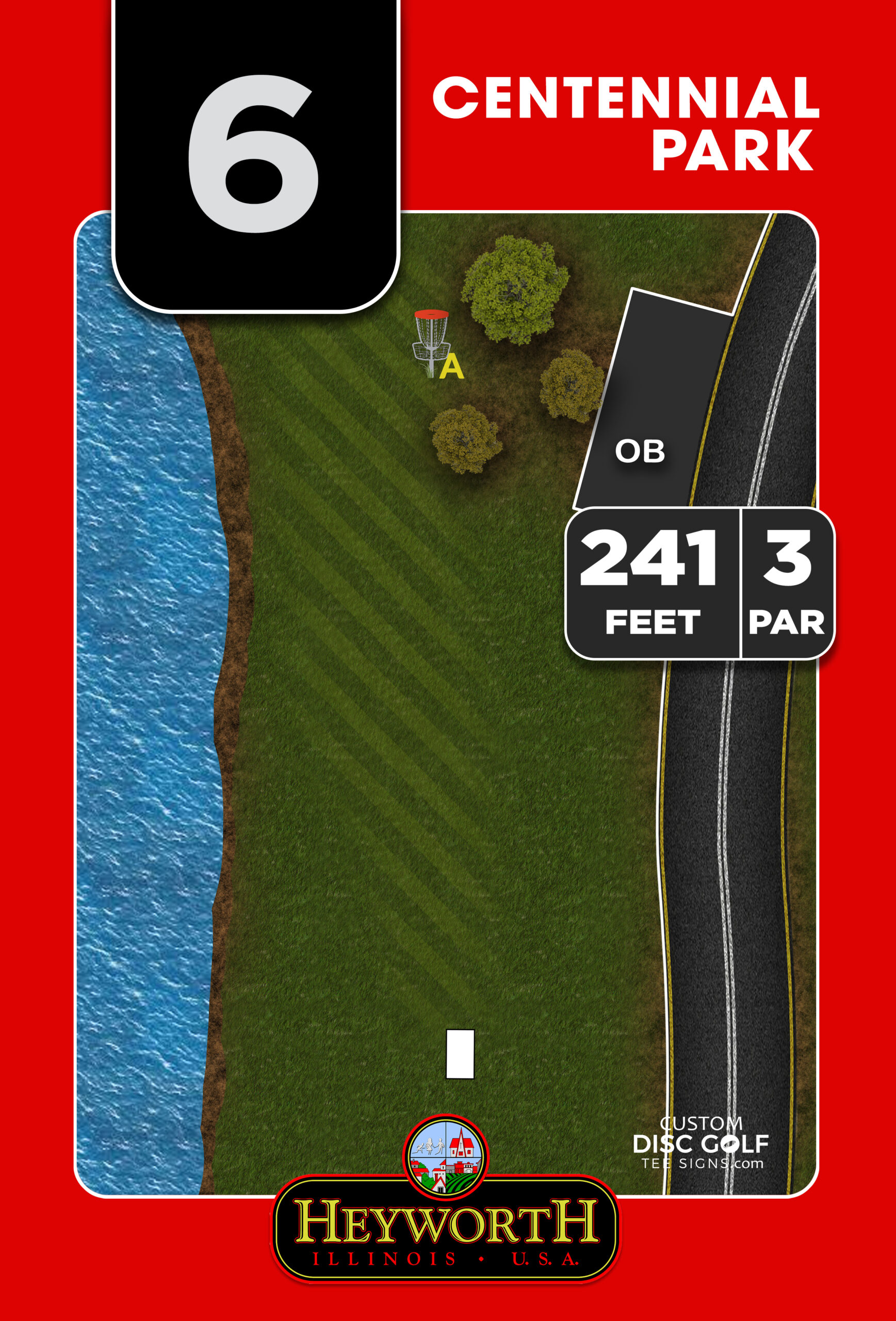
Design complexity also plays a major role. A clean sign with hole number, distance, par, and a simple directional layout takes less design time than a sign package with custom illustrations, precise OB markings, multiple basket positions, local branding elements, and sponsor-ready areas. Courses that want a polished, course-specific look usually find that professional design is where the package gains real value. It is also where generic sign layouts fall short.
Quantity changes pricing in a practical way. Per-sign pricing often improves when a full package is produced together because setup, proofing, and production become more efficient. That is why buyers commonly get better value by ordering a complete course package instead of replacing signs one at a time over several seasons.
Basic, mid-tier, and premium packages
A basic package is typically built for functionality first. It may include standard tee signs with essential hole information, consistent branding, and durable full-color printing. This is often the right choice for clubs replacing aging signs, small-town parks installing their first real signage system, or volunteer-led projects that need to stay within a tight fundraising target.
A mid-tier package usually adds more refined layout work, stronger visual hierarchy, sponsorship placement, and sometimes additional pieces such as next-tee arrows or a course overview board. This is where many public courses find the best balance. The signs look professional, the navigation improves, and the project has enough presentation value to justify municipal funding or local business support.
A premium package is built for courses that want to make a statement. That may include custom-shaped signs, advanced hole graphics, elevated branding, detailed maps, and a more fully developed course identity across every sign. Premium does not automatically mean oversized or flashy. It usually means the package is more tailored, more design-intensive, and more aligned with tournament-level presentation or a flagship public course.
Why sponsor space changes the pricing conversation
Sponsor integration is one of the smartest ways to think about disc golf sign package pricing because it changes the project from a pure expense into a funding opportunity. When signs include designated sponsor areas, local businesses often see clear value in participating. They are supporting a visible community amenity, and their brand appears directly on the course.
This does add some design coordination. Sponsor logos need to be organized, sized correctly, and placed consistently. In some cases, sponsors may be grouped by hole, by tier, or by inclusion on a course map or welcome sign. That extra work can affect the design side of pricing, but it often lowers the net project cost in a meaningful way.
For Eagle Scout projects, club-led upgrades, and park improvements with shared stakeholders, sponsorship support can be the difference between a delayed project and a completed one. It is not just a nice add-on. It is often a practical budget strategy.
What you are really paying for
Buyers sometimes compare sign packages as if the only variable is print cost. That misses the bigger picture. In a specialized disc golf signage project, pricing reflects more than the physical panel.
You are paying for course-specific design accuracy, consistent branding, clear communication of hole information, proofing workflow, production quality, and a sign system that feels intentional from hole 1 to hole 18. You are also paying for efficiency. When the process is handled by a team that understands disc golf infrastructure, fewer things get missed, approvals move faster, and the final package is easier to install with confidence.
That is where a specialist stands apart from a general sign printer. A general shop may be able to print a panel. That does not mean they are prepared to build readable tee sign layouts, understand pin and tee variations, or organize a sponsor-friendly sign system for a full course.
How to budget for your project without guessing
The cleanest way to budget is to define the package before asking whether it is affordable. Start with the total number of signs needed. Then decide whether the project includes only tee signs or also next-tee signs, overview boards, entrance signage, and maps. Once that is clear, material and design level become easier to evaluate.
It also helps to separate must-haves from upgrades. For example, durable full-color tee signs may be essential. A fully custom-shaped premium sign might be a phase-two upgrade. That does not mean the premium option is unnecessary. It just means the timing may depend on available funding.
If your course has multiple stakeholders, get agreement early on the purpose of the signs. Is the goal basic navigation, improved player experience, tournament presentation, sponsor fundraising, or all of the above? Misalignment here is what usually causes scope changes later, and scope changes are what make budgets feel unpredictable.
Disc golf sign package pricing and long-term value
The cheapest package is not always the lowest-cost decision over time. If signs fade quickly, become outdated, or fail to present the course professionally, you may end up replacing them sooner than expected or missing out on sponsorship support that would have helped fund the project in the first place.
A well-built package does more than mark a tee pad. It improves wayfinding, reduces confusion for first-time players, supports event play, and helps the course look cared for. That matters to parks departments, city recreation teams, and clubs trying to justify continued investment. Good signage quietly raises the standard of the entire facility.
That is also why design consistency matters. When every sign looks like it belongs to the same course system, the experience feels more credible. Players notice it. Tournament directors notice it. Sponsors notice it. And local officials notice it when they are deciding where future improvement dollars should go.
Choosing the right package for your course
There is no single best price point for every course. A volunteer-built community course may need a practical package with room for sponsor support. A destination course may need a more complete signage system that reflects the quality of the layout itself. A municipal course may need a middle-ground option that satisfies budget oversight while still delivering a major visual upgrade.
The right approach is to match the package to the role your course plays and the audience it serves. If the course needs credibility, clarity, and durability, those priorities should lead the decision. If sponsorship is available, use that structure early. If the project may expand later, build a package that can scale without forcing a redesign from scratch.
At Custom Disc Golf Tee Signs, that is how we look at pricing. Not as a one-size-fits-all number, but as a package built around your course, your goals, and the level of finish you want players to see every time they step onto the tee.
A strong sign package does not just answer where the next basket is. It tells players, sponsors, and the community that this course is worth investing in.