Disc Golf Signs for State Parks That Last
A state park course can have strong design, great land, and steady traffic, then still frustrate players with one simple problem – bad signage. When disc golf signs for state parks are unclear, inconsistent, or worn out, the whole course feels harder to use and harder to respect. That affects first-time visitors, tournament play, maintenance efficiency, and the park’s overall presentation.
State parks face a different signage challenge than private courses or small local installs. They serve a broad mix of players, from experienced tournament regulars to families who are trying disc golf for the first time during a weekend trip. They also deal with heavier public use, longer procurement cycles, more stakeholder input, and stricter expectations around durability and appearance. That means signage cannot be treated like an afterthought.
What state park disc golf signage needs to do
A good tee sign does more than label a hole number. It helps players make decisions before they throw, confirms they are in the right place, and reduces confusion that leads to wandering, backups, and damage to surrounding park areas. On a busy public course, those details matter.
For most state parks, signage needs to work on three levels at once. First, it must provide clear hole-by-hole information such as par, distance, tee location, basket position, and a readable layout. Second, it should support wayfinding between holes so players are not crossing trails, parking areas, or sensitive natural spaces by mistake. Third, it should contribute to a polished, unified course identity that reflects well on the park itself.
That last point is easy to overlook. A park department may focus on function first, which makes sense, but presentation is part of function. When a course looks organized and cared for, visitors trust it more. They follow rules more closely. They are also more likely to return, recommend the course, and support future improvements.
Why disc golf signs for state parks need a different standard
State parks are harder on signs than many course operators expect. Sun exposure, seasonal moisture, high winds, mowers, string trimmers, vandalism risk, and constant public traffic all put pressure on materials and mounting methods. A sign that looks acceptable on day one can become faded, bent, or unreadable much faster than expected if the substrate and print protection were chosen only to save upfront cost.
This is where trade-offs matter. Budget signs may reduce initial spend, but replacement cycles are usually shorter. If a park has to reorder pieces every season or two, coordinate labor for reinstall, and manage complaints from visitors in the meantime, the lower price stops being a real savings.
For state parks, the better approach is usually a durable sign system built around outdoor-rated materials, UV protection, and course-specific layouts that stay useful over time. Aluminum and aluminum composite are common choices because they offer a strong balance of weather resistance, print quality, and long-term value. The right pick depends on the site, expected wear, and the level of finish the park wants.
Design clarity matters as much as material strength
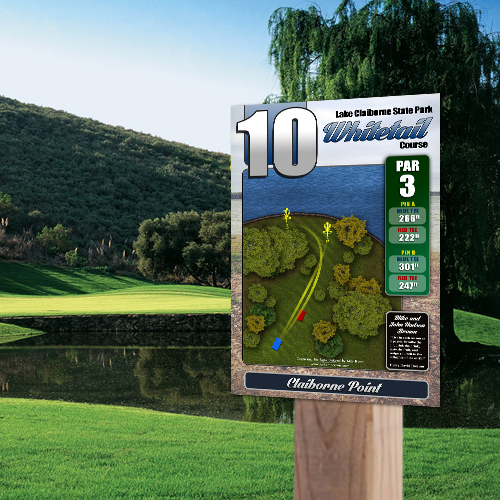
Even the most durable sign fails if players cannot read it quickly. This is one of the most common issues on public courses. A layout may be too cluttered, the map may be too small, or the sign may rely on generic diagrams that do not match the actual hole.
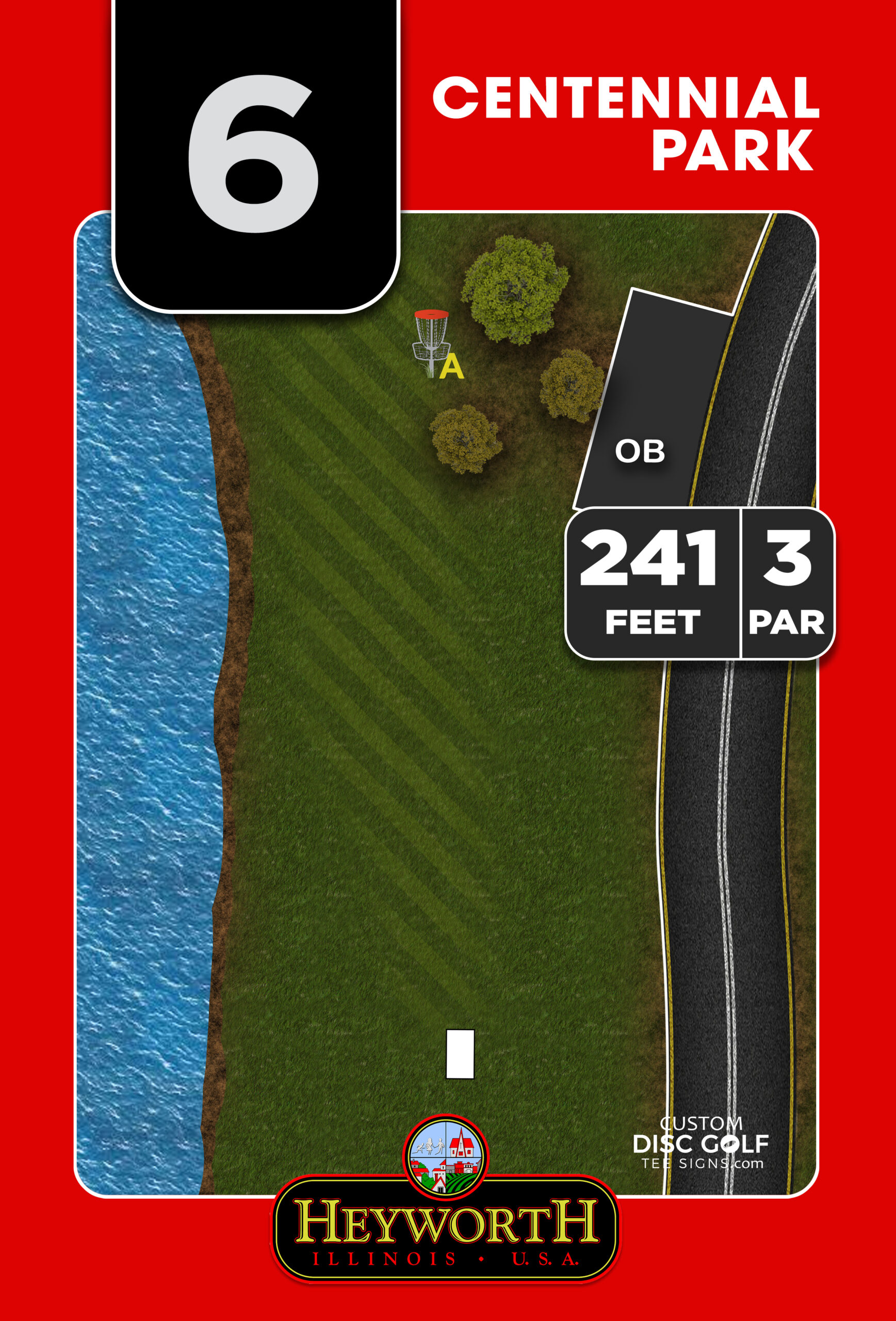
State park players often include out-of-town visitors who have never seen the course before. They need immediate visual clarity. A strong tee sign usually includes a high-resolution hole map, accurate flight path context, distance, par, directional cues, and a layout that prioritizes readability from a standing position at the tee. If the park uses multiple tee pads or alternate pin placements, that information has to be organized carefully so it helps rather than overwhelms.
There is also a strong case for consistency across the entire course. Mixed sign styles, mismatched colors, and varying information from hole to hole make a course feel pieced together. A unified sign package creates a better player experience and makes future updates easier because the park is working from one standard.
Course maps and directional signs are part of the same system
One mistake parks make is treating tee signs as the full signage plan. They are not. On many state park properties, players may park far from hole one, cross multi-use trails, or navigate wooded stretches where the next tee is not obvious. In those settings, a course overview sign and directional signs are just as important as the tee signs themselves.
A course map near the parking lot or kiosk helps visitors understand the full layout before they start. That reduces confusion, speeds up play, and cuts down on the number of players walking into the wrong area. Directional signs between holes keep rounds moving and reduce wear on unauthorized paths.
This matters even more in parks with mixed recreation uses. Hikers, campers, picnic visitors, and disc golfers often share the same larger property. Clear signage helps every user group move through the space with fewer conflicts.
Sponsorship can make better signage affordable
Budget pressure is real for state parks, clubs, and volunteer-led course improvements. The good news is that signage is one of the easiest disc golf infrastructure projects to support with sponsorships. A well-designed tee sign can include sponsor placement without making the sign look crowded or commercialized.
For many parks, this changes the conversation from whether the project can happen to how much the project can include. Instead of replacing only a few worn signs, sponsorship support may help fund a complete package with tee signs, map boards, and directional markers. That creates a more professional end result and avoids the patchwork look that happens when upgrades are spread out over too many phases.
The key is design discipline. Sponsor areas should be integrated cleanly, kept consistent across the course, and sized appropriately so hole information remains the priority. Done well, sponsorship supports the project without compromising readability.
A smoother process matters for public projects
State park projects rarely involve one person making a quick decision. There may be park staff, recreation leadership, local clubs, volunteer advocates, and funding partners involved. That is why a structured design and proofing process is so valuable.
A signage partner should be able to take course information, organize it into a consistent format, produce accurate proofs, and make revisions in a way that keeps the project moving. This is especially helpful when the park has limited in-house design resources or when the course has evolved over time and existing maps are outdated.
Fast turnaround also matters more than people think. Public projects can lose momentum when production drags on. Once approvals are in place and sponsors are lined up, parks need a process that goes from design to print to delivery without unnecessary delays. That keeps volunteer energy up and makes installation planning much easier.
How to choose disc golf signs for state parks
The best choice starts with how the course is actually used. A lightly trafficked nine-hole layout in a regional park may need a simpler package than a destination-level state park course hosting events and serving daily public play. The right solution depends on player volume, environmental exposure, park branding standards, and whether the goal is basic navigation or a full course presentation upgrade.
Start by asking a few practical questions. Does the current signage help first-time visitors play confidently without guidance? Is the course map accurate? Are there missed opportunities for sponsor support? Are the signs durable enough for full outdoor exposure year-round? If the answer to any of those is no, the park likely needs more than a few replacement panels.
It also helps to think in systems, not individual signs. A complete package often produces a better result than ordering pieces one at a time because the graphics, materials, and information hierarchy are aligned from the beginning. That is how a course moves from functional to professional.
For parks that want a dependable path forward, Custom Disc Golf Tee Signs focuses specifically on this kind of project – course-specific tee signs, maps, and signage packages built for real disc golf use, not generic outdoor printing.
Well-made signage does not just make a course easier to follow. It raises the standard of the entire facility, supports park staff, helps visitors enjoy the round they came for, and shows that the course is meant to last. If a state park is investing in disc golf, the signs should reflect that level of commitment.