How to Upgrade Disc Golf Signage
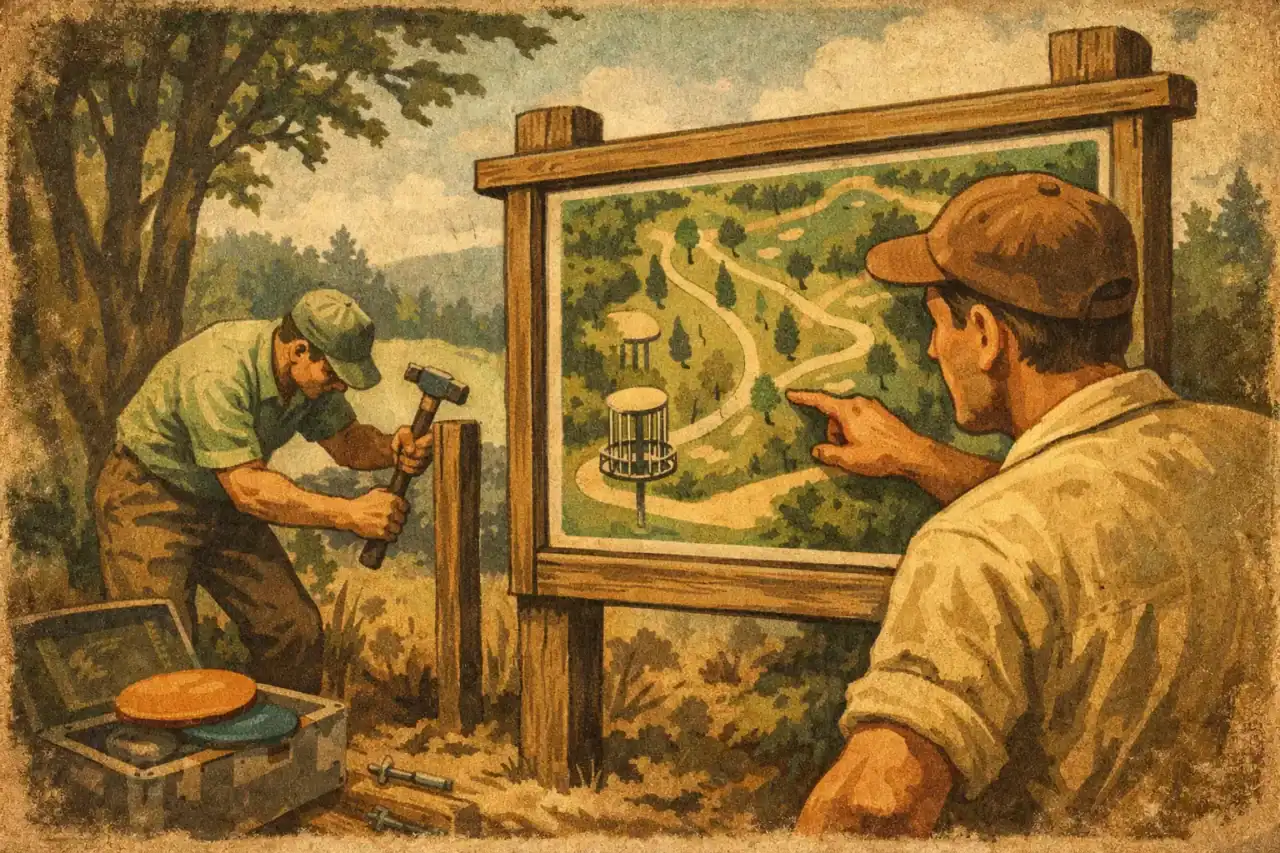
If players are standing on the tee pad arguing about where the basket is, your course signage is already costing you more than it seems. Confusion slows play, frustrates first-time visitors, and makes even a well-designed layout feel unfinished. That is why learning how to upgrade disc golf signage is not just a cosmetic project. It is a practical course improvement that affects navigation, safety, course reputation, and long-term maintenance.
For most clubs, parks, and course managers, the real issue is not whether signs need work. It is deciding what should change first and how to make the investment count. The best signage upgrades do not start with printing new hole maps. They start with a clearer standard for what players need to see, what the course needs to communicate, and what materials will actually hold up outdoors.
How to upgrade disc golf signage without wasting budget
The fastest way to overspend is to replace signs one by one without a system. A better approach is to think in layers. Tee signs, next tee signs, course overview boards, and park entry signage all serve different jobs. When those pieces are designed separately over time, the course starts to look inconsistent and players miss information they need.
Start by walking the course as if you have never played it before. Notice where a new player would hesitate. Usually that happens in three places – at the entrance, on the tee, and after finishing a hole where the path to the next tee is not obvious. Those hesitation points tell you where signage matters most.
Once you identify those gaps, separate the upgrade into essentials and enhancements. Essentials include accurate hole information, clear directional navigation, and durable materials. Enhancements include sponsor placements, branded course identity, custom sign shapes, and premium graphic treatments. Both matter, but the essentials should lead the plan.
Audit what your current signs are actually doing
Many courses have signage, but not enough useful signage. A faded tee sign with an outdated layout is not helping players much. Neither is a sign that looks sharp but leaves out distances, mando details, or alternate pin positions.
A proper audit should look at function first. Can players quickly understand the fairway shape? Can they identify OB, hazards, and mando routes? Can they tell whether the basket position shown matches the current setup? If the answer is no, the problem is not just age. It is communication.
You should also assess consistency. If hole 1 has a full-color tee sign, hole 6 has a laminated paper map, and hole 14 has nothing at all, the course feels uncoordinated. That affects public perception more than many organizers expect. Municipalities, donors, and sponsors notice when infrastructure looks complete and professionally managed.
The last part of the audit is physical condition. Check fading, edge wear, mounting stability, weather damage, and readability in direct sun. Some signs technically still exist, but they are no longer performing their job. At that point, repair is usually a short-term patch, not a real upgrade.
What better disc golf signage should include
Good signs reduce questions. Great signs reduce mistakes.
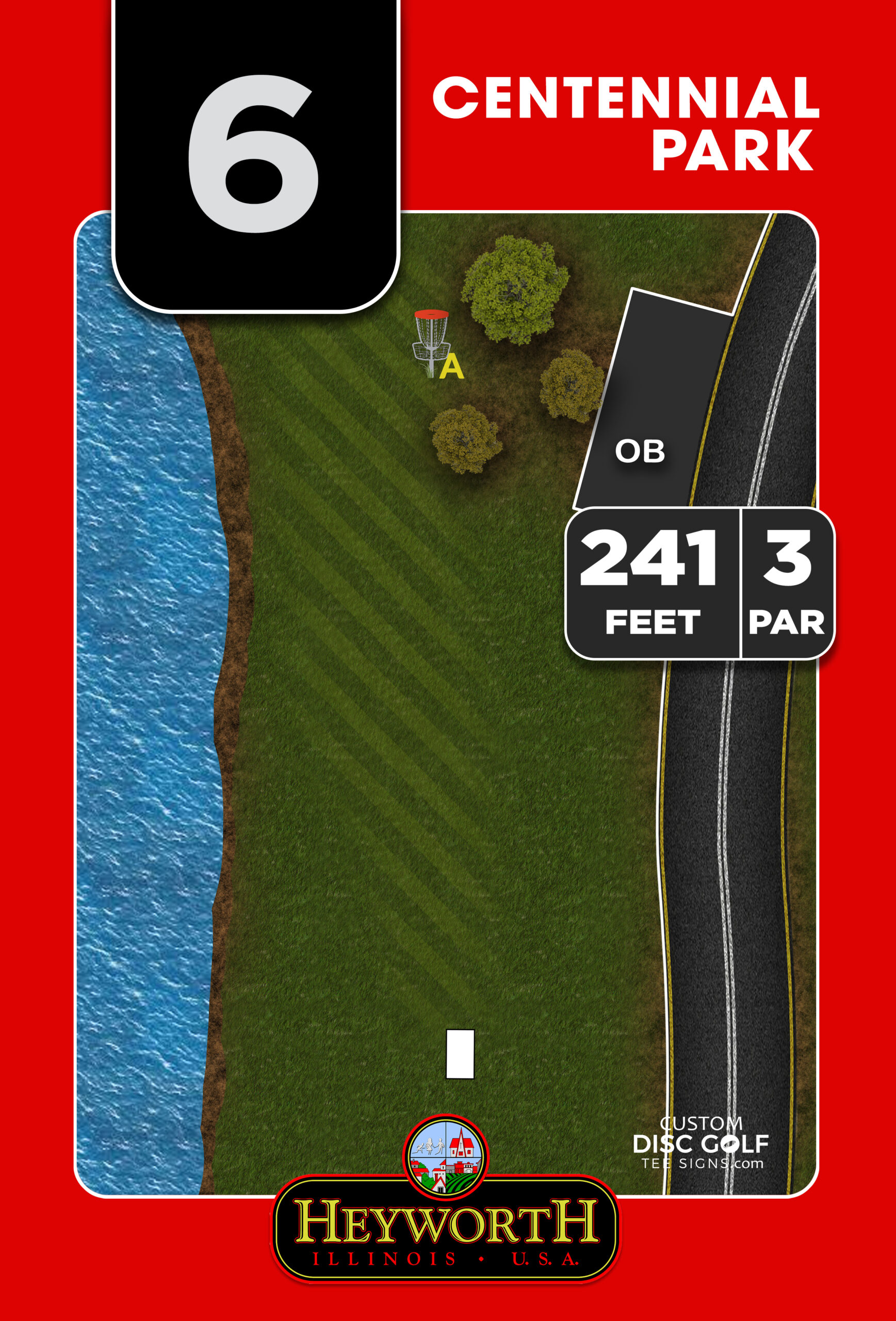
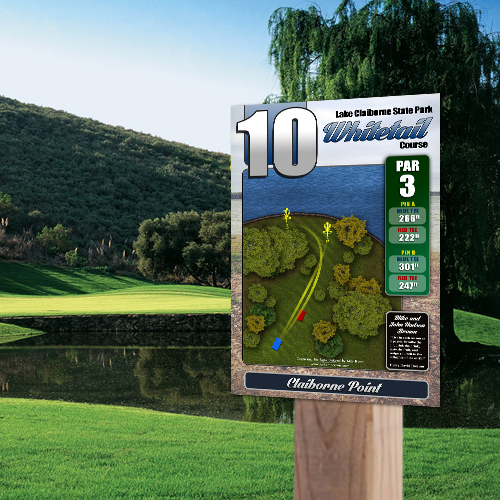
At the tee level, every sign should make the hole readable in seconds. That usually means a clean layout map, accurate distances, tee and basket indicators, par, hole number, and directional orientation that matches the player’s view. If the map is beautiful but hard to interpret from six feet away, the design has missed its purpose.
For courses with multiple tees or pin positions, clarity matters even more. This is where custom design becomes important. Generic layouts often get crowded, especially on technical or longer championship-style holes. A course-specific design can simplify visual hierarchy so players immediately know which route and distance applies to them.
Directional signage is where many upgrades pay off fastest. A simple next tee system can dramatically improve flow, especially on wooded courses, multi-use parks, or layouts with longer walks between holes. Entrance boards and overview maps also help set expectations before the round starts. They give players a big-picture understanding of the course while reinforcing that the facility is organized and well cared for.
Choose materials for your environment, not just your quote
Material choice is one of the biggest differences between a cheap refresh and a lasting upgrade. Outdoor disc golf signs take UV exposure, moisture, temperature swings, vandalism risk, and routine wear from players and maintenance crews. If your course is in a hot, open park, sun fade becomes a major issue. If it is in a wooded or damp area, moisture resistance matters more.
This is why substrate selection should be based on real conditions. Aluminum composite and aluminum are popular for a reason. They offer durability, clean print quality, and better long-term performance than temporary or lower-grade options. A UV-protected finish also matters. Bright color and detailed layouts only help if they stay readable season after season.
There is a trade-off here. Premium materials cost more up front, but replacement cycles are usually longer and the course looks better during that time. For public courses and municipalities, that often makes the total project more cost-effective over several years. A lower upfront cost can become expensive if signs need frequent replacement or quickly start looking worn.
Design for players, but also for stakeholders
Course signage has two audiences. One is the player standing on the tee. The other is the group paying for and approving the project.
Players want readability, consistency, and confidence. Stakeholders want a finished result that reflects well on the course, the club, or the park department. That means your signage should not only solve navigation problems. It should raise the visual standard of the property.
This is also where sponsorship becomes a practical part of the upgrade. Well-designed sponsor placement can help offset project costs without cluttering the sign. The key is integration. Sponsor logos should feel built into the layout, not dropped onto it at the last minute. When handled properly, sponsorship support can make larger signage projects possible while still preserving a professional look.
For clubs and volunteer-led improvements, that can be the difference between replacing a few damaged signs and upgrading the entire course system at once.
Build a process before you print anything
If you are figuring out how to upgrade disc golf signage for a public or club-managed course, project coordination matters almost as much as design. Most signage delays happen because information is incomplete, stakeholders are not aligned, or revisions drag on after production details should have been finalized.
A smoother process usually starts with collecting the right course data up front. That includes current hole layouts, distances, tee and basket placements, branding preferences, sponsor details, and any park rules that need to appear on overview signage. If basket positions rotate, decide whether the signs should show all placements or emphasize the most common one.
Then establish who approves what. On many projects, there may be input from a club board, a parks department, a course designer, and sponsors. That is manageable if there is a clear proofing workflow. It becomes difficult when everyone starts making design changes at different stages.
Working with a disc-golf-specific sign partner helps here because the common issues are already understood. At Custom Disc Golf Tee Signs, that project structure is a major part of getting from concept to final proof quickly and cleanly. The design side matters, but so does having a reliable workflow that keeps the project moving.
Prioritize the upgrades that improve the course fastest
Not every course needs a full signage overhaul on day one. If budget is limited, phase the project strategically.
Start with holes or transitions that create the most confusion. Then focus on the entry experience with a course map or welcome sign. After that, bring the tee signs into a consistent system across the entire property. This phased approach works especially well for clubs raising funds over time or parks departments managing annual improvement budgets.
The trade-off is that phased projects should still be designed as part of one larger visual system. If you replace signs in separate styles over several seasons, the course can end up with mixed branding and uneven quality. Even if installation happens in stages, the plan should feel unified from the beginning.
When an upgrade changes more than signage
The strongest signage projects do more than mark holes. They make a course easier to use, easier to support, and easier to take seriously.
That matters for local clubs trying to attract sponsors. It matters for municipalities that want park amenities to look professionally maintained. It matters for volunteer leaders and Eagle Scout coordinators who need a project with visible impact and a clear scope. Better signs make the course more legible, but they also make the whole facility feel more established.
If your current signs are faded, inconsistent, or missing where players need them most, the right upgrade is not just new graphics. It is a better system built around durability, clarity, and a course identity people can recognize the moment they arrive.
Bring your course to a higher standard by treating signage like infrastructure, not an afterthought.