10 Disc Golf Course Improvement Ideas for Better Play
A player can forgive a missed putt. They are less likely to forgive walking to the wrong tee, searching for the next hole, or arriving at a tee pad with no clear idea of where the basket sits. The best disc golf course improvement ideas solve those frustrating moments while making the entire facility feel more intentional, professional, and ready for repeat play.
For course managers, clubs, municipalities, and volunteer groups, improvements do not need to happen all at once. The strongest projects start by identifying what most affects safety, navigation, presentation, and long-term maintenance. Then, each upgrade works together to create a better round for beginners, league players, tournament visitors, and everyday park users.
1. Start With a Clear Course Walkthrough
Before ordering equipment or planning a workday, walk the course as a first-time visitor would. Bring someone who has never played it if possible. Note every point where they hesitate: the parking area, the first tee, tee-to-basket sightlines, transitions between holes, and the path back to the parking lot.
This walkthrough often reveals problems that regular players no longer notice. A faded hole number, an unmarked alternate tee, or a hidden turn toward Hole 12 may seem obvious to club members. For a new player, it can make the course feel confusing before the round has even settled in.
Document these issues with photos and a simple priority list. Separate immediate safety concerns from presentation upgrades and future enhancements. That gives decision-makers a practical scope instead of a vague goal to “improve the course.”
2. Make Tee Signs the Information Center of Every Hole
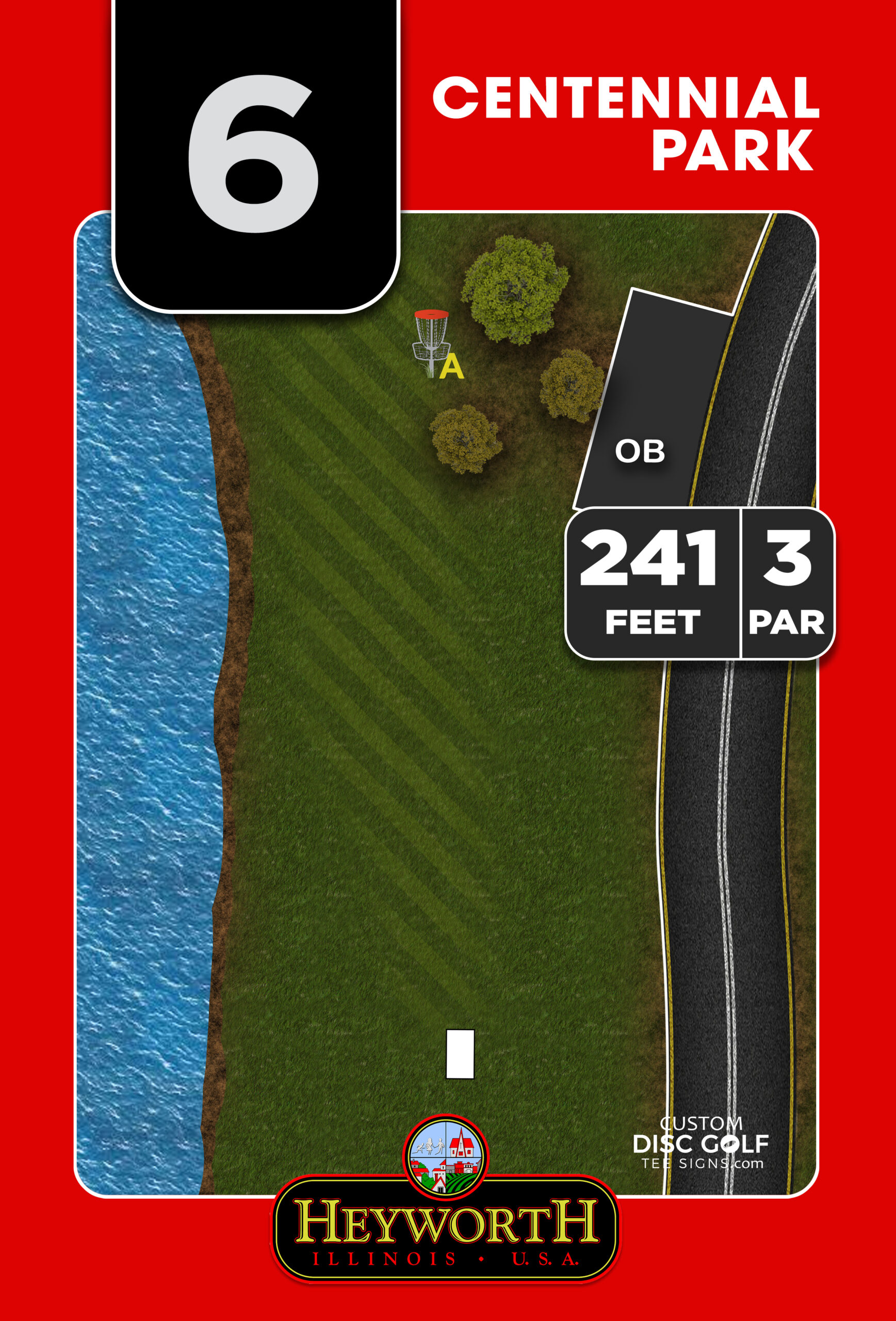
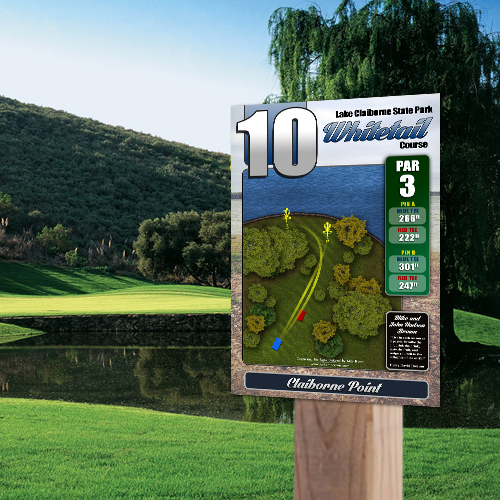
A quality tee sign does more than show a hole number and distance. It answers the questions a player has before every throw: Where is the basket? What route should I expect? What hazards matter? Which tee position am I using? What is par?
Full-color, course-specific tee signs are among the most visible disc golf course improvement ideas because they improve playability and elevate the course image at the same time. A well-designed sign should include a readable hole map, distance, par, directional indicators, relevant water or out-of-bounds areas, and clear tee or basket position details. For multi-layout facilities, color coding can help players understand which information applies to the current layout.
The trade-off is simple: basic signs cost less upfront, but generic layouts, undersized maps, and unclear graphics create problems that remain on the course for years. Durable, professionally designed signs are a longer-term infrastructure investment. They reduce confusion, support tournaments, and give potential sponsors a more polished place to be seen.
Material selection matters as much as the artwork. Outdoor signage needs UV protection, weather-resistant construction, and mounting that stands up to routine park use. A sign package should be designed around the course conditions, not just the lowest initial price.
3. Fix Navigation Between Holes
Even an excellent hole map cannot help a player after the basket if the route to the next tee is unclear. Transition signage is one of the most cost-effective ways to improve the pace and enjoyment of a round.
Use simple directional signs at every questionable transition. Arrows should be easy to spot from the previous basket, and hole numbers should be large enough to read while walking. This is especially important where trails cross, where the next tee is behind a tree line, or where multiple layouts share fairways.
Course overview maps at the parking lot and first tee provide another layer of confidence. They help players understand the total footprint, locate restrooms or practice areas, identify alternate loops, and see where the round finishes. For large public parks, an overview map can also reduce the chances of players wandering into unrelated trails or restricted areas.
4. Improve Tee Pads for Consistent Footing
A great hole is difficult to enjoy when the teeing surface is uneven, slick, too short, or full of pooled water. Tee pads directly affect safety and the quality of every drive, particularly for players using a full run-up.
Concrete remains a dependable option for many permanent courses because it provides consistent footing and low maintenance. Turf pads can work well where installation limitations, drainage needs, or a more natural visual fit influence the decision. The right choice depends on budget, soil conditions, weather patterns, player volume, and local park requirements.
Whatever surface you choose, make pad dimensions consistent across the course when possible. Make sure the front of the pad aligns with the intended fairway line, and address drainage before the surface is installed. A well-built tee pad should not create a muddy landing zone at either end.
5. Prioritize Safety and Fairway Separation
Safety improvements protect players, other park visitors, and the future of the course itself. Review every hole for overlapping fairways, blind throws toward walking paths, exposed parking areas, and tees that point too closely toward another group’s basket.
Some fixes are straightforward. Relocating a tee, adding a defined walking route, trimming a sightline, or moving a basket can reduce risk without changing the character of the hole. Other situations require a larger redesign. If a hole repeatedly creates conflicts, preserving the original layout is rarely worth the ongoing liability and player frustration.
Use signs thoughtfully around shared-use areas. Clear warnings near roads, playgrounds, trails, and active picnic spaces set expectations without cluttering the course. The goal is not to cover every tree with instructions. It is to place useful information where a player genuinely needs it.
6. Build Better Amenities Around the Round
Small amenities can make a public course feel cared for. Benches at longer or more demanding holes give players a place to rest. Trash and recycling stations, placed where maintenance crews can reasonably service them, help prevent litter from becoming a course-wide problem. Dog waste stations may be appropriate on heavily used community courses.
Consider the needs of tournament days as well as casual rounds. A designated event area, visible rules board, practice basket, and nearby course map can simplify check-in and reduce congestion. If space allows, shaded seating near the first tee gives players a comfortable place to gather without blocking play.
Amenities should match the maintenance capacity of the organization. A feature that cannot be emptied, repaired, or cleaned regularly can quickly make the course look neglected. Start with a manageable plan and expand as volunteer support or park resources grow.
7. Use Sponsorships to Fund Visible Improvements
Budget is often the obstacle between a wish list and a completed project. Sponsorship can help clubs and municipalities fund improvements while recognizing local businesses, community partners, or individual donors.
Tee signs are especially useful for sponsor placement because they provide a clear, durable location for recognition without interrupting the player experience. A consistent sponsor area can be incorporated into the sign design so it feels intentional rather than added as an afterthought. Sponsors receive meaningful exposure, while the course receives funds for signs, pads, baskets, maintenance, or future expansion.
Create a straightforward sponsorship structure before outreach begins. Explain what the sponsor receives, how long recognition will remain in place, and what the contribution supports. Local businesses are more likely to participate when the project is specific, visually professional, and tied to a well-used community asset.
8. Create a Consistent Visual Identity
A course does not need an oversized logo on every feature, but it should look like one connected facility. Consistent colors, typography, hole numbering, and map styling make navigation easier and reinforce pride in the course.
This matters most when signs are replaced over time. Without a basic visual standard, courses can become a mix of homemade markers, retired tournament signs, mismatched arrows, and faded boards. Establishing a unified system allows future additions to look planned rather than patched together.
Custom Disc Golf Tee Signs helps organizations build this consistency through course-specific artwork, proofing, material options, and sponsor-ready layouts. The design process should make it easier for a course team to move from field notes and rough maps to a finished sign system that fits the property.
9. Plan for Maintenance Before Installation
Every new improvement creates a maintenance responsibility. Include replacement planning in the initial project budget, especially for high-touch items such as tee signs, arrows, benches, and trash stations.
Assign responsibility for routine inspections. A monthly walk-through can catch loose mounting hardware, damaged signs, overgrown fairways, standing water, and vandalism before they become larger problems. Keep digital files for maps and sign artwork so updates to layouts, basket locations, or sponsor panels can be handled efficiently.
For volunteer-led courses, this is where a clear system makes a major difference. A shared inspection checklist and one contact person for reporting issues can prevent small repairs from disappearing into a busy club chat.
10. Improve the First and Last Impression
The parking area and first tee establish expectations. A clean welcome sign, overview map, visible course rules, and clear path to Hole 1 tell players that the course is organized and worth respecting. At the end of the round, a marked route back to parking, a scorecard or event information board, and a tidy final area leave the same impression.
These details are especially valuable for public courses trying to attract leagues, tournaments, and visitors from outside the area. Players share courses that are easy to understand, fun to play, and visibly maintained. A strong first impression can turn a one-time visitor into a regular player or an advocate for future funding.
The right improvement plan is not about adding the most features. It is about removing friction from the round and giving every player clear evidence that someone has invested in their experience. Start with the places where confusion, safety concerns, or poor presentation are most visible, then build a course standard your community will be proud to support.