Top Sponsor Benefits for Disc Golf Courses

A local business may not be able to fund an entire course renovation, but it can often fund a tee sign, a course map, or a full hole-by-hole signage package. That practical connection is at the center of the top sponsor benefits for disc golf: sponsors help close budget gaps while courses gain a more polished, navigable, and reliable player experience.
For municipalities, clubs, park departments, and volunteer-led projects, sponsorship is more than a logo placed in a corner. When it is planned well, it becomes a repeatable funding model that improves the course, gives local businesses visible community involvement, and reduces the financial burden on the people responsible for getting the project completed.
Sponsorship helps turn needed upgrades into funded projects
Many disc golf courses operate with limited capital budgets. A course may need replacement tee signs, directional markers, updated course maps, rules signage, or a complete visual refresh, yet those improvements compete with maintenance, landscaping, recreation programming, and other park needs.
Sponsorship gives decision-makers a way to divide a large project into manageable pieces. Instead of asking one funding source to cover every sign, a club or park can offer individual hole sponsorships, map sponsorships, event partnerships, or package-level recognition. Each commitment moves the project closer to completion.
This approach is especially useful when a course has older signs that no longer match the current layout. Hole distances change, basket placements move, alternate tees are added, and natural wear eventually makes information difficult to read. A sponsor-supported sign replacement project lets organizers address those issues with a defined plan rather than waiting for a future budget cycle.
The trade-off is that sponsorship requires coordination. Someone must build the sponsorship offer, communicate with businesses, collect logos, and set clear expectations. A structured signage project makes that work easier because sponsors can see exactly what they are supporting and where their recognition will appear.
Better tee signs give sponsors a place players actually notice
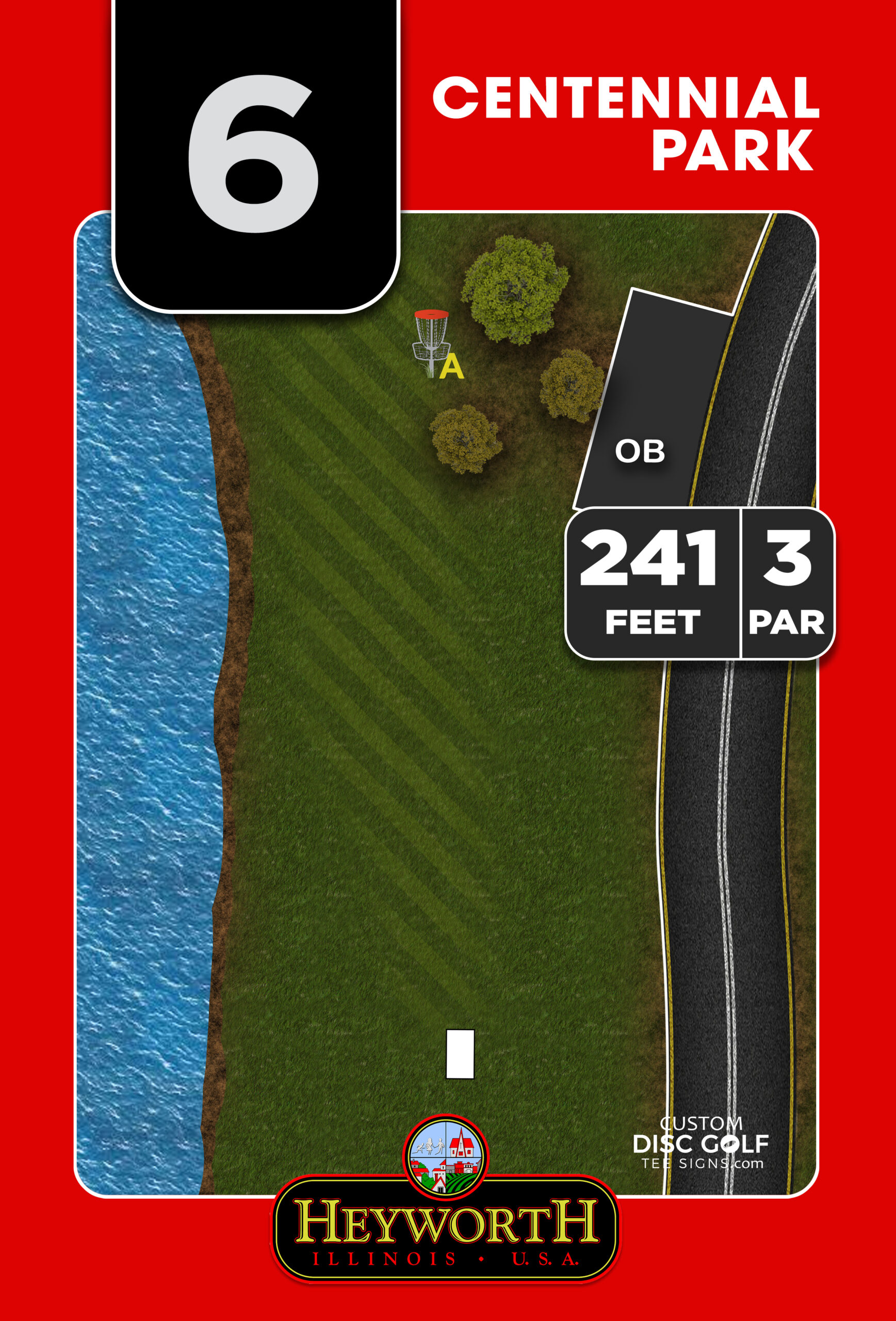
A sponsor logo has more value when it is integrated into something useful. Tee signs are one of the most consistent points of contact on a disc golf course because players stop at every hole to check distance, review the fairway shape, identify hazards, and choose a line.
That makes a professionally designed tee sign a much stronger sponsorship asset than a temporary banner or a small sign posted near the parking lot. The sponsor is associated with a practical amenity that helps every player navigate the course. It is visible without interrupting play or overwhelming the course’s visual character.
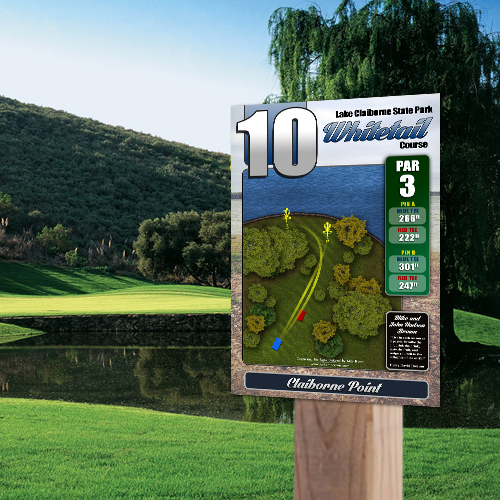
The best sponsor placement is clear but disciplined. A logo area should be planned as part of the sign design, not squeezed into leftover space after the hole map is finished. On a high-quality tee sign, the hole number, par, distance, layout, directional information, and sponsor recognition all have defined visual roles. Players get the information they need first, while the sponsor receives clean, professional exposure.
For many projects, consistency matters as much as size. A local restaurant, contractor, financial institution, brewery, medical practice, or sporting goods business may be more interested in sponsoring a full course package when each sign carries the same polished recognition area. Consistent placement makes the sponsorship feel intentional and gives the course a unified appearance.
The top sponsor benefits for disc golf extend beyond logo exposure
Local businesses often support disc golf because it gives them a visible role in improving a community asset. A sponsor is not simply buying advertising space. They are helping create a course that is easier to play, safer to navigate, and more welcoming for new and returning players.
That community connection can be particularly meaningful on public courses. Park users see that a local organization invested in an amenity used by families, league players, visitors, students, and casual recreational players. The goodwill can be more valuable than a short-lived promotional campaign, especially for businesses that depend on local relationships.
Sponsorship can also create stronger ties between clubs and community partners. A business that begins by sponsoring a tee sign may later participate in a tournament, donate prizes, support a league, or help with a volunteer workday. The first signage commitment can become the beginning of a longer relationship.
Still, organizers should avoid promising more than the signage can deliver. A tee sign sponsorship provides dependable on-course visibility, but it is not a substitute for a complete marketing campaign. Be specific about the benefits: logo placement, course recognition, community support, estimated term of display, and any additional acknowledgment that is genuinely available.
Durable signage protects the sponsor’s investment
A sponsor expects their name to remain legible and professional over time. Faded graphics, peeling vinyl, warped materials, and makeshift mounting can diminish both the course image and the value of the sponsorship.
For that reason, material selection is part of the sponsor conversation. Full-color disc golf tee signs produced with durable, UV-protected materials are built for the outdoor conditions courses face: direct sun, rain, temperature swings, routine cleaning, and frequent player use. Aluminum composite and aluminum options can provide the long-term performance many public and high-traffic courses need.
A durable sign also reduces the need to return to sponsors too soon for replacement funding. If organizers can explain that a signage system is designed for outdoor use and built around the specific course layout, the offer becomes more credible. Sponsors are supporting a lasting improvement, not a temporary patch.
It depends on the location, of course. A heavily wooded course may experience less sun exposure than an open park course, while a coastal, desert, or high-elevation setting may place greater demands on materials and mounting hardware. The sign package should fit the environment, expected traffic, and maintenance capacity of the facility.
Professional course presentation supports player confidence
Good signage changes how players experience a course from the first tee. A clear course overview can help visitors find the starting point, understand the layout, and locate amenities. Accurate tee signs reduce confusion at each hole. Directional signs help players move efficiently between baskets and the next tees.
When those elements share a coordinated design, the course feels cared for. That perception matters to park departments, event organizers, and clubs trying to grow participation. Players are more likely to recommend a course that is easy to follow, especially when they bring new players or out-of-town guests.
Sponsors benefit from that positive association. Their logos appear on infrastructure that reflects preparation and community pride rather than clutter. This is why custom design matters. A generic template may technically display a hole number and a logo, but course-specific artwork can account for actual fairway shapes, water hazards, alternate routes, elevation notes, branding colors, and sponsor placement without compromising clarity.
For championship-level courses and tournament destinations, polished signage also helps present the facility as an organized venue. That can support event recruitment, league participation, and local tourism conversations, even if signage alone is not the deciding factor.
A clear sponsorship structure makes approval easier
Sponsors are more likely to say yes when the offer is simple to understand. Before contacting businesses, determine how many sponsor placements are available, what each sponsor receives, how long recognition will remain in place, and what artwork requirements apply.
A course can offer one sponsor per hole, but that is not the only model. A title sponsor may receive primary placement on the course map and overview sign. Hole sponsors may receive individual recognition. A club may reserve select placements for annual partners or tournament supporters. The right structure depends on the project size and the level of local business support.
Keep the visual standards consistent from the beginning. Establish logo dimensions, accepted file formats, approval deadlines, and any restrictions on sponsor categories. This protects the design quality and prevents late changes from delaying production. It also helps public agencies avoid conflicts with signage policies or park sponsorship guidelines.
Custom Disc Golf Tee Signs supports this process by building sponsor areas into custom course-specific designs, then providing proofs for review before production. That proofing stage gives organizers a practical opportunity to verify hole information, branding, sponsor logos, and overall readability before signs are printed.
Give sponsors a project they can be proud to support
The strongest sponsorship request is concrete. Show the business what the finished sign system will look like, explain the role their support plays, and connect their investment to a better experience for the people using the course. A clear design, durable materials, and an organized approval process demonstrate that the project will be handled professionally.
When a local sponsor can stand at a tee pad and see their support helping players understand the hole ahead, the value is easy to recognize. Build the project around that moment: useful signage, clean recognition, and a course that feels ready for the next round.