How to Build Branded Disc Golf Signage

A course can have great baskets, smart routing, and strong local support, then still feel unfinished the moment players step onto the first tee. That usually comes down to signage. If you want to build branded disc golf signage that actually improves the player experience, the goal is not just to mark holes. It is to create a clear, durable system that helps people navigate the course, understand each hole, and immediately recognize that the facility is well managed.
For clubs, park departments, municipalities, and volunteer organizers, branded signage also solves a bigger problem. It brings consistency to a course that may have been built in phases, updated by different people, or patched together with temporary signs over time. When the tee signs, next tee markers, course map, and sponsor areas all look like they belong together, the entire property feels more professional.
What it really means to build branded disc golf signage
Branding is not just a logo in the corner. On a disc golf course, branding means every sign shares the same visual language. Fonts, colors, layouts, icon styles, sponsor treatment, and material choices should all feel connected. That consistency makes a course easier to use, but it also changes how players, city staff, donors, and sponsors perceive the facility.
A well-branded signage package often includes tee signs, directional signs, course overview boards, and maps. On some courses, that also means rules signs, welcome panels, and donor recognition pieces. The exact package depends on your layout, traffic, and budget, but the principle stays the same. Players should be able to move through the course without guessing, and every sign should reinforce the same course identity.
That identity matters even more for public courses. If your course sits in a city park, state park, or recreation area, the signage has to serve multiple audiences at once. New players need clarity. Experienced players want accurate hole data. Park departments want a polished public-facing asset. Sponsors want clean, readable placement that reflects well on their business. Good branding is how you make all of those needs work together.
Start with the player experience, not the artwork
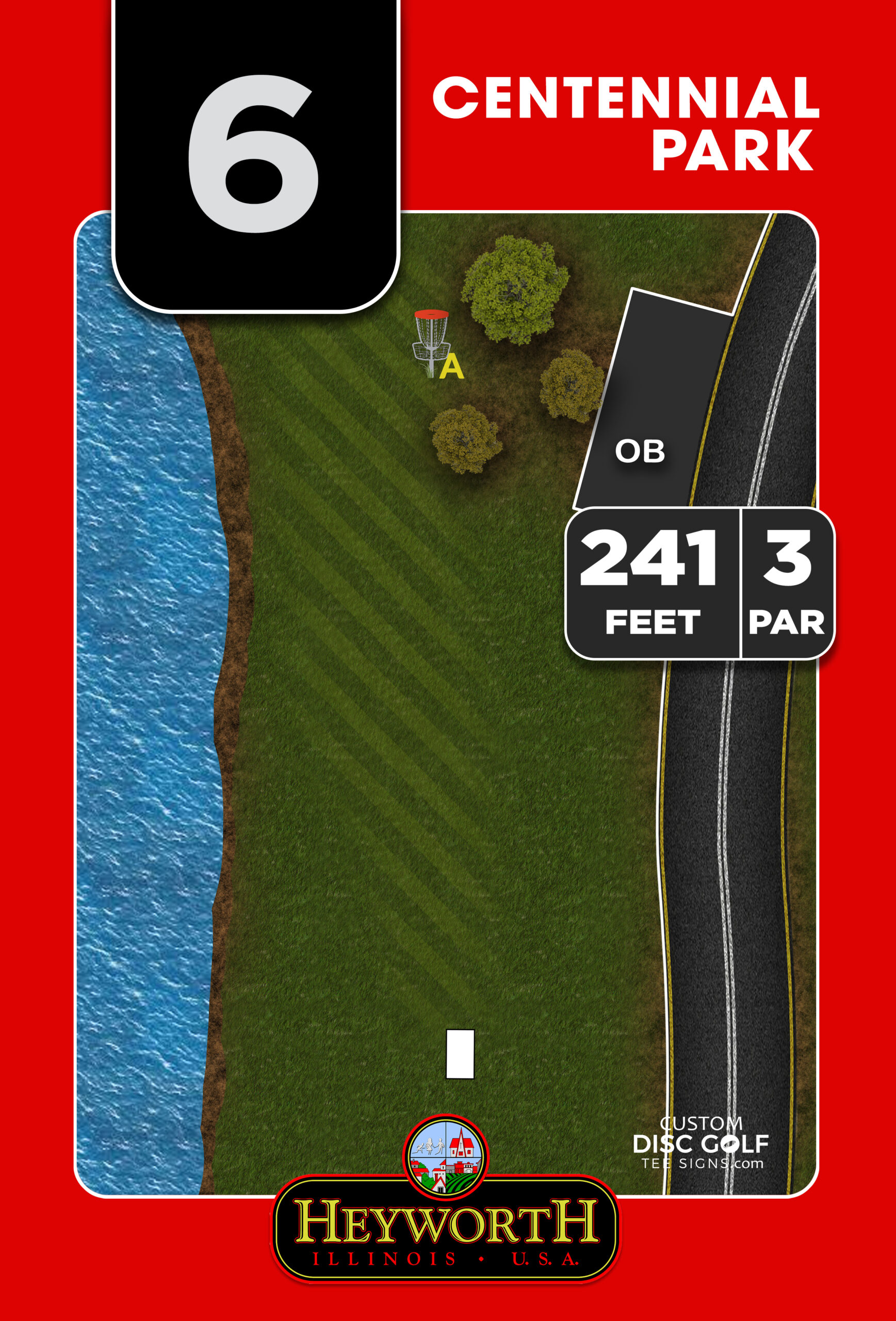
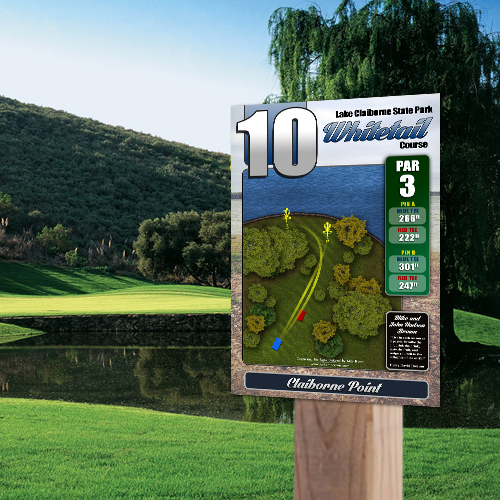
The most common mistake in signage projects is focusing on the look before defining the function. Strong design matters, but only after the information hierarchy is right. At the tee, players need to understand the hole quickly. That usually means hole number, par, distance, basket position if applicable, tee position if applicable, and a clean layout map that shows fairway shape and major obstacles.
If the course has multiple pin placements, alternate tees, or safety notes, those need to be handled carefully. Too much information creates clutter. Too little creates confusion. There is always a trade-off between detail and readability, especially on heavily wooded championship layouts where a hole map can become visually busy fast. The best sign systems simplify the right details without oversimplifying the hole.
Directional signage deserves the same level of attention. Many courses spend their budget on tee signs, then leave navigation to improvised arrows or small markers that are easy to miss. That is where player frustration builds. If people cannot find the next hole, the quality of the tee sign on the previous pad does not matter much. Building a branded system means thinking beyond individual signs and planning the full on-course flow.
How to build branded disc golf signage that holds up
Material choice has a direct impact on lifespan, maintenance, and presentation. For most permanent installations, durable outdoor substrates with UV protection make the most sense because they hold color, resist weather, and maintain a cleaner look over time. Aluminum composite and aluminum are common choices for good reason. They offer a strong balance of durability, print quality, and professional appearance.
That said, the right substrate depends on the course environment. A heavily exposed park with full sun, irrigation, and year-round public use may justify a more premium material choice than a lower-traffic seasonal course. If vandalism is a recurring issue, mounting strategy and sign replacement planning matter just as much as the panel itself. There is no single answer for every site, but temporary or low-grade materials usually cost more in the long run when signs fade, warp, or need repeated replacement.
Shape and finish also affect performance. Custom-shaped signs can elevate the look of a course and create a stronger identity, but they need to be executed cleanly and mounted securely. A standard rectangular panel may be the smarter choice when budget is tight or when fast deployment matters most. The best projects match ambition to actual course needs rather than treating premium features as automatic requirements.
The design process should reduce work for your team
Most course leaders are not looking for a blank canvas. They are looking for a process that gets the details right without creating weeks of back-and-forth. That is why a structured design and proofing workflow matters. When you build branded disc golf signage, the easiest projects are the ones where course data, branding elements, sponsor details, and sign count are organized early.
Start with a complete hole list and verify distances, pars, tee names, and pin configurations before artwork begins. If your course map is outdated or your routing has changed, fix that first. Sign projects often slow down because stakeholders are still debating hole information after design has started. That creates revisions, delays, and avoidable confusion.
Next, define what branding needs to appear on the signs. That may include the course logo, city or parks department branding, club branding, or tournament identity. On public projects, approvals can involve multiple parties, so a proofing process is not optional. It protects everyone from costly errors and helps ensure the final package reflects the course accurately.
Professional disc-golf-specific design makes a difference here. A general sign shop may be able to print panels, but disc golf tee signs are not generic signage. They need accurate hole mapping, readable layouts, sponsor integration, and design choices that make sense at a tee pad from a standing distance. That niche experience shortens the process and usually produces a better final result.
Sponsorship is not an afterthought
For many courses, sponsorship space is what turns a delayed signage project into an approved one. Branded tee signs create a natural place to recognize local businesses, club supporters, and community backers without making the course feel over-commercialized. The key is to treat sponsor placement as part of the design system, not as a last-minute box added wherever space is left.
A good sponsor area should be consistent across the course, easy to read, and proportioned appropriately. If every sign handles sponsor logos differently, the system starts to look patched together. If sponsor logos dominate the sign, the player information suffers. Balance is the goal.
This is where many clubs and volunteer-led projects gain momentum. A clean sponsor-ready signage package gives local businesses something tangible to support. They can see exactly where their brand will appear and how it fits into a polished public asset. For Eagle Scout projects and community course upgrades, that clarity can make fundraising much easier.
Build for consistency across the whole course
One excellent tee sign does not fix a course with poor overall communication. To bring your course to a higher standard, signage has to work as a coordinated system. That means overview signage at the entrance, consistent tee signs at each hole, directional signs where players need them, and a visual approach that ties everything together.
There are times when a phased rollout makes sense. A club may start with the front nine, replace the worst existing signs first, or install a new course map before committing to a full package. That is a practical approach when budgets are limited. The important thing is to design with the final system in mind so future additions match what is already on the ground.
Fast turnaround matters here because many organizations are working around event schedules, volunteer timelines, or grant windows. Free shipping and a predictable production process also matter more than people expect, especially when multiple stakeholders are waiting on installation. A signage partner that can guide the project from layout to proofing to production removes friction at every step.
Build branded disc golf signage that reflects the course you want to run
Players notice when a course feels cared for. So do sponsors, park officials, and first-time visitors. Clean, durable, well-designed signage tells people that the course is organized, current, and worth returning to. It also makes life easier for the people managing the property because fewer players are confused, fewer signs need replacing, and the course presents itself better every day.
If your current signs are inconsistent, faded, missing, or built from whatever was available at the time, upgrading is not just a cosmetic move. It is an operational improvement. Custom Disc Golf Tee Signs helps courses build signage systems that look professional, hold up outdoors, and support the way real disc golf facilities function.
The best time to fix signage is before another season goes by with players guessing where to go next.