Aluminum Tee Signs Review for Disc Golf Courses
A tee sign usually gets judged in the first five seconds. Players walk up, glance at the map, check distance and par, and move on. But for course managers, clubs, and parks departments, that quick moment reveals a lot. This aluminum tee signs review looks at what aluminum actually delivers on a disc golf course, where it shines, and where another material may make more sense.
If you are planning a new install or replacing worn signs, aluminum is one of the most dependable choices available. It carries a professional look, holds up well outdoors, and gives your course a permanent, well-funded appearance. That said, not every aluminum sign is equal, and not every project needs the same build.
Aluminum tee signs review: what stands out first
The biggest advantage of aluminum is confidence. When a course uses aluminum tee signs, the finished system feels established. That matters for municipal parks, destination courses, state parks, and club-led upgrades where presentation affects public perception, sponsor confidence, and player experience.
Aluminum also solves a common problem with lower-end signage. Temporary-looking signs can make even a strong course feel unfinished. A clean aluminum panel with a clear hole map, strong color contrast, and UV protection immediately raises the standard.
From a material standpoint, aluminum performs well in the conditions disc golf courses actually deal with. Sun exposure, rain, fluctuating temperatures, sprinklers, mud, and repeated player contact are all part of normal use. Aluminum handles that environment better than many budget-friendly alternatives, especially when paired with quality printing and protective finishing.
Durability in real course conditions
For most buyers, durability is the first reason to consider aluminum. That is fair. Tee signs are not indoor graphics. They are exposed infrastructure.
Aluminum resists rust, which gives it a clear advantage over untreated steel-based options. It also handles moisture well, making it a practical fit for wooded courses, creek-adjacent fairways, and public parks with irrigation systems. If your current signs have swollen edges, faded graphics, or fastener failure after a few seasons, material choice is often part of the problem.
Impact resistance matters too, but this is where expectations should stay realistic. Aluminum is durable, not indestructible. It holds up well under normal use, yet direct abuse, mower strikes, vandalism, or poor mounting can still damage it. Thicker gauges and better support systems improve performance, but installation quality matters almost as much as the panel itself.
For high-traffic public courses, aluminum is usually a strong long-term choice because it balances weather resistance with a professional finish. If your course sees heavy unattended public use, durability should include both the panel and the mounting system, not just the face material.
Print quality and readability
A tee sign is only useful if players can read it quickly. This is where aluminum can perform extremely well, provided the artwork is designed properly.
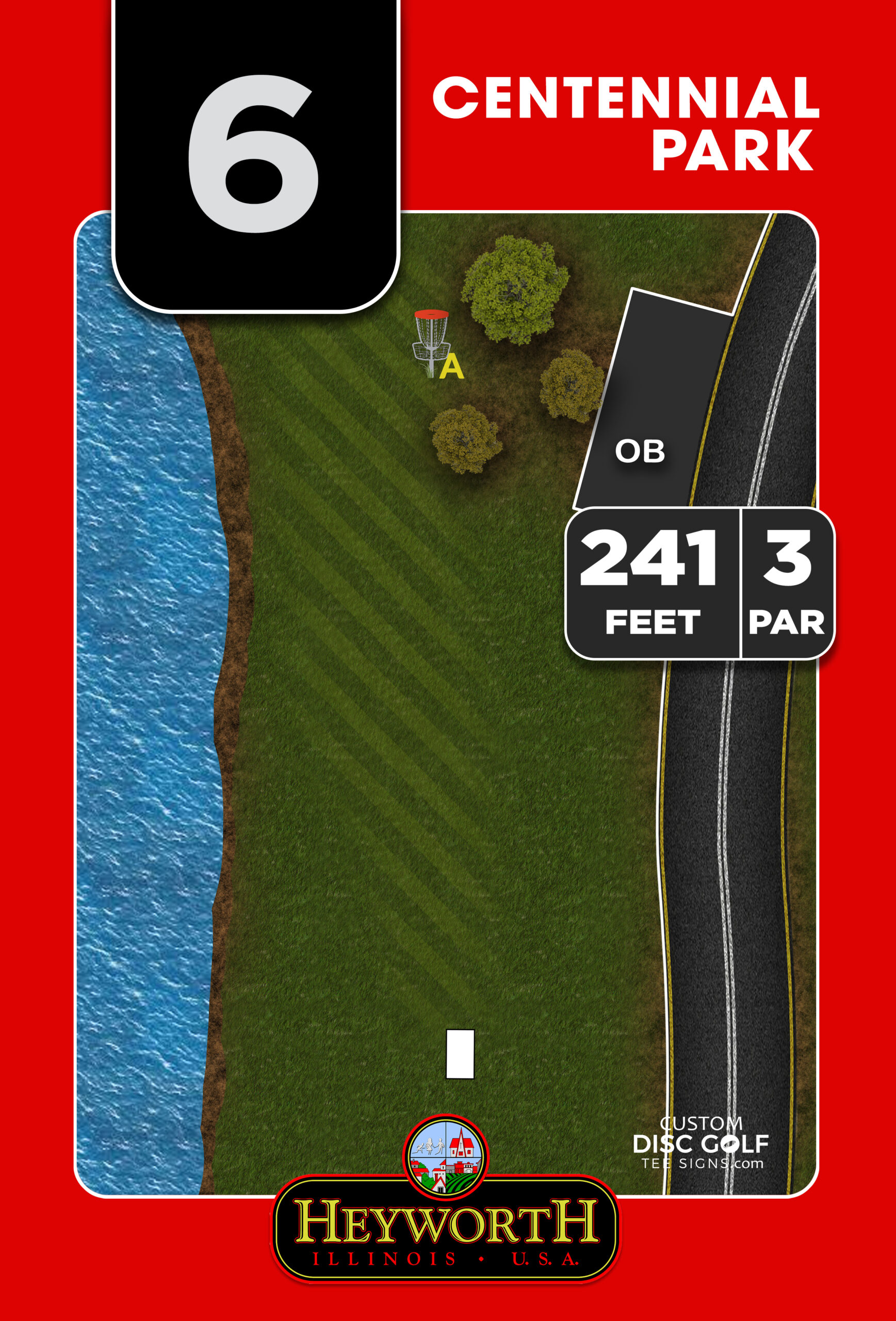
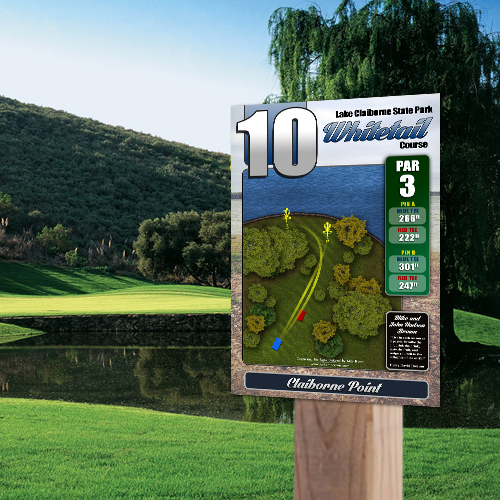
Full-color graphics reproduce cleanly on aluminum surfaces, and that makes a difference for hole maps, out-of-bounds markings, next-tee arrows, elevation notes, and sponsor logos. Fine details can look sharp, but there is a trade-off. The more information you place on a sign, the more important layout discipline becomes. A durable sign with cluttered design is still a bad sign.
For disc golf, readability is not just about print resolution. It is about hierarchy. Players need the basket location, tee orientation, distance, and major hazards first. Everything else is secondary. Aluminum supports high-quality visuals, but the real value comes from combining that material with course-specific design experience.
This is where a disc-golf-focused sign provider has an advantage over a general printer. A generic shop may print exactly what you send. A specialist is more likely to catch scaling problems, poor contrast, confusing map orientation, or sponsor placement that overwhelms gameplay information.
Appearance and course image
Course image is not a soft benefit. It affects funding conversations, park approval, event readiness, and sponsor participation.
Aluminum tee signs look permanent. That can help a course justify itself as a serious recreational asset rather than an informal layout. For clubs approaching local businesses about sponsorships, polished signage is also easier to sell. Sponsors want to be associated with something that looks organized and well maintained.
This matters even more for projects involving multiple stakeholders. A volunteer-led course upgrade may need buy-in from parks staff, city officials, donors, and club leadership. Aluminum signage photographs well, presents well in proofs, and signals that the project is being handled professionally.
Cost vs value in an aluminum tee signs review
Aluminum is rarely the cheapest option upfront, so the question is whether the value justifies the spend. In many cases, yes.
The real comparison is not aluminum versus the lowest quote. It is aluminum versus replacement cycles, maintenance effort, and lost credibility from worn signage. If a lower-cost sign fades quickly, warps, or needs to be redone after a short period, the savings disappear fast. That is especially true when labor, installation coordination, and stakeholder approvals have to be repeated.
At the same time, budget still matters. Smaller clubs and community projects may not need the most premium sign package on every hole. It can make sense to prioritize aluminum for primary tee signs, course maps, and branded entry signage, then scale other elements based on available funding.
Sponsorship support often changes the equation. When signs are designed with intentional sponsor placement, aluminum becomes more attainable because the signage itself helps offset project cost. For many courses, that is not an extra feature. It is what makes the project possible.
When aluminum is the right fit
Aluminum is usually the right call when you need a long-term, professional signage system and you want the course to look complete from day one. It works especially well for permanent installations, city and county park upgrades, state park courses, tournament-hosting facilities, and sponsor-supported projects where appearance matters.
It is also a strong fit when the course has enough traffic that low-end signs would quickly show wear. If players are using the signs daily, the better material pays off in consistency and reduced replacement hassle.
When another material might make more sense
There are cases where full aluminum is not the best answer. A very limited-budget community build, a short-term course, or an early-phase install may benefit from a more economical substrate while the layout is still evolving. If hole routing or distances are likely to change soon, locking into a premium permanent sign system too early may create avoidable rework.
Some buyers also prefer aluminum composite for certain applications because it can offer a strong balance of durability, weight, and cost. The best choice depends on the sign size, mounting method, exposure level, and budget.
That is why material selection should never happen in isolation. Good sign planning starts with how the course functions, how permanent the layout is, and what level of presentation the project needs.
What separates a good aluminum sign from a disappointing one
Not all aluminum tee signs perform the same, even when the product description sounds similar. The difference usually comes down to four things: panel quality, print process, UV protection, and design workflow.
Panel quality affects rigidity and long-term performance. Print process affects color accuracy, detail, and outdoor longevity. UV protection affects whether your artwork still looks strong after years in the sun. The design workflow affects whether the final sign is actually accurate, readable, and ready for stakeholder approval.
That last point gets overlooked too often. A proofing process is not just a formality. It is where map errors get corrected, sponsor names get verified, and layout issues get resolved before production. For clubs, municipalities, and Eagle Scout-led improvement projects, a structured proofing phase reduces stress and prevents expensive mistakes.
A provider that understands disc golf can also help standardize the entire system. That includes consistent branding, hole numbering, navigational logic, and sponsor integration across the course. One well-designed aluminum sign looks good. A full coordinated sign package makes the course feel intentional.
Final verdict on aluminum tee signs
For most established disc golf courses, aluminum is a smart investment. It offers the durability, appearance, and print quality needed for signage that does more than mark a tee pad. It improves navigation, supports sponsors, strengthens course identity, and gives players confidence that the course is cared for.
The trade-off is simple. You will usually spend more upfront than you would on a short-term or lower-tier option. But if your goal is to bring your course to a higher standard and avoid redoing the project in a year or two, aluminum earns its place.
If you are evaluating signage for a public park, private course, club upgrade, or sponsor-funded improvement, the best next step is not just choosing a material. It is choosing a signage partner that can translate your course into a clear, durable, professionally designed system that still looks right long after installation day.