Park Signage Planning Guide for Disc Golf Courses
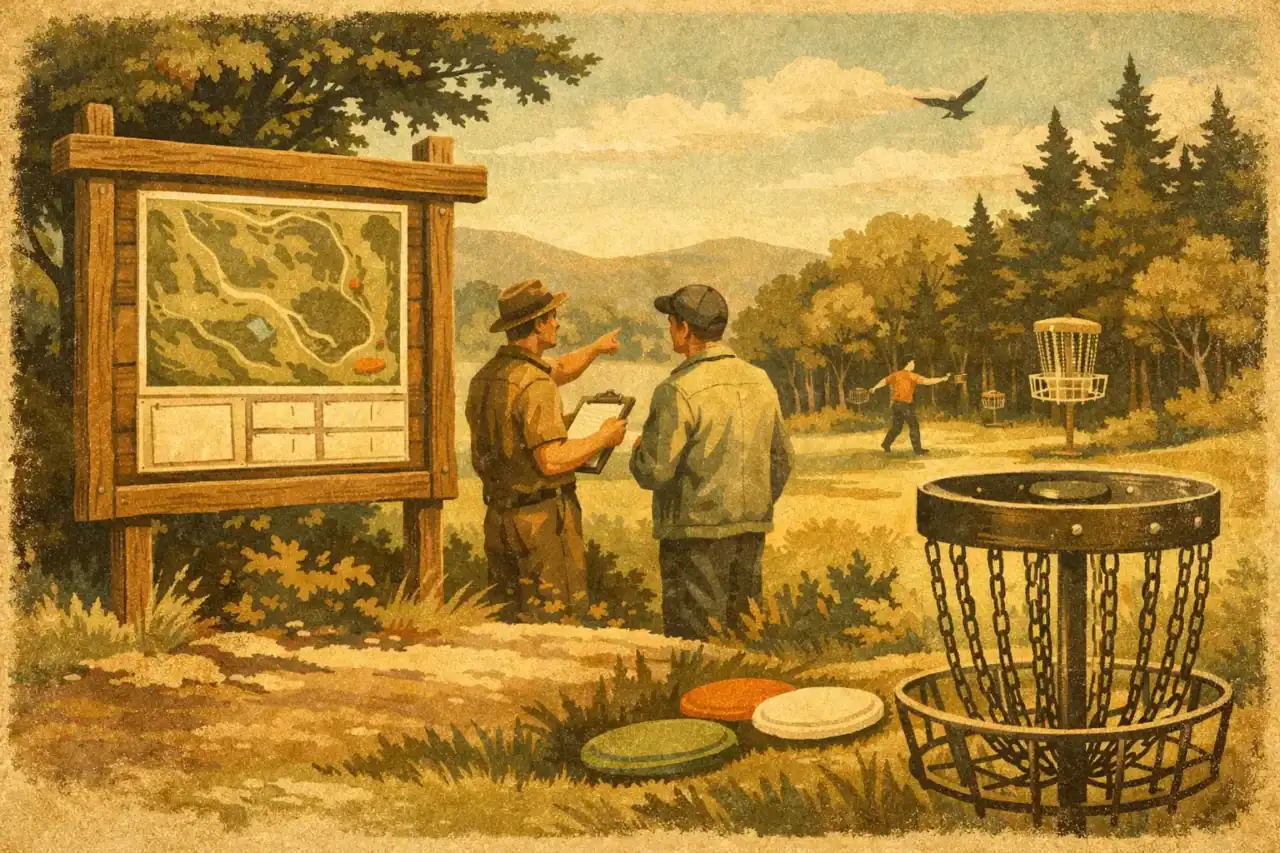
A player standing at hole 1 should know three things within seconds: where the basket is, which route to take, and where the next tee begins after the putt drops. When any of those answers are missing, even a well-designed course can feel unfinished. This park signage planning guide helps park departments, course managers, clubs, and project leaders build a signage system that makes a disc golf course easier to play, easier to maintain, and more professional from the first throw.
Signage is not a finishing touch. It is part of the course infrastructure. Good signs reduce wrong turns, keep players moving, help first-time visitors feel welcome, and give municipalities a clean way to communicate rules, safety information, and park expectations. For clubs, clear signage also creates a stronger platform for leagues, tournaments, and local sponsorships.
Start With the Player Journey
Planning begins before artwork, materials, or sign sizes. Walk the course as someone who has never played it. Start at the parking area, look for the first tee, play each hole, and follow the exit path. Mark every moment where a visitor might hesitate.
The most common gaps appear before hole 1, at trail crossings, after long walks between holes, and around alternate layouts. A parking lot may need a course overview and basic rules. The first tee may need a welcome sign, map, and event information. A long transition from hole 9 to hole 10 may need a simple directional arrow that prevents players from wandering through another fairway or onto a restricted trail.
This walk-through should also consider different users. A regular league player may know the layout by memory, but a family trying disc golf for the first time will depend on signs. Tournament players need confident navigation between holes. Maintenance teams need signs that clearly identify holes and routes. The best system serves all of them without cluttering the landscape.
Identify the Essential Sign Types
Most disc golf parks need a coordinated combination of course overview signs, tee signs, directional signs, and policy or information signs. Each has a different job.
A course overview sign belongs near the primary entrance or parking area. It should show the entire layout, parking, restrooms, practice areas, emergency access points when applicable, and a clear “you are here” marker. It is also the right location for park rules, contact information, course etiquette, and a QR code if your organization uses one for current updates.
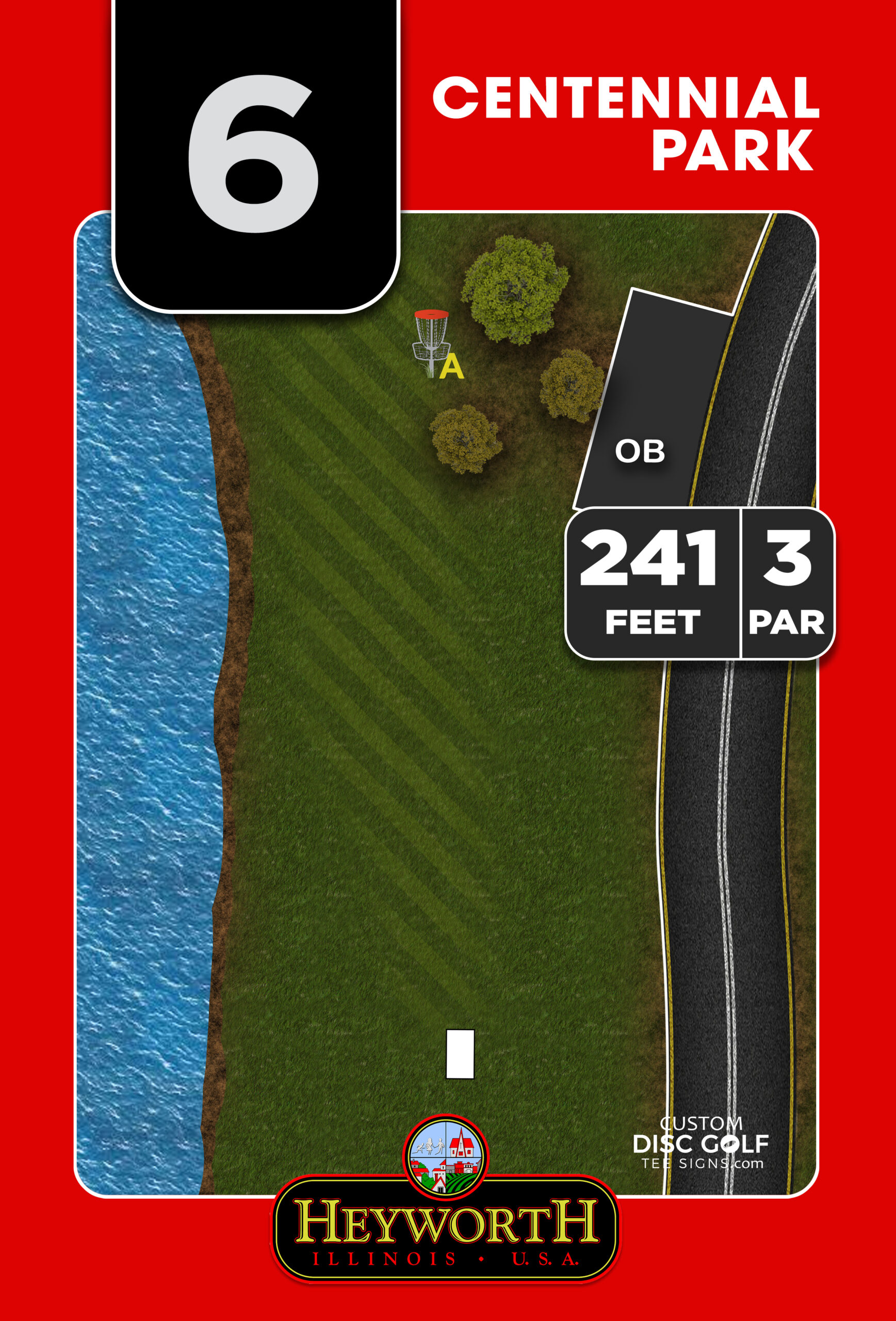
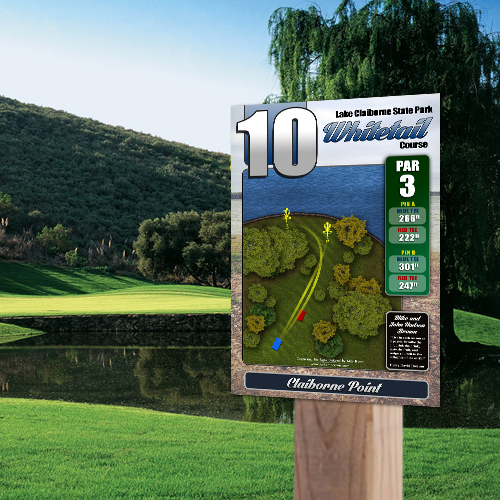
Tee signs are the primary on-course information source. At minimum, they should identify the hole number, par, distance, and target location. For stronger player usability, include a full-color hole map, fairway shape, hazards, out-of-bounds areas, alternate pin positions, and next-tee direction. Directional signs handle the spaces between holes. They should be concise, highly visible, and placed before the player reaches a confusing decision point.
Information signs are more situational. They can communicate trail-sharing expectations, seasonal closures, wildlife protection, flood-prone areas, or tournament notices. Use them where the message matters. Filling every open post with text causes players to stop noticing signs altogether.
Build Your Park Signage Plan Around Course Conditions
Every course has a different combination of woods, open fields, elevation, shared trails, and public-use areas. That is why generic sign layouts often fall short. Your plan should respond to the conditions players actually encounter.
Wooded courses usually need stronger transition signage because sightlines disappear quickly. Signs should be visible from the direction of travel, not just from the tee pad. Open courses may need larger hole maps and clearer hazard details because distance and wind can make basket locations hard to judge. Multi-use parks need direct, respectful guidance where disc golf traffic overlaps with walkers, playgrounds, picnic areas, or athletic fields.
Sign placement matters as much as sign design. A tee sign should be readable from the teeing area without forcing players to stand in the throwing line. Directional signs should appear before a split in the trail, not after a player has already guessed wrong. On busy courses, consider the flow around groups waiting at tees. A sign mounted where players can study it without blocking the next group keeps play moving.
Accessibility also deserves attention. Use readable type sizes, high contrast, and plain directional language. A detailed hole diagram is valuable, but it should not replace clear printed information. Think about viewing distance, glare, shade, and whether a sign remains understandable in rain or low evening light.
Choose Sign Content That Works During Play
A tee sign has limited space, and every element needs to earn its place. Players scan signs quickly. They are looking for a route, a number, or a warning, not a wall of text.
Prioritize the information that affects the shot: hole number, distance, par, layout map, basket location, mandatory routes, hazards, and out-of-bounds lines. If the course has multiple tees or baskets, label each clearly using consistent colors and names. Avoid relying on color alone. Pair colors with labels so the sign remains useful for all players and under varying light conditions.
Course maps should use the same visual language as tee signs. If water hazards are blue on the overview map, keep them blue on every hole. If long tees are gold and short tees are white, use those identifiers consistently throughout the course. This consistency lowers the learning curve and makes the entire park feel intentionally managed.
Accurate information is non-negotiable. Measure distances carefully, confirm current basket locations, and review the map with someone familiar with the course before proofing. A beautiful sign with an incorrect route or outdated pin position creates more problems than a simple sign ever would.
Plan for Change Without Starting Over
Course improvements happen. Baskets move, trees fall, alternate layouts are added, and new paths are built. A practical signage plan separates permanent course identity from details likely to change.
For example, a durable main tee sign can include the hole map and fixed course branding, while removable panels or update areas can handle seasonal pin positions and temporary tournament instructions. This approach is especially useful for parks that host events or maintain multiple layouts.
Before production, create a single source of truth for all course data. Keep hole distances, par, tee names, sponsor information, map files, and approved wording in one organized document. This prevents inconsistent details from reaching different signs and speeds up the proofing process.
Select Materials for Public-Park Durability
Public course signage faces sun, rain, impacts, mowers, dirt, and constant use. Material choices should reflect those conditions and your expected maintenance cycle.
Aluminum composite is a strong choice for many disc golf tee sign projects because it provides a rigid, professional panel with durable full-color printing. Aluminum is another excellent option when long-term outdoor performance and a premium finished appearance are priorities. UV-protected graphics are essential for preserving color and legibility over time, especially on open courses with heavy sun exposure.
The right material depends on the site and budget. A lightly used community course with some tree cover may not need the same build as a championship-level venue with year-round traffic and sponsor commitments. However, saving money on thin, temporary-looking signs can create a replacement problem within a few seasons. A well-built sign system costs more upfront than paper inserts or basic stickers, but it protects the course presentation and reduces recurring labor.
Mounting hardware and posts deserve the same attention. Match the installation method to soil conditions, mowing practices, vandalism risk, and local park standards. Keep signs high enough to remain visible but low enough for comfortable reading. Before digging, confirm utility requirements and obtain any required park approvals.
Use Sponsorship to Strengthen the Project Budget
Sponsorship can turn a limited signage budget into a complete course improvement project. Local businesses, disc golf retailers, restaurants, real estate professionals, and community partners often value visibility on a well-used public course.
The key is to make sponsor placement organized and respectful of the player experience. Reserve a consistent area on each tee sign or create a dedicated sponsor panel on the course map. Keep the hole information dominant. Sponsors should support the sign system, not compete with it.
Present sponsorship as a defined package. Explain where the logo will appear, how long the recognition lasts, what other exposure may be included, and how the funds improve the public course. Clear tiers make it easier for clubs and project coordinators to ask for support with confidence. For Eagle Scout projects and volunteer-led improvements, this structure can also make stakeholder approvals more straightforward.
Follow a Proofing Process That Prevents Expensive Errors
A successful project moves from site information to organized design, then through a careful proofing stage before production. Give every stakeholder a clear chance to review course maps, spelling, distances, sponsor logos, and rules language. Parks often involve several decision-makers, so establish one final approver early.
Do not proof only on a computer screen. Print a sample at a readable size or review a scaled layout with the planned mounting location in mind. Small text, thin arrows, and low-contrast map features can look acceptable on a monitor but fail outdoors.
Custom Disc Golf Tee Signs can help course teams move through this process with custom course-specific artwork, sponsor-ready layouts, durable material options, and a clear path from design to approved proofs. The goal is not to force your course into a template. It is to create a system that fits its terrain, identity, and players.
When you plan signage as part of the course experience, every sign begins doing more than displaying information. It gives a first-time visitor confidence, helps a tournament run cleaner, and shows the community that the course is built to a higher standard.