Disc Golf Sign Durability That Holds Up Outside
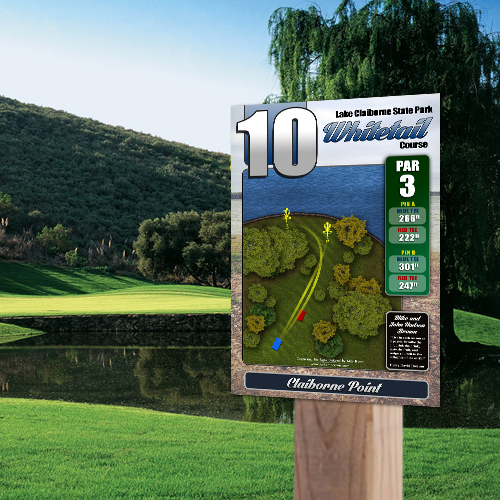
A tee sign can look excellent on installation day and become hard to read far sooner than anyone expected. Disc golf sign durability is not just about selecting a metal panel. It comes from the complete system: the sign substrate, full-color print process, UV protection, mounting hardware, post condition, and the local weather your course faces every day.
For parks, municipalities, clubs, and course managers, durable signage protects more than a budget. It keeps players moving confidently from tee to basket, presents the facility professionally, and gives sponsors a placement that remains visible. A faded hole map or warped sign sends the opposite message, even when the course itself is well designed.
What Determines Disc Golf Sign Durability?
Outdoor tee signs deal with a tougher environment than most people realize. They face direct sunlight, rain, snow, humidity, wind, sprinkler overspray, mower debris, flying discs, and occasional vandalism. At busy public courses, they also endure hands, bags, carts, and players leaning equipment against the post.
The best material for one course is not automatically the best choice for another. A shaded wooded course in the Midwest has different challenges than an exposed desert layout, a coastal park, or a heavily used municipal course. Still, a few factors consistently determine how well a sign performs over time.
The panel material matters first
Aluminum composite is a practical choice for many disc golf tee sign projects. It combines aluminum outer layers with a solid core, creating a rigid, smooth panel that resists moisture and provides a clean surface for detailed hole maps, rules, logos, and sponsor graphics. It is well suited to standard rectangular tee signs where reliable outdoor performance and a polished appearance are the goal.
Solid aluminum can be a strong option when a course needs a lighter metal panel or has a design that calls for custom shaping. It will not rust, which is a significant advantage in wet locations. The right thickness matters, though. A thin metal panel can bend under repeated impacts or high winds, while an appropriately specified panel remains flat and professional-looking.
Wood, plastic, and laminated paper signs may appear less expensive at the start, but the replacement cycle can change the real cost quickly. Wood can split, fade, or absorb moisture. Plastic can become brittle or distort in intense heat. Paper-based graphics, even when laminated, are vulnerable once moisture finds an edge or mounting hole.
Print protection keeps graphics readable
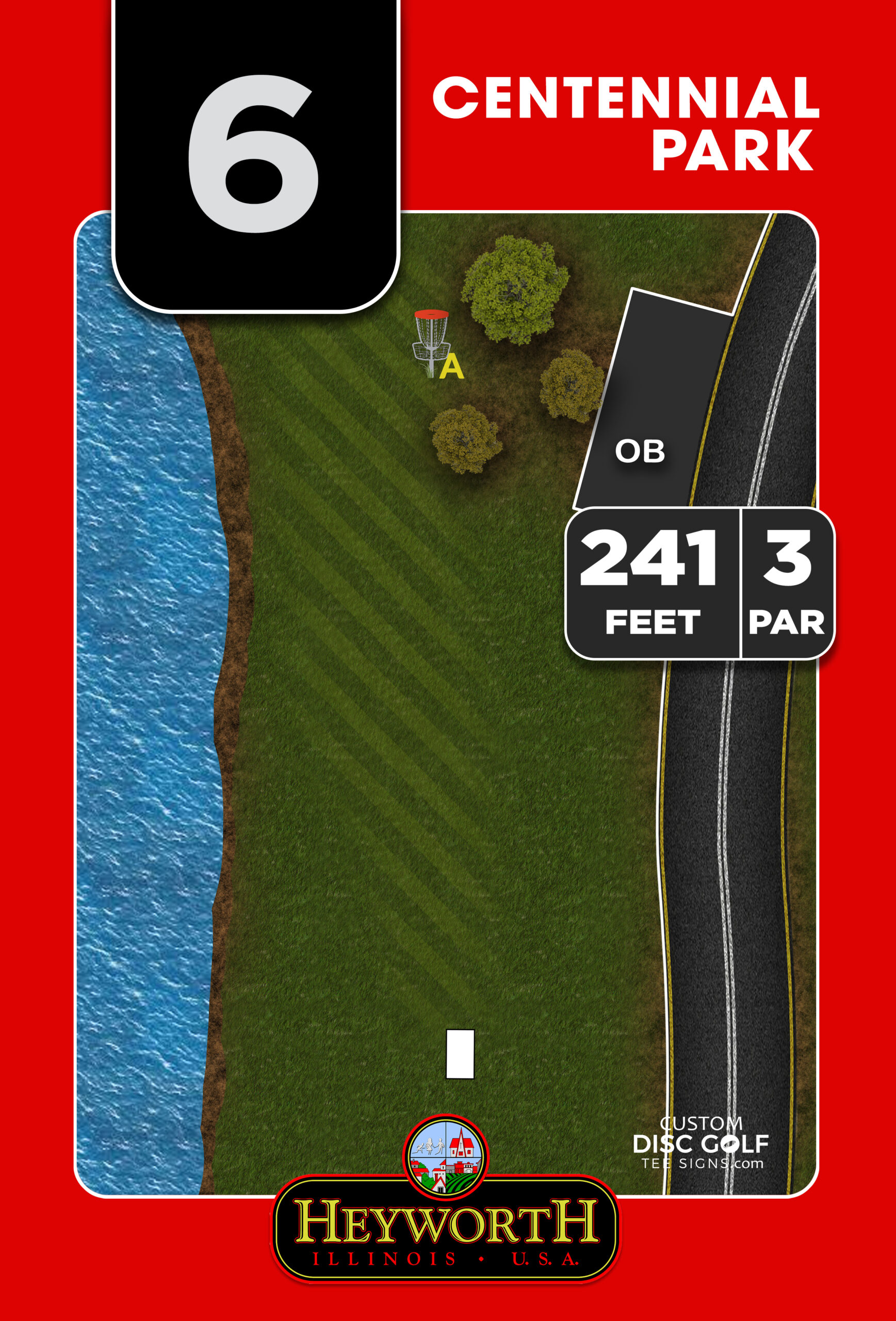
A durable panel is only half the job if the artwork fades or peels. Disc golf players depend on readable distances, fairway shapes, next-tee direction, mandatory routes, out-of-bounds information, and course rules. When color contrast disappears, a sign stops doing its job.
UV-protected full-color printing is essential for outdoor graphics. Sunlight is especially hard on dark colors, bright sponsor logos, and detailed maps with multiple visual layers. Proper UV protection helps preserve contrast and keeps the hole layout understandable through changing seasons.
This is where professional file preparation also makes a difference. Thin lines, tiny labels, and low-resolution aerial imagery may look acceptable on a computer screen but become difficult to read outdoors. A tee sign should be designed for a standing player in changing light, not merely for approval in a digital proof. High-resolution layouts, intentional type sizing, and clear color hierarchy support longevity because the sign remains useful even after normal outdoor wear begins.
Mounting is part of the sign system
A premium panel can still fail early if it is mounted poorly. Loose hardware lets a sign rattle in the wind, which can enlarge mounting holes and stress the panel over time. Hardware that is not suitable for outdoor use can rust, stain the sign face, or become difficult to service.
Posts need the same attention. A stable metal post or properly installed treated post helps keep the sign level and reduces movement. In areas with freeze-thaw cycles, post depth and ground conditions matter. In sandy soil, exposed locations, or parks with frequent storms, the installation may need additional reinforcement.
Mounting holes should be planned into the design and production process rather than drilled as an afterthought in the field. Thoughtful placement protects key information, improves alignment, and reduces the chance of damaging a finished graphic during installation.
Plan for Your Course Environment
Course decision-makers should choose signage based on actual site conditions, not just a product photo. Start by walking the layout with durability in mind. Look at which tees receive the longest periods of direct sun, where water collects, whether carts or maintenance equipment pass close to signs, and which holes experience the highest player traffic.
An open course with limited tree cover needs strong UV resistance above all else. A wooded course may receive less direct sun, but moisture, moss, falling branches, and poor airflow can create their own problems. A lakeside or coastal course should account for persistent humidity and corrosion risk in hardware. Northern facilities should consider snow removal routes and the force of freeze-thaw movement around posts.
Vandalism is another reality for public spaces. No sign material is completely immune to intentional damage, but durable metal panels, secure mounting, and a layout that avoids isolated placement can reduce routine issues. It is also wise to retain final production files. If a single panel needs replacement, having approved artwork available makes it easier to restore a consistent course-wide appearance.
Design Choices That Help Signs Last Longer
Durability has a visual side. A sign with a crowded layout can become unusable before the material itself fails because small text, weak contrast, and overly detailed imagery lose clarity in outdoor conditions.
Keep the essential information prominent: hole number, par, distance, tee designation, basket location, fairway route, hazards, and next-tee guidance. Course branding and sponsor recognition belong on the sign, but they should not compete with navigation. A disciplined design gives every element enough room to remain readable.
Color selection deserves practical consideration as well. High contrast improves visibility in bright sun and at dusk. Large areas of very dark ink can show scratches or dust more easily, while extremely light type on a busy aerial image can disappear. The goal is not to make every panel look identical. The goal is to create a repeatable visual system that players can understand quickly on every hole.
Custom-shaped signs can add a memorable, premium element to a course identity, particularly at championship venues, destination courses, and facilities pursuing a major renovation. Their durability depends on the same fundamentals as standard panels: appropriate material selection, clean finished edges, protected print, and secure mounting. The additional visual impact should be paired with a design that still puts hole information first.
Avoid the Replacement-Cycle Trap
The lowest initial quote is rarely the most economical option if signs need to be replaced after a few seasons. Replacing a panel involves more than printing another sign. Staff or volunteers must coordinate access, remove old hardware, install the replacement, and potentially revise graphics if the course has changed. If sponsors are involved, a damaged sign can also create an uncomfortable conversation about the visibility they received.
A better approach is to set a realistic performance standard at the beginning. Specify outdoor-ready materials, durable full-color graphics, and hardware suited to the installation. Build a small number of spare panels into the project when the course is remote, heavily used, or susceptible to vandalism. This allows a damaged sign to be replaced quickly without leaving a blank or improvised marker on the course.
Sponsorship can help make this level of quality attainable. A well-designed sponsor area gives local businesses meaningful exposure while helping a club, municipality, or volunteer-led project fund a more complete signage system. To protect that value, sponsor placement should be integrated into the original design rather than added later as an afterthought.
Simple Maintenance Protects the Investment
Even the best outdoor signs benefit from occasional attention. A seasonal walk-through can catch loose hardware, leaning posts, mower damage, tree growth blocking visibility, and sign faces that need cleaning. Use a soft cloth and mild soap with water when cleaning is needed. Avoid abrasive pads, harsh solvents, or pressure washing at close range, which can damage the printed surface or force water into vulnerable edges.
Check signs after major storms and before large tournaments. This is also a good time to confirm that distances, basket positions, rules, and next-tee directions still match the active layout. A durable sign is most valuable when it is both physically sound and operationally accurate.
For course leaders, the right signage project is not simply a printing order. It is an infrastructure decision that affects player confidence, course identity, maintenance workload, and long-term operating cost. Choose materials and design standards that match the conditions on your property, then give the system the occasional care it deserves. Players will notice the difference every time they step onto the tee.