Can Park Sponsors Offset Sign Costs?
A full tee sign package can feel out of reach right up until a local business says yes to one hole. That is usually the turning point. If you are asking can park sponsors offset sign costs, the practical answer is yes – often significantly – but only when the signage is designed, priced, and presented in a way sponsors immediately understand.
For disc golf courses, sponsorship-backed signage works because it gives two groups something they already want. Courses need durable, professional signs that improve navigation and presentation. Sponsors want visible, long-term placement in a community setting where local players return again and again. When those interests line up, sign costs stop looking like a pure expense and start looking like a fundable course improvement project.
Can park sponsors offset sign costs for disc golf courses?
In many cases, yes. A sponsor-supported tee sign program can cover part of the project, all of the project, or even create room in the budget for upgrades like course maps, next tee arrows, or premium materials. The exact result depends on your sponsor pricing, your course traffic, the number of holes, and how clearly the sponsor benefit is built into the sign design.
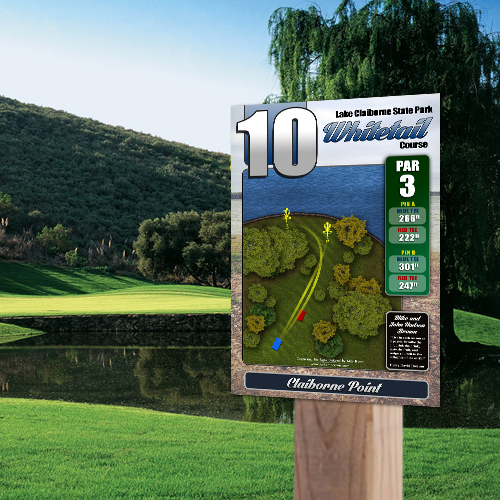
A common mistake is treating sponsorship as an afterthought. If a club or park department orders signs first and only later tries to sell sponsor space, the opportunity is weaker. Sponsors respond better when their placement is intentionally designed into the sign from the beginning, with a clean area for logo recognition that does not compete with the hole layout, distance, par, and navigation details players need.
That balance matters. A tee sign still has to function as a tee sign. If the sponsor area overwhelms the hole information, the player experience suffers and the course can look cluttered. The best sponsor-supported signs give local businesses clear visibility while keeping the course itself at a higher professional standard.
Why sponsors are often willing to fund tee signs
Disc golf signage offers something many local advertising channels do not. It stays in place for years, appears in photos, and reaches a recurring audience rather than a one-time event crowd. On a well-used public or private course, that visibility is steady and local, which is exactly what many restaurants, breweries, real estate offices, contractors, and community businesses are looking for.
There is also a credibility factor. A sponsor is not just buying ad space. They are helping improve a park or course that people actively use. That community benefit makes the ask easier, especially for municipalities, clubs, and volunteer-led projects. It feels less like selling advertising and more like inviting local businesses to support a visible upgrade.
For parks departments, this can be especially useful when capital budgets are tight. If public funds cannot cover a complete signage refresh, sponsor support may be what moves the project from postponed to approved.
What determines whether sponsorship will cover part or all of the cost
The biggest factor is math, not hope. If your total sign project is $4,500 and you have 18 holes, you need an average of $250 per hole to fully offset the cost. If your market supports $300 or $400 per sponsor, you may cover the full package. If your market is softer and businesses are comfortable at $100 to $150, sponsorship may still reduce the expense substantially, just not eliminate it.
The next factor is perceived value. Sponsors are more likely to commit when the signs look professional, durable, and worth being attached to. A full-color custom sign on aluminum or aluminum composite presents very differently than a temporary-looking setup. Businesses want placement on something that reflects well on them.
Course profile also matters. A busy municipal course with strong local play and tournament traffic will usually support stronger sponsor pricing than a newer rural course with lighter use. That does not mean smaller courses cannot secure sponsors. It means the pitch should match the market. In some communities, a lower annual amount with multiple local supporters is more realistic than one premium rate.
How to structure sponsor space without hurting the sign
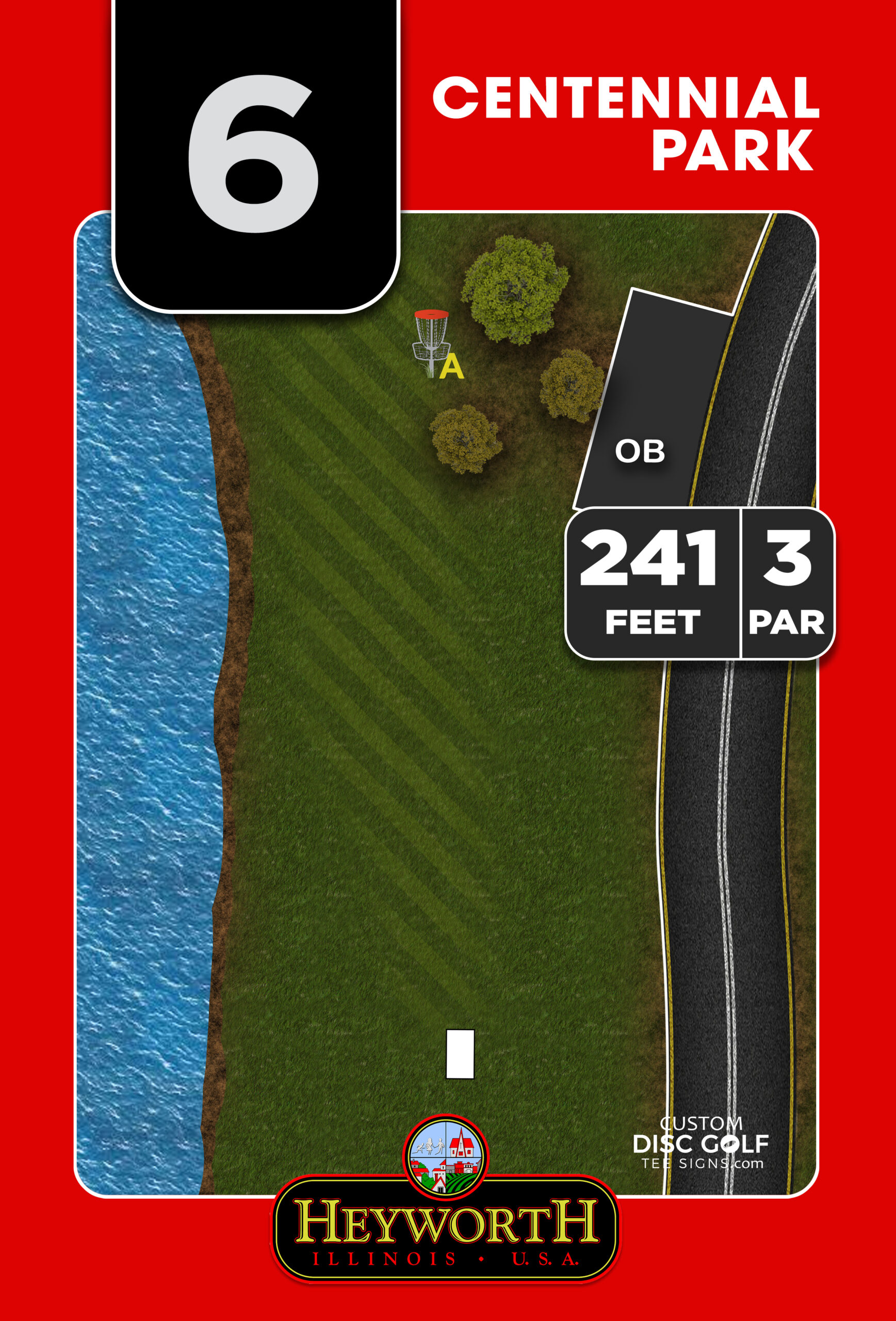
The best sponsor-supported tee signs are organized from the start. Hole information comes first. Players need clear distance, par, basket location, obstacles, and directional guidance. Sponsor placement should be visible but contained, usually in a designated panel or footer area that feels intentional instead of squeezed in.
This is where custom design matters more than people expect. If every hole has a consistent sponsor area, your program looks established and easier to buy into. Sponsors can see exactly what they are getting. Course managers can also keep branding standards consistent across all 9 or 18 holes.
Some courses choose one sponsor per hole. Others reserve a larger featured sponsor area on premium signs or maps while keeping tee signs sponsor-free. There is no single correct model. The right option depends on your funding target and how much sponsor visibility your stakeholders are comfortable with.
Pricing sponsorships in a way businesses will actually buy
If sponsor pricing is too low, the project takes more work than it should. If it is too high, businesses hesitate and the signs get delayed. A good starting point is to work backward from the total project cost and then pressure-test the rate against your local market.
For example, if each hole sign effectively needs to generate $200 to $300 to make the project viable, that range may be reasonable for many local businesses if the sign is durable, full color, and expected to remain in place for multiple seasons. If the course has strong foot traffic and event visibility, the rate can go higher. If the course is still developing, a lower entry point or multi-year package may be the better fit.
Annual renewals are worth considering too. Some courses use initial sponsor dollars to fund the signs, then renew sponsorships each year to build a maintenance or improvement budget. That can help pay for replacements, map updates, or expanded signage later.
The pitch that gets better results
Sponsors rarely respond to vague requests. They respond to a clear offer. Instead of asking a business to “support the course,” show them the exact sign concept, where their logo goes, how long the sign is expected to last, and what the course gains from the project.
A strong pitch explains that the signs improve navigation, player experience, and the overall look of the facility. It also shows that the sponsor will be part of a polished system, not a patchwork of mismatched ads. That distinction matters to businesses that care about brand presentation.
It also helps to keep the process simple. Business owners are busy. If they can review a clean proof, approve a logo placement, and understand the timeline in a few minutes, you are much more likely to close the sponsorship.
Where projects usually go wrong
The most common problem is overestimating sponsor demand. A course may assume all 18 holes will sell quickly, then stall at six or seven sponsors. That is why it helps to build a base budget first and treat full sponsorship coverage as the goal, not the guarantee.
Another issue is weak artwork. If the signs look generic or the sponsor logos are handled inconsistently, both the course and the sponsor lose confidence. Disc golf-specific layouts, clear mapping, and clean branding are not cosmetic details. They are part of what makes the sponsorship feel worth paying for.
There can also be stakeholder friction. Clubs may want more sponsor visibility. Parks departments may want less commercial presence. The right answer depends on local policy and public expectations. Early alignment saves time and prevents redesigns later.
A better way to think about sponsor-funded signs
The real question is not only can park sponsors offset sign costs. It is whether your course can present a sponsor-backed signage project that feels organized, useful, and durable enough to earn support.
When the answer is yes, sponsorship can do more than reduce cost. It can raise the quality of the entire installation. Better materials last longer. Better design improves play. Better consistency makes the course look established and cared for.
That is why many successful projects start with the sign system itself, not the sales pitch. Once the layout, materials, and sponsor placement are handled professionally, fundraising becomes much easier. At that point, you are not asking businesses to imagine the outcome. You are showing them a finished standard they can attach their name to.
For clubs, municipalities, and course organizers planning a signage upgrade, the smartest move is to treat sponsorship as part of the project design from day one. Custom Disc Golf Tee Signs works with courses that need exactly that kind of structured, sponsor-friendly approach. When the signs are built to serve players and sponsors at the same time, the budget conversation gets a lot more manageable.
A good sign should help players find their line, help visitors trust the course, and help the project make financial sense. When sponsorship is integrated the right way, it can do all three.